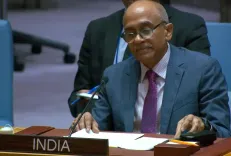
Syed Akbaruddin: India's Growing Global Role Demands Caution
Synopsis
Syed Akbaruddin highlights the changing landscape of India's foreign policy, emphasizing the need for a more measured approach that resonates with the aspirations of the youth. As India's significance on the global stage grows, the country must navigate its responses carefully to align with domestic interests.
Key Takeaways
India's foreign policy is evolving to reflect the aspirations of its youth.
Economic integration has increased from 15-17% to nearly 50%.
Younger generations prioritize practical outcomes over traditional ideological stances.
Caution and strategic balance are crucial in international responses.
India holds significant leverage in the Gulf region.
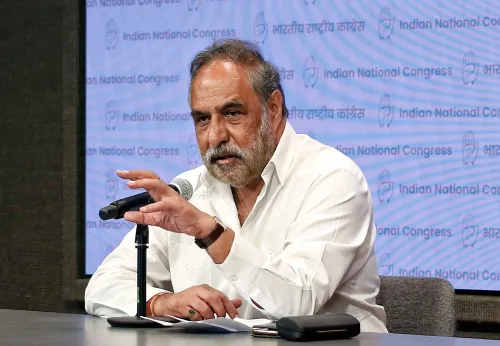
New Delhi, April 3 (NationPress) Syed Akbaruddin, India's former Permanent Representative to the United Nations, emphasized that the nation's foreign policy is progressively mirroring the aspirations of its youthful demographic and the daily issues faced by common citizens. While India is significant to the global landscape, the converse is equally true, necessitating a more cautious and deliberate approach in its diplomatic responses.
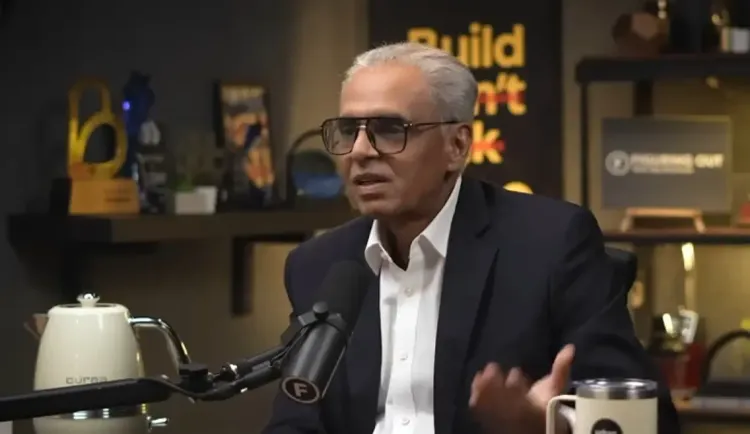
During a discussion on the YouTube channel of the young Indian podcaster and entrepreneur Raj Shamani, Akbaruddin explored the changing dynamics of diplomacy, noting that the expectations of today's youth diverge markedly from those of previous generations.
The former IFS officer observed that traditional foreign policy predominantly centered around ideological stances, whereas the current youth prioritize tangible outcomes like job creation, streamlined visa processes, and enhanced avenues for remittances. "Young and ordinary Indians have distinct expectations from foreign policy compared to traditionalists," he stated, highlighting that these aspirations are now influencing India's international engagements.
Akbaruddin remarked that India’s foreign policy in the 1980s was notably more vocal and reactive regarding global events.
"We were quick to express our opinions on international matters. For instance, we would swiftly condemn incidents occurring in Libya or Venezuela,"
he recalled. However, he noted that India's increasing economic integration with the global community demands a more measured and balanced approach. With India’s global economic engagement escalating from approximately 15-17% in the 1980s to nearly 50% today, this shift compels India to exercise greater restraint and strategic foresight since international developments now directly affect domestic interests.
"Currently, while India is crucial to the world, the world is equally essential to India. Hence, we must adopt a more careful and calculated approach in our responses,"
he cautioned.
Addressing geopolitical realities, Akbaruddin mentioned that every nation wields a certain degree of leverage in international relations. He illustrated this with China’s substantial influence over Iran due to its significant oil imports, contrasting it with the comparatively limited leverage held by European nations.
He stressed that the outcomes of foreign policy should not solely be evaluated based on immediate results, as diplomacy is often a lengthy and process-oriented endeavor. "Some processes require time to yield results, while others may progress more swiftly. Different nations have varying levels of leverage," he explained.
Highlighting India's advantages, he pointed out that the country possesses considerable influence in the Gulf region, enabling it to effectively safeguard its interests. He underscored that India's foreign policy should be assessed based on its leverage and achievements rather than merely on its public denunciations of global events.
Point of View
It's crucial to recognize the significant shift in India's foreign policy, reflecting the voice of the younger generation. This evolution underscores the necessity for a strategic balance in international relations, catering to both global responsibilities and domestic aspirations.
NationPress
19 Sept 2026
Frequently Asked Questions
What did Syed Akbaruddin say about India's foreign policy?
Syed Akbaruddin stated that India's foreign policy increasingly reflects the aspirations of its youth and ordinary citizens, emphasizing the need for a more cautious and measured approach in international responses.
How has India's economic integration affected its foreign policy?
India's economic integration has risen significantly, from around 15-17% in the 1980s to nearly 50% today, necessitating a more restrained and calculated stance in its foreign policy.
What are the expectations of today's youth from foreign policy?
Today's youth expect foreign policy to focus on practical outcomes like job creation, easier visa access, and better remittance avenues, differing from traditional ideological positions.
Why is caution important in India's foreign policy according to Akbaruddin?
Caution is essential as global developments now directly impact India's domestic interests, making it vital for the country to respond thoughtfully to international events.
What leverage does India have in international relations?
India enjoys considerable influence, particularly in the Gulf region, which helps secure its interests effectively in the complex landscape of international relations.