India solar and wind expansion to unlock $10–15 billion land opportunity by 2030
Synopsis
A new Colliers India report puts a striking number on India's green energy ambition: the solar and wind buildout alone will unlock a $10–15 billion land market by 2030, embedded within a $110–120 billion investment wave. With OEM warehousing demand already up 4x in five years, the real estate sector is quietly becoming one of the biggest beneficiaries of India's net-zero pivot.
Key Takeaways
$10–15 billion land aggregation opportunity projected from India's solar and wind expansion by 2030 , per a Colliers India report released on 20 May 2025 .
Total renewable energy investment expected to reach $110–120 billion over the next few years.
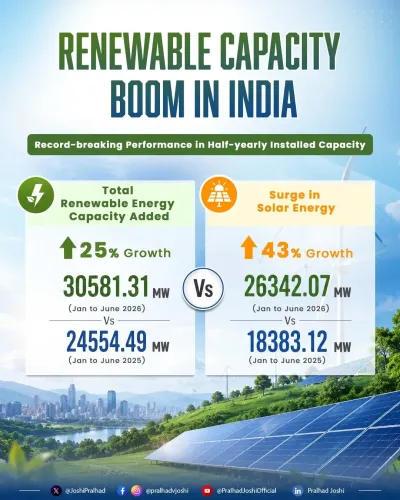
India's current renewable capacity stands at 251 GW ; an additional 270–300 GW of solar and wind capacity is targeted by 2030.
Non-fossil sources already account for 51 per cent of India's installed power capacity.
Renewable energy OEM leasing of industrial and warehousing space has surged nearly 4x in five years, hitting 3 million sq ft in 2025.
Land costs typically represent 10–12 per cent of total solar and wind project expenditure.
India's rapidly expanding solar and wind energy sector is set to generate a $10–15 billion land aggregation and acquisition opportunity by 2030, according to a new report by Colliers India released on 20 May 2025. The projection is part of a broader $110–120 billion investment wave expected to flow into the country's renewable energy sector over the next few years, driven primarily by utility-scale solar and wind projects.
Scale of the Renewable Push
India's installed renewable energy capacity currently stands at 251 GW, according to the Colliers India report. An additional 270–300 GW of solar and wind capacity is expected to be added by 2030, effectively more than doubling the existing base. Badal Yagnik, Chief Executive Officer and Managing Director at Colliers India, described this as the sector entering 'its next phase of accelerated growth.'
Non-fossil sources — including renewables and nuclear energy — already account for 51 per cent of India's existing installed capacity. With rapid advances in domestic manufacturing, the report argues India is well positioned to achieve its target of 500 GW of non-fossil-based capacity by 2030.
Land: The Hidden Bottleneck and Opportunity
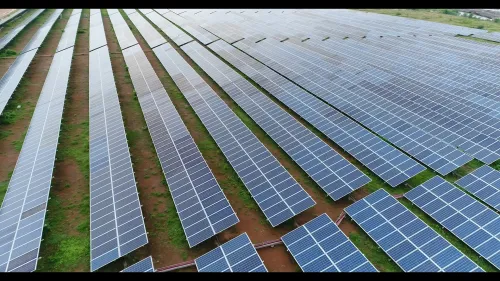
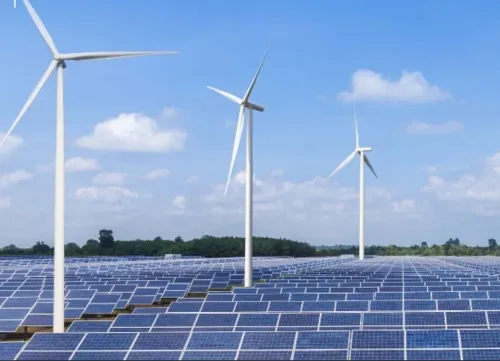
Land aggregation and acquisition typically accounts for around 10–12 per cent of total project costs for solar and wind installations. For solar projects, land is secured either by private developers or by central and state-level nodal authorities, particularly for larger parks. Wind projects, by contrast, primarily require land for electrical substations and critical infrastructure, while turbine sites are often secured through leasing arrangements.
This structural difference means that as the pipeline scales, land strategy will vary significantly across project types — creating differentiated demand for real estate intermediaries, legal advisors, and aggregation platforms.
Industrial and Warehousing Demand Surges
Beyond land, the renewable expansion is reshaping India's industrial and warehousing market. Annual leasing by renewable energy original equipment manufacturers (OEMs) has surged nearly four times over the past five years, reaching approximately 3 million sq ft of industrial and warehousing space in 2025, according to Vimal Nadar, National Director and Head of Research at Colliers India.
As project pipelines expand further, the OEM segment is expected to account for a significant share of overall industrial and warehousing demand in India — a trend that is drawing attention from logistics developers and institutional investors.
Growth Corridors and Long-Term Impact
The Colliers India report highlights that renewable energy expansion will not only accelerate India's decarbonisation trajectory but also catalyse the development of new growth corridors and investment destinations across the country. Yagnik noted that the sector's scale-up will create significant opportunities for the real estate sector, particularly in land, industrial, and warehousing segments.
This comes amid the Indian government's firm commitment to achieving net-zero emissions over the long term, with the 500 GW non-fossil capacity target by 2030 serving as a key interim milestone. With investment appetite robust and policy direction clear, the coming years are likely to test whether execution on the ground — particularly land acquisition — can keep pace with ambition.
Point of View
But the harder story is execution. India's renewable pipeline has repeatedly outpaced its land acquisition machinery — state-level clearances, tribal land restrictions, and grid connectivity delays have shelved or deferred gigawatts of otherwise-funded projects. The Colliers report captures the financial opportunity accurately, but the gap between aggregation intent and shovel-in-ground reality has historically been wide. The 4x surge in OEM warehousing demand is perhaps the more reliable leading indicator — it reflects capital already committed, not just projected. Whether the land market catches up will depend less on developer appetite and more on whether state governments streamline acquisition frameworks before the 2030 deadline becomes a 2032 rescheduling.
NationPress
25 Sept 2026
Frequently Asked Questions
What is the $10–15 billion land opportunity in India's renewable energy sector?
According to a Colliers India report released on 20 May 2025, the expansion of solar and wind projects in India will require large-scale land aggregation and acquisition, creating a $10–15 billion market opportunity by 2030. Land costs typically account for 10–12 per cent of total project costs for solar and wind installations.
How much total investment is expected in India's renewable energy sector by 2030?
The Colliers India report projects $110–120 billion in total investment flowing into India's renewable energy sector over the next few years, primarily for solar and wind projects. This is underpinned by government targets to achieve 500 GW of non-fossil-based capacity by 2030.
What is India's current renewable energy capacity and what is the 2030 target?
India's installed renewable energy capacity stands at 251 GW as of the report date. An additional 270–300 GW of solar and wind capacity is expected to be added by 2030, with a broader target of 500 GW of non-fossil-based capacity including nuclear energy.
How has renewable energy affected industrial and warehousing demand in India?
Annual leasing by renewable energy OEMs has surged nearly four times over the past five years, reaching approximately 3 million sq ft of industrial and warehousing space in 2025, according to Colliers India. This segment is expected to account for a growing share of overall industrial space demand as project pipelines expand.
How is land acquired differently for solar versus wind projects in India?
For solar projects, land is typically aggregated by private developers or central and state nodal authorities for larger parks. Wind projects primarily require land for electrical substations and critical infrastructure, with turbine sites often secured through leasing arrangements rather than outright acquisition.