India's Javelin anti-tank deal: Ex-military says it's vital to counter Pakistan-China threat
Synopsis
India has formally moved to acquire the Javelin — a fire-and-forget anti-tank missile jointly built by Lockheed Martin and RTX — from the US, with retired officers warning that a gap in anti-tank capability left India exposed to a coordinated Pakistan-China armoured offensive. The LOA is signed; co-production talks could follow.
Key Takeaways
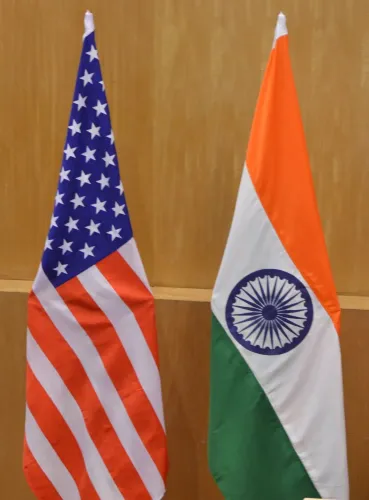
India has signed a Letter of Offer and Acceptance (LOA) with the US to acquire the Javelin anti-tank guided missile system .
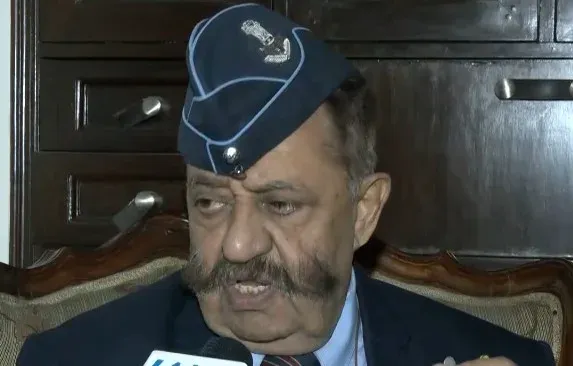
Retired Major General P.K.
Sehgal said India faced a 'significant deficiency' in anti-tank guided missiles and had sought the Javelin for 'a considerable time.' The deal was confirmed by US Ambassador Sergio Gor in a post on X, who cited the May 2026 Shangri-La Dialogue and flagged co-production possibilities.
Retired Wing Commander Praful Bakshi cited the Russia-Ukraine war , the 1971 war , and Khemkaran (1965) as evidence that tank battles remain central to modern conflict.
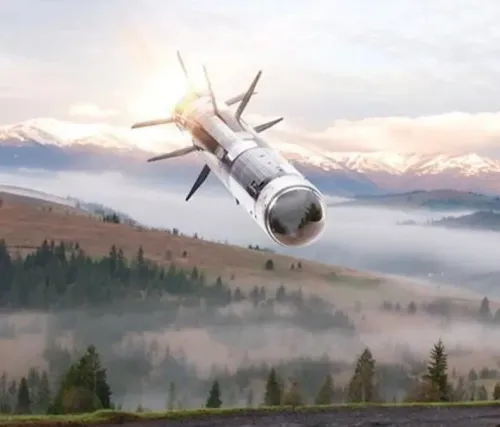
The Javelin is a man-portable, fire-and-forget missile jointly developed by Lockheed Martin and RTX , in service with the US Army and US Marine Corps .
India's decision to acquire the Javelin anti-tank guided missile system from the United States is a strategically necessary step to counter a potential coordinated armoured offensive by Pakistan and China, former military officers said on Friday, 28 August. The assessments followed US Ambassador to India Sergio Gor's confirmation of the deal via a post on X.
What the Deal Involves
With the signing of a Letter of Offer and Acceptance (LOA) between India and the United States, India formally becomes a customer of the Javelin system — an advanced, medium-range, fire-and-forget anti-tank guided missile jointly developed by Lockheed Martin and RTX. The man-portable system is designed to engage a wide array of targets, including armoured vehicles and fortified positions, and is already in service with the US Army and US Marine Corps, as well as numerous international customers.
Why Former Officers Say India Needed This
Retired defence expert Major General P.K. Sehgal underscored the strategic rationale. 'First of all, India clearly understands that Pakistan and China can launch a coordinated attack. Both possess substantial tank capabilities. Currently, India faces a significant deficiency in anti-tank guided missiles. To address this deficiency, India had been trying for a considerable time to acquire the Javelin anti-tank weapon system from the United States, but there had been no forward movement,' he said.
Sehgal added that Ambassador Gor's public confirmation signals a political decision has now been reached. 'These anti-tank missiles could arrive in India soon,' he noted.
Tank Warfare as the Context
Wing Commander Praful Bakshi (Retd.) pointed to the growing prevalence of tank battles in modern conflicts. 'India's border is very vast; Pakistan, Bangladesh, China and tank battles have become very common. We have seen it in Ukraine, in Iraq, in the 1971 war, in 1965, Khemkaran, etc.,' he said. He emphasised that anti-tank guided missiles are among the most effective countermeasures when enemy armour advances: 'When an enemy tank comes, you destroy it either with a tank, a tank gun, or with anti-tank weapons; an anti-tank guided missile is very effective.'
What the US Side Said
In his post on X, Ambassador Sergio Gor described the development as 'a great step forward in the U.S.-India defense relationship' and said it 'opens the door to co-production possibilities.' He also referenced US Secretary of Defense Pete Hegseth's remarks at the May 2026 Shangri-La Dialogue, framing the Javelin acquisition as consistent with the broader trajectory of bilateral defence ties, which Gor described as being 'at record high levels.'
What Comes Next
With the LOA signed, the focus now shifts to delivery timelines, co-production negotiations, and integration with India's existing anti-armour doctrine. The Javelin deal is likely to be followed by discussions on technology transfer, given both governments' stated interest in deepening defence industrial cooperation. Analysts expect the acquisition to meaningfully address India's acknowledged gap in man-portable anti-tank systems along its northern and western fronts.
Point of View
And the Javelin LOA is an acknowledgement that indigenous solutions have not moved fast enough. The geopolitical framing — a two-front armoured threat from Pakistan and China — is not new, but saying it publicly, through a US ambassador's X post, carries diplomatic weight of its own. What mainstream coverage underplays is the co-production angle: if Lockheed Martin and RTX agree to manufacture components in India, this deal could be a template for deeper defence industrial integration, not just a procurement line item. The real measure of success will be whether the Javelin purchase accelerates India's own anti-tank missile programmes or becomes a substitute for them.
NationPress
13 Oct 2026
Frequently Asked Questions
What is the Javelin anti-tank system that India is buying?
The Javelin is an advanced, medium-range, fire-and-forget anti-tank guided missile jointly developed by Lockheed Martin and RTX. It is man-portable, designed to destroy armoured vehicles and fortified positions, and is already in service with the US Army and US Marine Corps.
Why does India need the Javelin missile system?
Retired Major General P.K. Sehgal said India has a 'significant deficiency' in anti-tank guided missiles and needs the Javelin to counter a potential coordinated armoured offensive by Pakistan and China, both of which possess substantial tank capabilities.
Has the India-US Javelin deal been officially confirmed?
Yes. US Ambassador to India Sergio Gor confirmed the deal in a post on X on 28 August, stating that India plans to buy the Javelin system and that it opens the door to co-production possibilities between the two countries.
What is a Letter of Offer and Acceptance (LOA) in a defence deal?
An LOA is a formal US government document that initiates a Foreign Military Sale, making India an official customer of the Javelin system. It sets out pricing, quantities, and terms before final delivery and payment schedules are agreed.
Could India co-produce the Javelin missile domestically?
Ambassador Gor indicated the deal 'opens the door to co-production possibilities,' suggesting future negotiations could involve manufacturing components of the Javelin system within India, consistent with the broader Make in India defence initiative.