Will India's leather exports surge after US, EU trade agreements?
Synopsis
The Indian leather industry is gearing up for a transformative phase, aiming for a $50 billion turnover by 2030. This anticipated growth is driven by favorable trade agreements with the US and EU, which promise to enhance market access and competitiveness.
Key Takeaways
India's leather sector targets a $50 billion turnover by 2030.
Favorable trade agreements will enhance export competitiveness.
Focus on finished products indicates strong domestic processing.
Elimination of EU tariffs boosts market access.
Operational efficiencies are expected to improve profitability.
Mumbai, Feb 17 (NationPress) The Indian leather industry is on the brink of a major growth surge, aiming for a remarkable $50 billion turnover by 2030. This ambitious target is fueled by increasing export activities and a rise in domestic consumption, as highlighted in a report by CareEdge Ratings released on Tuesday.
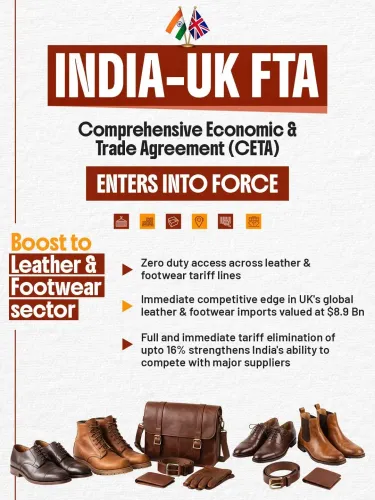
According to CareEdge Ratings, the Union Budget for 2026–27, alongside the finalization of the India–European Union (EU) Free Trade Agreement (FTA) on January 27, along with reductions in US import tariffs, collectively foster a favorable policy landscape for the leather sector in India. The Budget's emphasis on optimizing import duties, lowering input costs, and streamlining procedures is anticipated to enhance operational efficiency and economic performance. Furthermore, the EU–FTA significantly boosts market accessibility and export competitiveness.
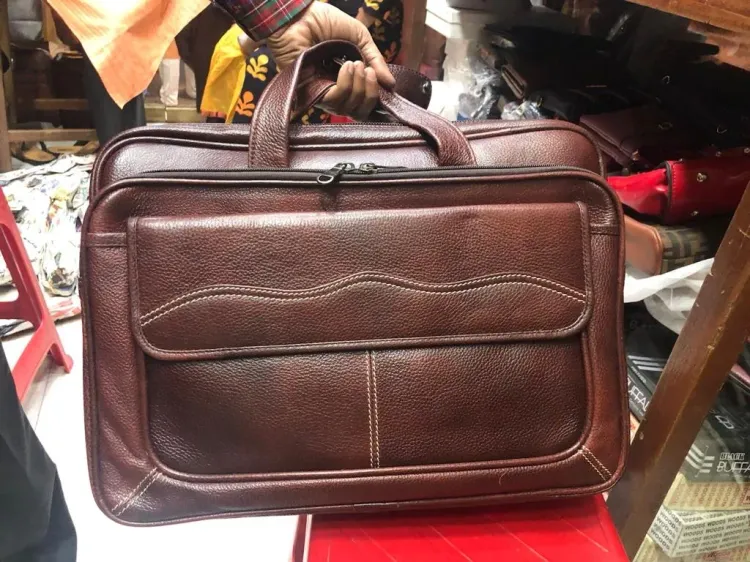
The leather industry in India is notably labour-intensive and export-oriented, according to the report, which states that the sector primarily exports finished products, such as footwear, leather accessories, and garments, rather than raw hides. This shift indicates a substantial degree of domestic processing and value addition.
With its existing emphasis on finished products, the improved trade conditions empower the industry to scale up exports, stabilize demand, and strengthen ties with global buyers, thereby positioning the Indian leather sector to capture a more significant market share in the medium to long term. These advancements are expected to yield cost efficiencies, enhancing profitability margins, as stated in the report.
The abolition of EU import tariffs, which were previously as high as 17 percent under the agreement, greatly enhances the cost-effectiveness of Indian leather and footwear products in the European market. CareEdge Ratings emphasizes that this change will bolster India’s exports by approximately Rs 0.21 lakh crore ($2.4 billion) and enable Indian companies to seize a larger portion of the EU’s leather and footwear market imports, valued at around Rs 8.71 lakh crore ($100 billion).
India stands to benefit greatly, with tariffs dropping sharply from around 17 percent to zero by FY26, thus boosting its cost competitiveness and export capacity. The removal of these tariffs under the new agreement is expected to enhance India's relative value proposition and stimulate a substantial increase in demand, particularly from leading European fashion houses located in Italy, France, and Germany, the report concludes.
Point of View
It is clear that the Indian leather sector is on the verge of significant growth. The recent trade agreements and budget initiatives create a conducive environment for expanding exports and enhancing the industry's global footprint. Support for domestic manufacturers and streamlined trade regulations will be pivotal in achieving these ambitious targets.
NationPress
3 Oct 2026
Frequently Asked Questions
What is the projected turnover of India's leather industry by 2030?
The Indian leather industry aims for a turnover of $50 billion by 2030.
How will the EU–FTA impact Indian leather exports?
The EU–FTA will eliminate high import tariffs, significantly enhancing the competitiveness of Indian leather products in the European market.
What are the main products exported by India's leather sector?
The industry primarily exports finished goods like footwear, leather goods, and garments, rather than raw hides.
What role does the Union Budget play in this growth?
The Union Budget focuses on reducing import duties and input costs, which will improve operational performance and cost efficiency in the leather sector.
What is the significance of the US import tariff cuts?
The recent cuts in US import tariffs further create a favorable environment for increasing India's leather exports.