Indian scientists develop PLA-ZnO nanofiber filter for dye-polluted wastewater
Synopsis
Scientists at INST Mohali have created a filter that uses turmeric-derived zinc oxide locked inside biodegradable nanofibers — activated by both light and mechanical vibrations — to destroy stubborn industrial dyes in wastewater. Machine learning optimises the process, and the research is published in Advanced Functional Materials, marking a significant step toward scalable, chemical-free water treatment.
Key Takeaways
Researchers at INST Mohali , under the Department of Science and Technology , developed the PLA-ZnO nanofiber filter, published in Advanced Functional Materials (Wiley).
ZnO nanoparticles were synthesised from turmeric extract , eliminating the need for harmful chemical reagents.
The filter combines photocatalysis and piezocatalysis — using both light and mechanical vibrations — to degrade persistent organic dyes.
Machine learning was integrated to optimise treatment conditions, enabling customisation for different wastewater profiles.
The technology addresses key failures of conventional systems: nanoparticle recovery, electron-hole recombination, and limited low-light performance.
The textile industry is the primary target application, given its large-scale discharge of toxic, degradation-resistant organic dyes.
Indian scientists have developed a sustainable, multifunctional filter that combines green-synthesised zinc oxide (ZnO) nanoparticles with biodegradable polylactic acid (PLA) nanofibers — aided by machine learning — to offer an eco-friendly solution for treating dye-contaminated industrial wastewater, according to an official statement issued on Tuesday, 13 October 2026.
The breakthrough was achieved by researchers at the Institute of Nano Science and Technology (INST), Mohali, an autonomous institute under the Department of Science and Technology (DST). The findings have been published in the peer-reviewed journal Advanced Functional Materials (Wiley).
How the Filter Works
The research team, led by Dr. Aviru Kumar Basu, immobilised ZnO nanoparticles — prepared from natural sources — within porous PLA nanofibers. When subjected to both mechanical excitation and light, the system triggered two complementary degradation mechanisms: photocatalysis and piezocatalysis.
The mechanical vibrations generated piezoelectric polarisation, which suppressed photogenerated electron-hole recombination and enhanced reactive-species formation — significantly improving pollutant breakdown efficiency.
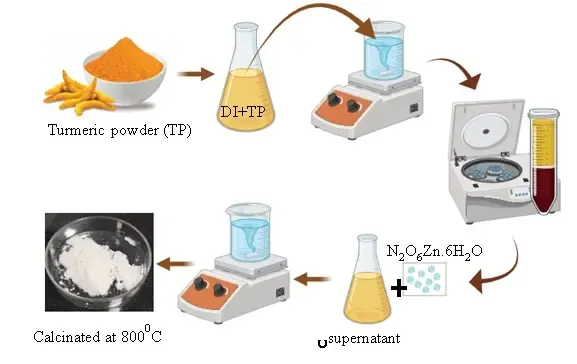
Crucially, the ZnO nanoparticles were synthesised using turmeric extract. According to the Ministry of Science and Technology, 'naturally occurring bioactive compounds like curcumin, flavonoids and phenolic compounds acted as reducing and stabilising agents, avoiding conventional synthesis routes involving harmful reagents.' This green synthesis route eliminates the use of toxic chemicals typically required in nanoparticle fabrication.
Why Industrial Dye Pollution Is a Growing Crisis
The discharge of persistent organic dyes from industrial activities — particularly the textile industry — presents a major environmental challenge. These compounds tend to be chemically stable, toxic, and resistant to natural degradation, rendering conventional treatment methods inadequate.
Existing approaches such as adsorption, sedimentation, and flocculation can physically separate pollutants but do not destroy them. Biological treatment, while useful in some contexts, is often too slow for highly stable synthetic dyes. Photocatalysis has long been considered an attractive alternative, given its ability to degrade pollutants under mild conditions using renewable energy — but conventional photocatalytic systems have faced persistent technical hurdles.
Problems This Technology Solves
The new PLA-ZnO filter addresses several key limitations of earlier photocatalytic systems, including: difficulty in recovering and separating nanoparticle catalysts from treated water; electron-hole recombination losses that reduce catalytic efficiency; dependence on light availability alone; and the challenge of ensuring efficient catalyst-pollutant contact. The integration of piezocatalysis means the filter can continue degrading pollutants even in low-light conditions, as long as mechanical energy — such as vibrations from water flow — is present.
Role of Machine Learning
The research also incorporated machine learning to optimise treatment conditions, marking a convergence of materials science, nanotechnology, and artificial intelligence. This computational layer is expected to help scale and customise the technology for varied industrial wastewater profiles.
Significance and Next Steps
The publication in Advanced Functional Materials, a high-impact international journal, lends considerable credibility to the research. This development is particularly timely as India intensifies scrutiny of textile and chemical industries over effluent discharge norms. Researchers have not yet specified a timeline for commercial deployment, but the study positions INST Mohali as a key player in next-generation water-treatment technology.
Point of View
Yet enforcement of effluent norms has been inconsistent. A filter that destroys rather than merely transfers pollutants, built from biodegradable and plant-derived inputs, removes the most common industry excuse: that effective treatment is too expensive or chemically intensive. The machine learning layer also signals that Indian public research institutions are beginning to converge disciplines in ways that could accelerate commercialisation — if the DST follows through with scale-up funding and industry partnerships rather than letting the publication stand as an endpoint.
NationPress
13 Oct 2026
Frequently Asked Questions
What is the PLA-ZnO filter developed by Indian scientists?
It is a biodegradable, multifunctional wastewater-treatment filter developed at the Institute of Nano Science and Technology (INST), Mohali, that combines polylactic acid (PLA) nanofibers with green-synthesised zinc oxide (ZnO) nanoparticles. The filter uses both light and mechanical vibrations to destroy persistent organic dye pollutants from industrial wastewater, and was published in Advanced Functional Materials.
How were the zinc oxide nanoparticles made without harmful chemicals?
Dr. Aviru Kumar Basu's team synthesised ZnO nanoparticles using turmeric extract, where naturally occurring compounds — curcumin, flavonoids, and phenolic compounds — acted as reducing and stabilising agents. This green synthesis route avoids conventional methods that rely on toxic reagents.
What makes this filter better than existing wastewater treatment methods?
Unlike conventional approaches such as adsorption or flocculation — which separate but do not destroy pollutants — the PLA-ZnO filter degrades them through a combination of photocatalysis and piezocatalysis. It also overcomes key weaknesses of earlier photocatalytic systems, including catalyst recovery difficulty, electron-hole recombination losses, and dependence on light availability.
What role does machine learning play in this technology?
Machine learning was incorporated to optimise treatment conditions, enabling the system to be tuned for different types of industrial wastewater. This computational layer is expected to make the technology more adaptable and scalable for real-world applications.
Which industry does this research primarily target?
The research primarily targets the textile industry, which is a major source of persistent organic dye discharge into water bodies. These synthetic dyes are chemically stable, toxic, and resistant to natural degradation, making them especially difficult to treat with conventional methods.