How is India Engaging with the Weimar Triangle Format?
Synopsis
On January 7, India's External Affairs Minister S Jaishankar made significant strides in the Weimar Triangle format, engaging with top European leaders. The discussions highlighted critical areas like India-EU relations and the Indo-Pacific, showcasing India's intent to strengthen ties with Europe amidst global shifts. A step forward in international cooperation!
Key Takeaways
S Jaishankar represents India in the Weimar Triangle format.
Discussions cover India-EU relations , the Indo-Pacific , and Ukraine .
India's ties with the European Union hold great unrealized potential.
France, Germany, and Poland are key partners in advancing cooperation.
Emphasis on the need for regular exchanges among nations.
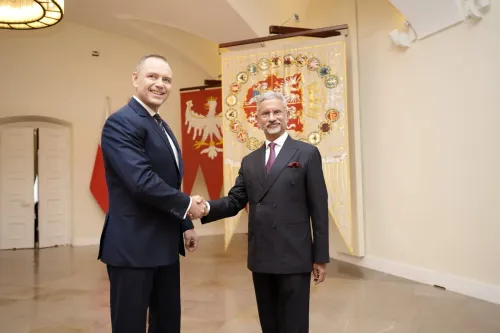
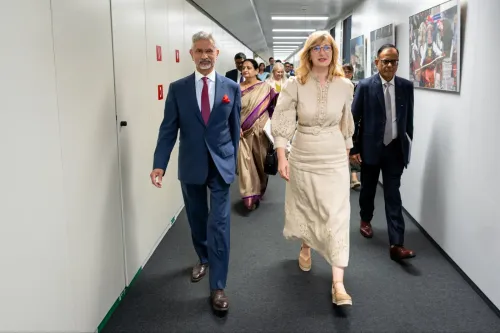
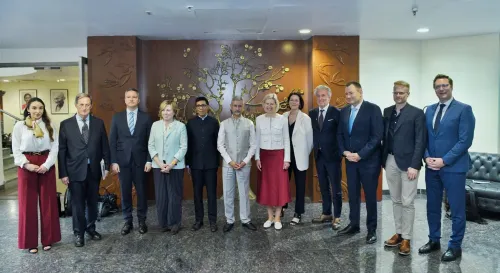
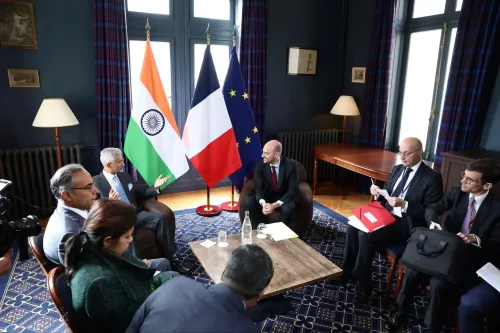
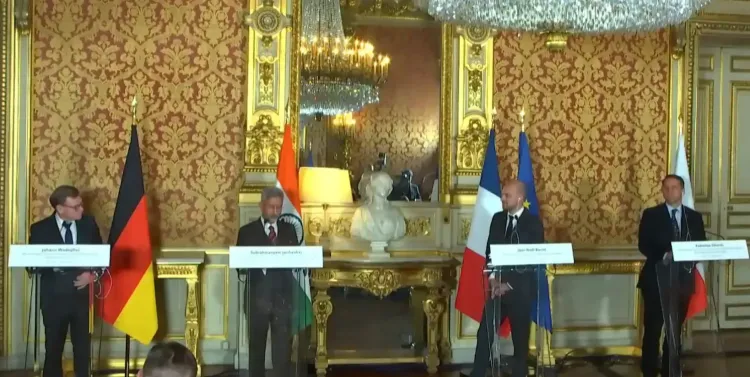
Paris, Jan 7 (NationPress) External Affairs Minister S Jaishankar engaged in India's first participation in the Weimar Triangle format on Wednesday, engaging in meaningful dialogues with French Minister for Europe and Foreign Affairs Jean-Noël Barrot, German Minister of State for Europe and Climate Action Anna Lührmann (represented by Tobias Lindner or Wadephul), and Polish Foreign Minister Radosław Sikorski.
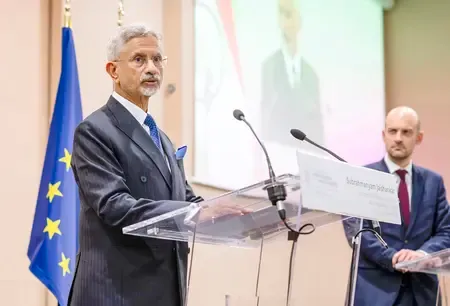
After the meeting, Jaishankar spoke to the press, calling the discussions short yet profound and transparent, addressing three primary topics: India-European Union relations, the Indo-Pacific region, and the ongoing situation in Ukraine.
He highlighted that India's increasing involvement with Europe, both through Brussels and in bilateral relations with member nations, naturally fosters smaller group interactions like the Weimar format for enhancing broader cooperation.
Jaishankar pointed out that among India's crucial partnerships, its ties with the European Union and its member states possess the largest unrealized potential, with numerous new avenues yet to be explored.
He expressed optimism that France, Germany, and Poland, as significant European allies, would contribute actively to efforts aimed at advancing India-Europe relations to new heights.
Jaishankar framed the discussions within the context of a world experiencing substantial transformation, from enduring developments in the Indo-Pacific to Europe's own strategic challenges and broader global shifts that could redefine the international landscape.
He underscored the importance of regular exchanges of views among nations from diverse regions due to their differing perspectives.
Emphasizing the evolving multi-polar global environment characterized by instability and unpredictability, the External Affairs Minister argued that such conditions necessitate deeper collaboration among like-minded nations sharing common goals.
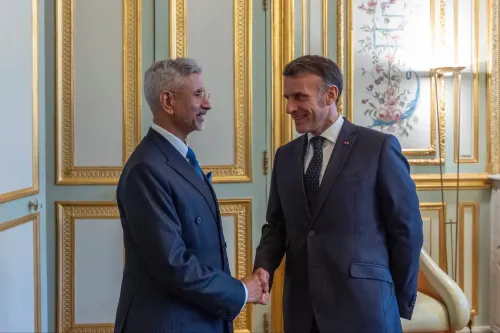
Earlier, Jaishankar held bilateral discussions with French Foreign Minister Barrot, reviewing the special strategic partnership between India and France, India's first in Europe. The two leaders deliberated on enhancing cooperation across various sectors and global challenges.
Jaishankar conveyed India's anticipation to soon host French President Emmanuel Macron.
Describing the day as fruitful even before the Weimar meeting, Jaishankar expressed gratitude to his counterparts for a highly beneficial exchange that highlighted the growing strategic alignment between India and key European powers.
Point of View
This engagement by External Affairs Minister Jaishankar is a pivotal moment for India, reinforcing its strategic partnerships with key European nations. The discussions reflect India's commitment to addressing global challenges collaboratively and signify a step towards realizing the untapped potential of India-EU relations.
NationPress
20 Sept 2026
Frequently Asked Questions
What is the Weimar Triangle format?
The Weimar Triangle is a trilateral cooperation format involving France, Germany, and Poland, focused on enhancing political and economic collaboration among the three nations.
Why is India's participation significant?
India's participation highlights its intention to strengthen ties with Europe, addressing key global issues and fostering deeper cooperation in strategic areas.
What topics were discussed during the meeting?
The discussions focused on India-EU relations, the Indo-Pacific region, and the ongoing conflict in Ukraine.
Who were the key participants in the meeting?
Key participants included French Foreign Minister Jean-Noël Barrot, German Minister of State Anna Lührmann, and Polish Foreign Minister Radosław Sikorski.
What does this mean for India-Europe relations?
This engagement is expected to pave the way for enhanced cooperation and collaboration between India and European nations, unlocking potential in various sectors.