Indonesia orders firefighting aircraft, vows disaster response overhaul
Synopsis
Indonesia's President Prabowo Subianto has ordered large water-bombing aircraft and flagged the need for hundreds of firefighting helicopters — funded by over 300 trillion rupiah in government savings — as the country battles Kalimantan wildfires and a Java Sea ferry disaster that has left 129 people missing. It is the Prabowo administration's most concrete disaster preparedness commitment yet.
Key Takeaways
President Prabowo Subianto announced a major expansion of Indonesia's disaster response fleet on 16 September , including large aerial water-bombing aircraft and hundreds of helicopters.
The government has saved more than 300 trillion rupiah (approximately 17 billion US dollars ) in its first year, which Prabowo said should fund productive programmes including disaster mitigation.
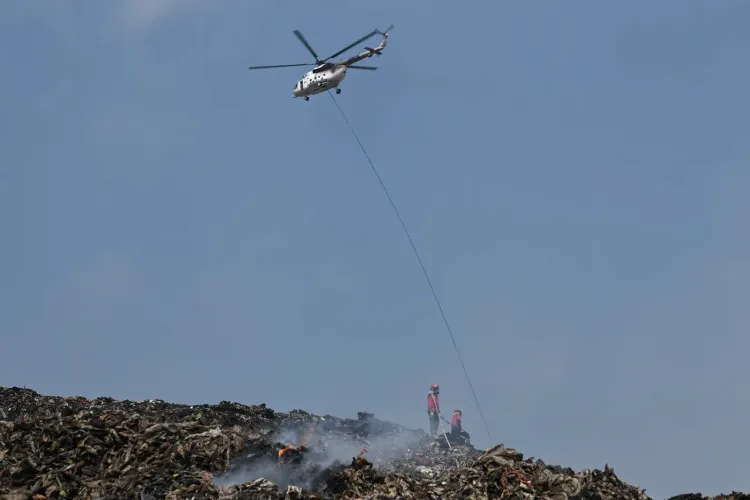
Widespread forest and land fires have hit Kalimantan in 2024, underlining the urgency of the aerial firefighting investment.
The ferry KM Virgo Transport 8 sank in the Java Sea with 243 people aboard; 129 remain missing as of 10 pm Monday , with 108 rescued and 6 bodies recovered.
The vessel lies at 30 metres depth off Masalembo ; authorities are considering towing it to shallower waters for the next search phase.
Indonesian President Prabowo Subianto on Wednesday, 16 September announced a sweeping expansion of the country's disaster response infrastructure, including the acquisition of large aerial water-bombing aircraft and hundreds of additional helicopters for firefighting operations. The announcement, made during a government talk programme, signals one of the most ambitious emergency preparedness commitments since Prabowo took office.
What the President Ordered
'I am determined to strengthen our mitigation capabilities. The agencies that deal with disasters must be strengthened,' Prabowo said, according to the state communications agency. He confirmed that he had already ordered several large aircraft specifically configured for water-bombing missions, in addition to flagging the need for hundreds of helicopters for firefighting and broader disaster response work.
The President also linked disaster preparedness directly to fiscal discipline, warning that corruption in the management of state resources could critically undermine the country's emergency response capacity.
Funding the Push: Savings Redirected
Prabowo said the government had saved more than 300 trillion rupiah (approximately 17 billion US dollars) during his first year in office, partly by cutting ministry expenditure on events such as anniversary celebrations. He indicated that these savings should be redirected toward more productive national programmes, including disaster mitigation.
Citing Indonesia's position along the Pacific 'Ring of Fire' — one of the world's most seismically and volcanically active zones — Prabowo framed the investment as a strategic necessity rather than discretionary spending.
Context: Fires and Natural Disasters in 2024
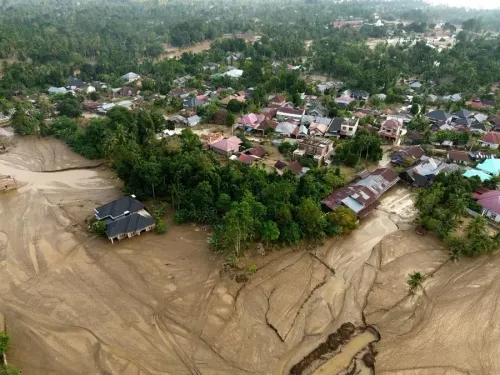
The announcement comes amid a difficult year for Indonesia on the natural disaster front. Widespread forest and land fires have ravaged parts of Kalimantan in 2024, compounding the toll of other natural calamities. Indonesia regularly contends with earthquakes, volcanic eruptions, tsunamis, and seasonal fires, making its disaster response infrastructure a perennial policy concern. Notably, this is the first major aerial firefighting procurement commitment under the Prabowo administration.
Ferry Disaster: 129 Still Missing in Java Sea
Separately, Indonesian authorities are grappling with an ongoing maritime emergency. The ferry KM Virgo Transport 8, carrying 243 people, sank in the Java Sea after losing contact early Sunday while sailing from Surabaya to Banjarmasin. As of 10 pm Monday, 108 survivors had been rescued and six bodies recovered, leaving 129 people unaccounted for.
Mohammad Syafii, head of the National Search and Rescue Agency, said the vessel is lying at a depth of approximately 30 metres in waters off Masalembo. Authorities are weighing whether to tow the wreck to shallower waters to facilitate the next phase of the search operation. The Indonesian Navy has, for now, advised against disturbing the vessel while rescue teams remain focused on locating survivors.
'We still very much hope that victims will soon be found alive,' Syafii told a press conference in Banjarmasin. Search teams are currently operating across six sectors, with the possibility of adjusting the search grid as new information emerges.
What Comes Next
The government has not yet detailed a procurement timeline for the firefighting aircraft or specified which agencies will oversee the expanded fleet. Industry observers note that large aerial firefighting assets — such as amphibious water bombers — require significant lead times for acquisition, crew training, and maintenance infrastructure. How quickly Indonesia can operationalise the President's directive will be the critical test of this commitment.
Point of View
And Indonesia has a history of disaster-preparedness pledges that stall at the institutional level. The simultaneous Java Sea ferry crisis, with 129 people still missing, is an uncomfortable reminder that the country's existing search-and-rescue infrastructure is already under strain. Ordering aircraft is the easy part; building the operational doctrine to deploy them effectively is the harder, less headline-worthy work.
NationPress
16 Sept 2026
Frequently Asked Questions
What disaster response measures has Indonesia's President Prabowo announced?
President Prabowo Subianto has ordered the acquisition of large aircraft for aerial water-bombing and flagged the need for hundreds of additional helicopters for firefighting and disaster response. The announcement was made on 16 September during a government talk programme, with funding linked to over 300 trillion rupiah in government savings from his first year in office.
Why is Indonesia investing in firefighting aircraft now?
Indonesia has faced severe forest and land fires in Kalimantan in 2024, alongside other natural disasters stemming from its location on the Pacific 'Ring of Fire.' Prabowo cited the country's acute vulnerability to seismic and fire-related disasters as the primary justification for the investment.
What is the status of the KM Virgo Transport 8 ferry disaster?
The ferry KM Virgo Transport 8, which was carrying 243 people from Surabaya to Banjarmasin, sank in the Java Sea after losing contact early Sunday in waters off Masalembo. As of 10 pm Monday, 108 survivors had been rescued and six bodies recovered, with 129 people still unaccounted for.
Are rescuers planning to raise the sunken ferry?
Authorities are considering towing the KM Virgo Transport 8 — lying at approximately 30 metres depth — to shallower waters to assist the search operation. However, the Indonesian Navy has advised against disturbing the vessel for now while rescue teams continue to focus on locating survivors.
How is Indonesia funding its disaster response expansion?
President Prabowo said the government saved more than 300 trillion rupiah (approximately 17 billion US dollars) during his first year in office, including by cutting ministry spending on events such as anniversary celebrations. He indicated these savings should be redirected toward productive programmes, including disaster mitigation infrastructure.