Should International Observers Intervene Over Threats to Buddhist MP Candidates in Bangladesh?
Synopsis
In Bangladesh, indigenous Buddhist candidates face severe threats as they prepare for the upcoming parliamentary elections. The Rights and Risks Analysis Group (RRAG) calls for international observers to intervene and protect democratic processes, highlighting alarming incidents of intimidation.
Key Takeaways
International intervention is sought to protect Buddhist candidates in Bangladesh.
Threats from the PCJSS highlight ongoing challenges for indigenous voters.
Local authorities have been slow to respond to reports of intimidation.
Election observers are crucial for upholding democratic principles.
Historical context reveals a complex political landscape in the Chittagong Hill Tracts.
New Delhi, Jan 30 (NationPress) The Rights and Risks Analysis Group (RRAG), a rights organization based in New Delhi, has called upon international election monitors from the European Union, Commonwealth, and Japan to take action regarding reported threats against indigenous Buddhist candidates who are participating in the forthcoming parliamentary elections in Bangladesh.
The 13th general election for the 300-member Bangladesh Parliament is slated for February 12.
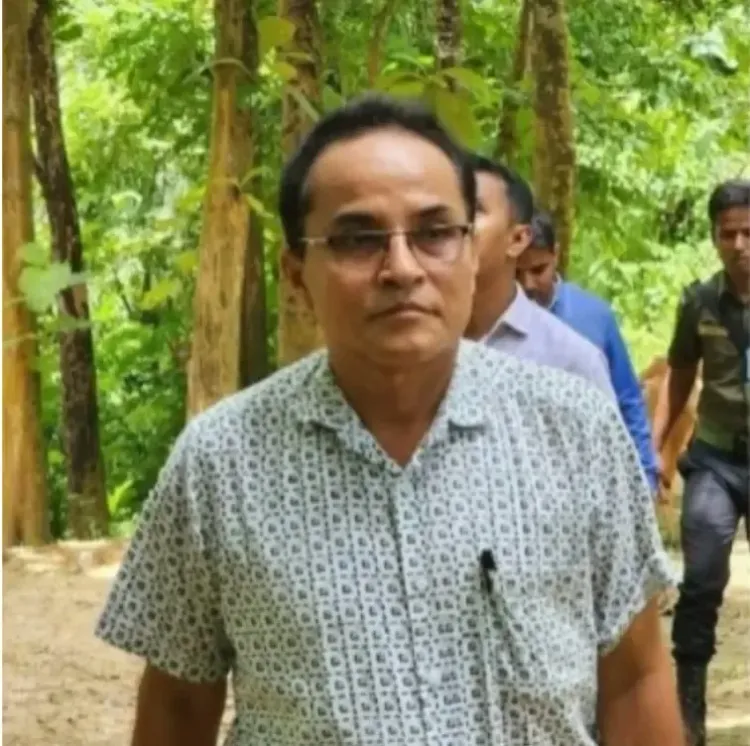
In their statement, the RRAG highlighted concerns about two independent Buddhist candidates—Pahel Chakma from the Rangamati parliamentary constituency and Dharmajyoti Chakma from the Khagrachari constituency located in the Chittagong Hill Tracts. These candidates, along with their campaign teams, have reportedly received death threats from the Parbatya Chattagram Jana Samhati Samiti (PCJSS).
The rights organization claims that the PCJSS is an armed group backed by the government, under the leadership of Jyotirindra Bodhipriyo Larma, also known as Santu Larma, who has served as the Chairman of the Chittagong Hill Tracts Regional Council.
The RRAG asserts that approximately 75 armed members of the PCJSS have been stationed in the Dudukchara area of Khagrachari since January 29 to intimidate indigenous voters and pressure them into endorsing candidates from national political parties such as the Bangladesh National Party, Jamaat-e-Islami, and the National Citizens Party.
Moreover, the rights group claims that despite a general diary filed by Pahel Chakma on January 17, the Bangladesh Police has thus far refused to accept a formal FIR, escalating fears among the candidates and their supporters.
In an additional incident mentioned by the RRAG, a forged withdrawal letter was allegedly submitted on January 20 by a person named Bidarshi Chakma to the Deputy Commissioner of Khagrachari on behalf of Dharmajyoti Chakma, with no subsequent action reportedly taken.
According to the RRAG, both candidates continue to face death threats as they have chosen not to withdraw from the elections.
The rights organization noted that while the PCJSS officially surrendered its arms following the 1997 Chittagong Hill Tracts Accord, it appears to have retained its armed wing.
It also accused Santu Larma of maintaining his position as Chairman of the Regional Council for nearly three decades without elections, enjoying privileges akin to those of a state minister.
The RRAG’s statement referenced previous incidents, such as the arrest of 13 alleged PCJSS members in Agartala on June 4 of the previous year, and a September 5, 2024 ruling by the Gauhati High Court in the National Investigation Agency versus Rohmingliana case, which classified the PCJSS as a terrorist organization during a significant arms seizure.
Director Suhas Chakma of the RRAG asserted that although the PCJSS is not participating in the elections, it has been threatening independent indigenous candidates to facilitate the success of national political parties.
Labeling this a grave breach of democratic principles, the RRAG urged international election observers to station monitors in Khagrachari and Rangamati districts, ensure the safety of the affected candidates, and engage with Bangladeshi authorities to avert further intimidation.
The rights group further called upon the Bangladesh government to ensure that PCJSS members are restricted to government barracks and adhere to human rights standards.
Point of View
It is crucial to highlight the challenges faced by indigenous candidates in Bangladesh's electoral landscape. The current threats and intimidation undermine the very essence of democracy, and we must advocate for the protection of all candidates, regardless of their background. The call for international intervention reflects a growing concern that must not be ignored.
NationPress
19 Sept 2026
Frequently Asked Questions
What is the current situation for Buddhist candidates in Bangladesh's elections?
Buddhist candidates are reportedly facing threats and intimidation from the Parbatya Chattagram Jana Samhati Samiti (PCJSS), prompting calls for international intervention.
Who is leading the Rights and Risks Analysis Group?
The Rights and Risks Analysis Group is directed by Suhas Chakma, who has been vocal about the threats faced by indigenous candidates.
When are the parliamentary elections scheduled?
The 13th general election in Bangladesh is scheduled for February 12.
What actions have been taken by local authorities regarding the threats?
Despite a general diary filed by one of the candidates, local police have yet to register a formal FIR, leaving candidates vulnerable.
What is the significance of international observers in this context?
International observers can help ensure fair electoral processes and protect candidates from intimidation and violence.