Iran defends UNGA participation as 'legal right' amid US visa curbs
Synopsis
Iran's foreign ministry has framed UNGA attendance not as a diplomatic courtesy but as a sovereign legal right — and it is pushing back against what it calls deliberate US obstruction via visa restrictions. With Trump set to make Iran's nuclear programme the centrepiece of his UN diplomacy, the 81st UNGA session could mark a defining moment for one of the world's most combustible geopolitical stand-offs.
Key Takeaways
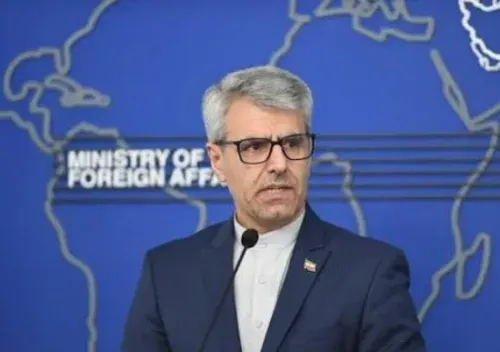
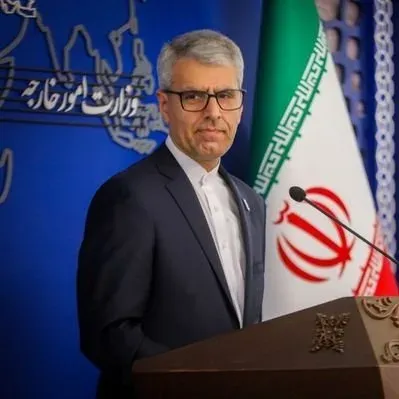
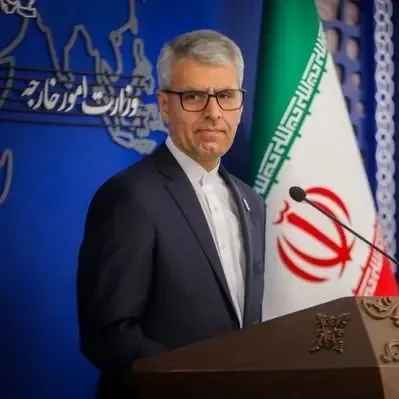
Iranian Foreign Ministry spokesman Esmaeil Baghaei declared on 20 September 2026 that Iran's UNGA participation is a 'legal right,' not a diplomatic favour.
Iran is one of the UN's 50 founding members , Baghaei stressed, rejecting what he called US 'obstructionism.' The US State Department confirmed it would issue visas to Iran's 'core delegation,' but noted the group is smaller than last year .
US President Donald Trump is set to address the UNGA on Tuesday , with Iran's nuclear ambitions at the centre of his agenda.
US Ambassador Mike Waltz said Trump's speech will stress that Iran must never obtain a nuclear weapon, echoing past UN Security Council resolutions.
Trump is also scheduled to meet Gulf Cooperation Council leaders in New York, with Iran a confirmed subject of discussion.
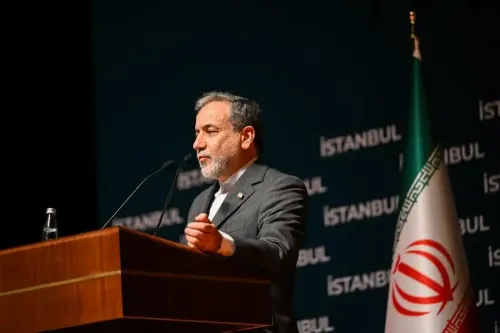
Iranian Foreign Ministry spokesman Esmaeil Baghaei on 20 September 2026 declared that Iran's attendance at the 81st session of the United Nations General Assembly (UNGA) in New York is a legal right — not a privilege to be granted or withheld — as tensions over the delegation's visa status and nuclear diplomacy dominated the pre-session discourse.
Iran's Firm Stand on UNGA Access
"Being present in New York holds absolutely no appeal for Iran's representatives. However, it is a stronghold that must not be abandoned. Iran's participation in the UNGA's session is a legal right, not a favour to be granted to us by someone. Iran is one of the UN's 50 founding members," Baghaei said in an interview with state-run IRIB TV.
"It is our duty as the Iranian nation's representatives to attend this major international event to make the world hear the Iranian people's rightfulness," he added, accusing 'the other side' of deploying every available tool to obstruct the Iranian delegation's participation.
Baghaei warned that such "obstructionism and negative propaganda" would never compel Tehran to abandon its legitimate right to attend and articulate its positions on the world stage.
US Grants Visas — but to a Smaller Delegation
The US State Department confirmed it would issue visas to Iran's "core delegation" for the UNGA, describing the move as consistent with American host-country obligations under the UN Headquarters Agreement. However, the department noted that "the delegation is smaller than last year," a detail that Iranian officials viewed as a form of indirect pressure.
The visa dispute underscores a longstanding friction: as host nation to UN Headquarters, the United States is legally bound to grant access to member-state delegations, yet critics argue Washington has repeatedly used visa processing as a diplomatic lever against adversaries.
Trump to Put Iran's Nuclear Programme at Centre of UN Diplomacy
US President Donald Trump is expected to address the UN General Assembly on Tuesday, with Iran's nuclear ambitions reportedly at the top of his diplomatic agenda. Trump is also scheduled to meet leaders of the Gulf Cooperation Council (GCC) in New York, where officials confirmed Iran would be a major subject of discussion.
US Ambassador to the UN Mike Waltz told reporters that Trump's speech would stress the importance of ensuring Iran never obtains a nuclear weapon — a demand, Waltz noted, that has also been reflected in repeated UN Security Council resolutions. The speech is expected to span diplomatic agreements, unresolved conflicts, and progress on Trump's 20-point Gaza peace plan.
When asked about possible direct US-Iran meetings on the sidelines, officials declined to confirm whether the president or secretary of state would hold talks with Iranian representatives.
Broader Context: Iran, the UN, and the Nuclear File
Iran's insistence on UNGA participation is consistent with a pattern of asserting multilateral standing even as bilateral relations with Washington remain deeply strained. Tehran has faced successive rounds of US sanctions, and the nuclear file has been a recurring flashpoint since the collapse of the 2015 Joint Comprehensive Plan of Action (JCPOA). Notably, each UNGA session in recent years has been accompanied by a visa row — making this year's dispute part of a recurring rather than exceptional pattern.
With Trump publicly reaffirming a maximalist position on Iran's nuclear programme and GCC leaders expected to coordinate on a unified response, the 81st UNGA session looks set to be a critical moment for the trajectory of Iran-US diplomacy in the months ahead.
Point of View
Iran positions itself as the multilateral rules-based order's defender against a superpower that bends host obligations. With Trump centring his UN week on the nuclear file and GCC partners in tow, the real question is whether any credible diplomatic off-ramp exists — or whether this UNGA becomes another performance of irreconcilable positions.
NationPress
20 Sept 2026
Frequently Asked Questions
Why is Iran insisting on its right to attend the UNGA?
Iran's Foreign Ministry says UNGA participation is a legal right guaranteed by international law, not a favour the United States can grant or deny. Spokesman Esmaeil Baghaei cited Iran's status as one of the UN's 50 founding members as the basis for this claim.
Did the US grant visas to the Iranian delegation?
Yes, the US State Department confirmed it would issue visas to Iran's 'core delegation' consistent with its host-country obligations. However, it noted the delegation is smaller than in the previous year, which Tehran viewed as a form of indirect pressure.
What will Trump say about Iran at the UNGA?
US President Donald Trump is expected to address the General Assembly on Tuesday, with Iran's nuclear ambitions reportedly at the top of his agenda. US Ambassador Mike Waltz said the speech will emphasise that Iran must never be permitted to obtain a nuclear weapon.
Will the US and Iran hold direct talks at the UNGA?
Officials have not confirmed any direct US-Iran meeting. When asked, US representatives declined to get ahead of the president's or secretary of state's final schedule, leaving the possibility open but unconfirmed.
What is the broader context of Iran-US tensions at the UN?
Relations between Tehran and Washington have been severely strained since the collapse of the 2015 nuclear deal (JCPOA). Annual visa disputes over the Iranian delegation have become a recurring feature of UNGA sessions, and Iran's nuclear programme remains a central point of contention in multilateral forums.