Iran reiterates offer to mediate Saudi Arabia-Yemen dialogue amid Riyadh airport attack
Synopsis
Iran has again offered to broker Saudi-Yemeni dialogue — but the backdrop is grimmer than before. A Houthi strike on Riyadh's King Khalid International Airport killed 12 people and injured 309 on Saturday, the deadliest single incident yet at a Saudi civilian facility. Tehran's mediation pitch, backed by a foreign-ministerial phone call to Riyadh, lands at a moment when the window for diplomacy is narrowing fast.
Key Takeaways
Iran's Foreign Ministry spokesman Esmaeil Baghaei reiterated Tehran's readiness to facilitate Saudi-Yemen dialogue on 12 October 2026 .
Foreign Minister Seyed Abbas Araghchi made a similar offer directly to his Saudi counterpart in a phone call on 11 October .
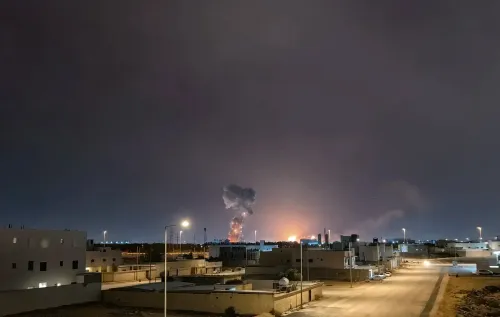
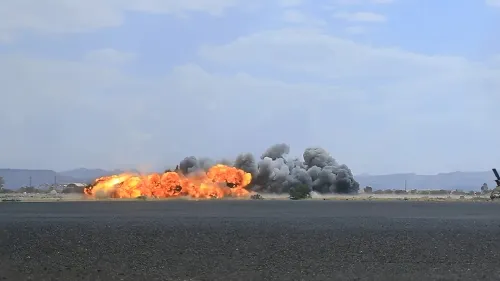
A Houthi strike on King Khalid International Airport in Riyadh on Saturday killed 12 people — four Saudis and eight foreign nationals — and injured 309 others .
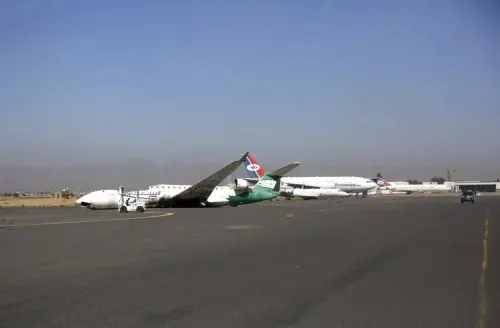
Airport operations were temporarily suspended for damage assessments and safety checks.
The Houthi group said it was willing to keep airports, seaports, and humanitarian facilities out of military targeting if Saudi Arabia reciprocated.
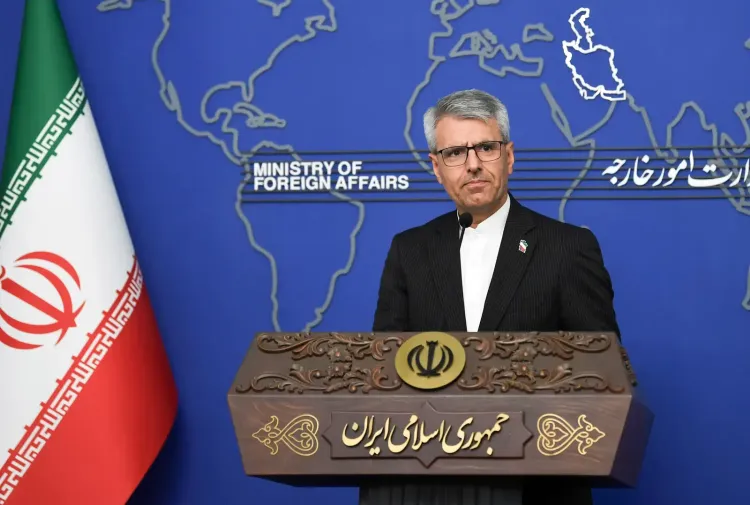
Iran's Foreign Ministry spokesman Esmaeil Baghaei on Monday, 12 October reiterated Tehran's readiness to deploy its diplomatic good offices to facilitate dialogue between Saudi Arabia and Yemen, as the Arabian Peninsula edges toward a dangerous new phase of escalation. The statement came just a day after Iran's Foreign Minister Seyed Abbas Araghchi conveyed a similar offer in a phone call with his Saudi counterpart.
Iran's Diplomatic Position
Speaking at a weekly press conference in Tehran, Baghaei expressed grave concern over the deteriorating situation on the Arabian Peninsula. 'We have repeatedly expressed readiness to use our good offices to facilitate dialogue between the (warring) parties,' Baghaei said, stressing that the conflict must be resolved through engagement rather than military force. He added that Iran does not approve of the continuation of hostilities between the two sides.
The remarks followed Foreign Minister Araghchi's phone conversation with the Saudi foreign minister on Sunday, 11 October, during which Araghchi reportedly offered any form of assistance that could help initiate a dialogue process between Riyadh and Sanaa.
Backdrop: Escalation on the Arabian Peninsula
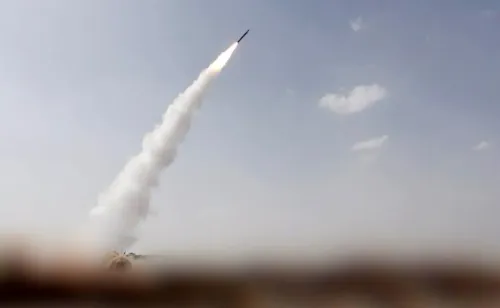
Iran's diplomatic overture comes amid a sharp and accelerating spiral of strikes between the Saudi-led coalition and Yemen's Houthi group. Saudi air operations against Houthi-held areas have intensified, while the Houthis have responded with repeated missile and drone attacks on targets deep inside Saudi Arabia, including airports and critical energy infrastructure.
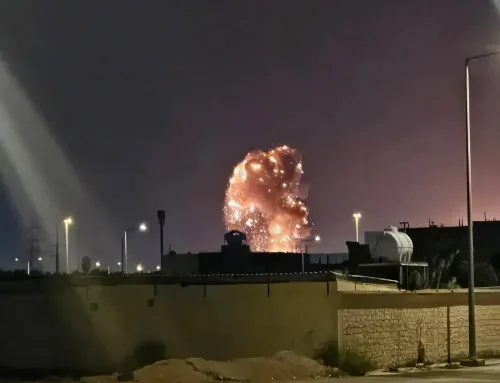
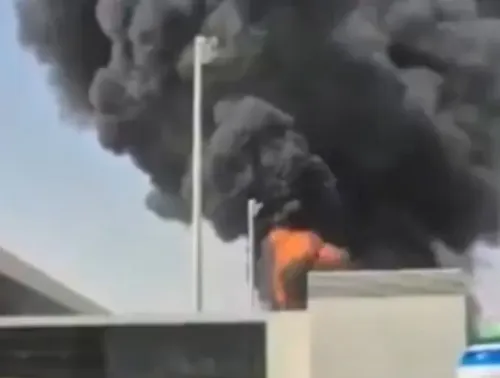
The most devastating recent strike targeted King Khalid International Airport in the Saudi capital Riyadh on Saturday afternoon. According to the Saudi General Authority of Civil Aviation, the attack killed 12 people and injured 309 others. Among the dead were four Saudi citizens and eight foreign nationals — two Bangladeshis, and one each from the United States, Egypt, Jordan, Syria, Palestine, and Sudan. The injured are receiving treatment across several hospitals, with some reported to be in serious condition.
Airport operations were temporarily suspended following the strike, pending damage assessments and safety checks, according to the aviation authority.
Houthi Response and Humanitarian Proposal
Following the Saturday attack, the Houthi group issued a statement indicating it was prepared for reciprocal arrangements with Saudi Arabia to keep airports, seaports, and other facilities with humanitarian functions outside the military confrontation. The proposal signals a potential, if fragile, opening for de-escalation talks — one that Iran appears eager to help broker.
Why This Matters
Notably, Iran's repeated offers to mediate reflect its complex role in the conflict: Tehran has long been accused by Riyadh of arming and backing the Houthis, a charge Iran has historically denied or downplayed. Critics argue that Iran's mediation offer must therefore be viewed through the lens of its strategic interests in the region, not purely as neutral diplomacy. This is not the first time Tehran has positioned itself as a potential interlocutor — similar offers were floated during earlier rounds of ceasefire negotiations.
The killing of 12 people, including nationals from multiple countries, at a major international airport raises the human cost of the conflict to a new public threshold and is likely to increase international pressure for a negotiated pause. With forward momentum on both military tracks, the window for diplomacy — including Tehran's offer — may be narrow.
Point of View
Making the offer more useful as a geopolitical signal than a practical peace mechanism. The Riyadh airport attack — killing nationals from eight countries — has internationalised the human cost of the conflict in a way earlier strikes did not, and may force reluctant regional players to the table faster than either side wants. The real question is whether the Houthi's conditional offer to spare humanitarian infrastructure represents a genuine off-ramp, or a tactical pause ahead of the next escalatory cycle.
NationPress
12 Oct 2026
Frequently Asked Questions
Why is Iran offering to mediate between Saudi Arabia and Yemen?
Iran says it does not approve of the continuation of hostilities on the Arabian Peninsula and has 'repeatedly expressed readiness' to use its diplomatic good offices to facilitate dialogue between the warring parties. The offer was reiterated by Foreign Ministry spokesman Esmaeil Baghaei on 12 October, and separately conveyed by Foreign Minister Seyed Abbas Araghchi to his Saudi counterpart the previous day.
What happened at King Khalid International Airport in Riyadh?
A strike attributed to Yemen's Houthi group hit King Khalid International Airport in the Saudi capital Riyadh on Saturday afternoon, killing 12 people and injuring 309 others, according to the Saudi General Authority of Civil Aviation. Airport operations were temporarily suspended for damage assessments and safety checks.
Who were the victims of the Riyadh airport attack?
The 12 fatalities included four Saudi citizens and eight foreign nationals — two Bangladeshis and one each from the United States, Egypt, Jordan, Syria, Palestine, and Sudan, according to the Saudi aviation authority. Some of the 309 injured are in serious condition and are receiving hospital treatment.
What did the Houthis say after the Riyadh airport attack?
Following the Saturday strike, the Houthi group said it was ready for reciprocal arrangements with Saudi Arabia to keep airports, seaports, and other facilities with humanitarian functions outside the military confrontation. The proposal was seen as a conditional de-escalation signal.
How does Iran's role as a mediator sit with its support for the Houthis?
Critics and analysts argue that Iran's mediation offer is complicated by longstanding accusations that Tehran arms and backs the Houthi movement — charges Iran has historically denied or downplayed. This dual role makes Saudi Arabia unlikely to accept Iranian facilitation without independent third-party oversight, according to regional observers.