Iranian plane with Houthi delegation diverted to Hodeidah after Sanaa airport strikes
Synopsis
An Iranian passenger jet carrying senior Houthi officials was forced to divert from Sanaa to Hodeidah after Yemen's Armed Forces struck the airport runway — then Saudi warplanes allegedly targeted Hodeidah too. Yemen has now shut all airports indefinitely, and the Houthis are warning of a 'new phase' against Saudi Arabia. A dispute over one flight has cracked open a much bigger confrontation.
Key Takeaways
A Mahan Air aircraft carrying a senior Houthi delegation was diverted from Sanaa International Airport to Hodeidah on 13 July after airstrikes hit the runway.
Yemen's Armed Forces claimed responsibility for the Sanaa strikes; the Houthis accused Saudi Arabia of also targeting Hodeidah airport .
The delegation had been returning from Tehran , where they attended funeral ceremonies for Iran's late Supreme Leader Ali Khamenei .
Yemen's internationally recognised government ordered all airports shut and civilian flights suspended until further notice.
Houthi military spokesperson Yahya Sarea warned the attack 'will not go unanswered'; the political bureau called it the start of a 'new phase' against Saudi Arabia .
Tensions had been building for over a week following allegations that a prior Iranian flight carried military personnel into Sanaa.
A Mahan Air passenger aircraft carrying a senior Houthi delegation was forced to divert to the Red Sea port city of Hodeidah on Monday, 13 July, after airstrikes attributed to Yemen's internationally recognised Armed Forces struck the runway at Sanaa International Airport, preventing the plane from landing in the Houthi-held capital. The incident marks a sharp escalation in the ongoing conflict between Yemen's warring factions over Iranian aircraft access to Yemeni airspace.
How the diversion unfolded
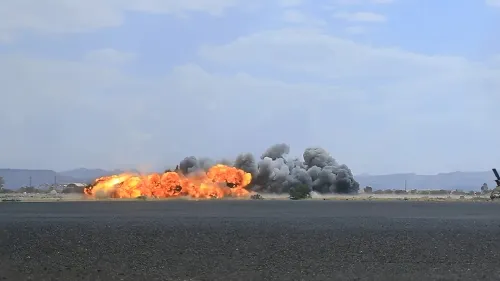
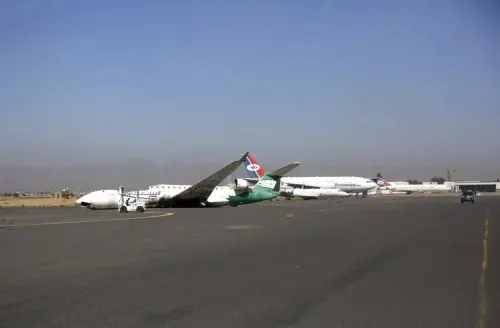
The Iranian aircraft had been carrying Houthi officials returning from Tehran, where they had attended the funeral ceremonies of Iran's late Supreme Leader Ali Khamenei. When the plane attempted to land at Sanaa International Airport, the Yemeni Armed Forces claimed responsibility for striking the runway, stating the action was taken after the Houthi group rejected government proposals that would have allowed the delegation to return aboard a non-Iranian aircraft under government supervision.
A military commander with the Houthi group confirmed the plane subsequently landed in Hodeidah, a western port city under Houthi control. The same source claimed that Saudi warplanes also launched strikes on Hodeidah airport in an attempt to prevent the aircraft from landing there as well.
Government's position and airport closure
Yemen's Defence Minister Taher al-Aqili had warned earlier on Monday that the armed forces would intercept any 'hostile aircraft' violating Yemen's airspace. He stated that the government had exhausted diplomatic efforts to persuade both the Houthis and Iran to cease what he described as 'repeated violations' of the country's sovereignty.
Following the strikes, Yemen's internationally recognised government ordered the closure of all airports across the country and suspended all civilian flight operations until further notice, according to reports.
Houthi response and Saudi accusation
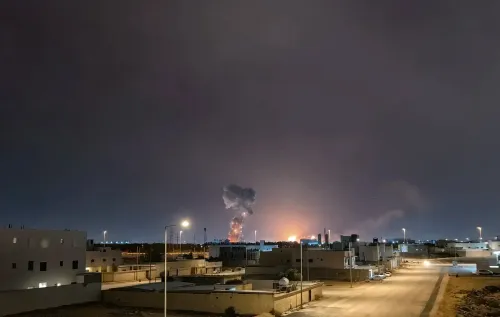
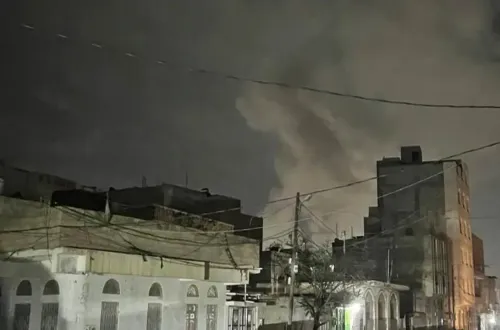
The Houthi group characterised the strikes as a major escalation, accusing Saudi Arabia — a principal ally of Yemen's government — of carrying out the attacks on Sanaa airport. Houthi military spokesperson Yahya Sarea warned the strike 'will not go unanswered,' while the group's political bureau declared it marked the beginning of a 'new phase' in confronting Saudi Arabia. Local residents reported hearing multiple explosions in and around the airport and observed plumes of smoke rising from the area.
Background: A week of mounting tensions
The diversion did not occur in isolation. The latest escalation follows more than a week of intensifying tensions between Yemen's warring sides over direct flights between Tehran and Sanaa. Last week, Yemen's Presidential Leadership Council called for an international investigation into a previous Iranian aircraft that had landed in Sanaa, alleging it had transported Iranian military personnel, drone and missile specialists, and Yemeni trainees under the guise of a civilian flight. The Houthis rejected those allegations, insisting the flight was entirely civilian in nature.
With all Yemeni airports now closed and both sides trading accusations, the standoff over Iranian flight access risks deepening into a broader confrontation — one that could further complicate already fragile ceasefire dynamics in the country.
Point of View
And the government's refusal to allow an Iranian aircraft to land in Sanaa reflects a deeper contest over whether Iran retains unfettered logistical access to Houthi-controlled territory.
NationPress
12 Oct 2026
Frequently Asked Questions
Why was the Iranian plane diverted from Sanaa to Hodeidah?
Yemen's Armed Forces struck the runway at Sanaa International Airport on 13 July to prevent the Mahan Air aircraft from landing, after the Houthi group rejected a government proposal for the delegation to return on a non-Iranian plane under government supervision. The aircraft then diverted to Houthi-controlled Hodeidah on the Red Sea coast.
Who was on board the Iranian aircraft?
The plane was carrying a senior Houthi delegation that had travelled to Iran to attend funeral ceremonies for Iran's late Supreme Leader Ali Khamenei. The delegation's composition beyond that has not been officially detailed.
What did Yemen's government do after the airstrikes?
Yemen's internationally recognised government ordered the closure of all airports across the country and suspended civilian flight operations until further notice following the strikes on Sanaa airport.
How have the Houthis responded to the strikes?
The Houthi group described the strikes as a major escalation and accused Saudi Arabia of carrying out the attack. Military spokesperson Yahya Sarea warned the strike 'will not go unanswered,' and the political bureau declared it marked the beginning of a 'new phase' in confronting Saudi Arabia.
What is the background to the standoff over Iranian flights to Sanaa?
Tensions have been building for over a week. Yemen's Presidential Leadership Council last week called for an international investigation into a previous Iranian aircraft that landed in Sanaa, alleging it carried Iranian military personnel and weapons specialists under civilian cover. The Houthis denied those allegations, insisting the flight was civilian.