Has ISI's New Strategy Involved Setting Up Foreign 'Desks' for Covert Operations?
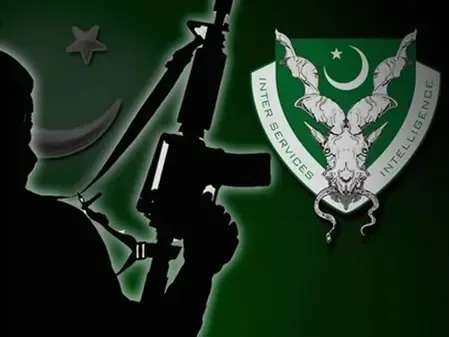
Synopsis
The ISI is expanding its covert operations by establishing foreign desks across various countries, including Russia and Bangladesh. This strategy aims to create modules for intelligence gathering and infiltration, posing serious implications for national security.
Key Takeaways
ISI is expanding its covert operations through foreign desks.
The desks aim to gather intelligence and infiltrate local agencies.
Countries targeted include Russia , Bangladesh , Myanmar , Nepal , and Sri Lanka .
There are implications for India's national security.
Collaboration with Turkey enhances ISI's operational capabilities.
New Delhi, Feb 16 (NationPress) The establishment of desks in various nations for executing covert activities appears to be the latest tactic employed by the ISI. Reports indicate that in addition to its pre-existing operations in numerous countries, the Pakistani intelligence agency is creating its own desks to facilitate covert maneuvers.
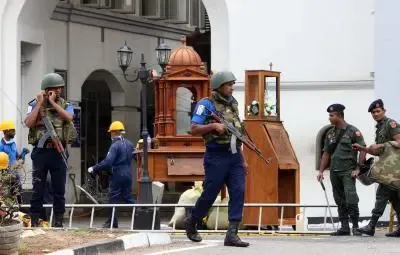
These desks echo the model the ISI introduced in Sri Lanka 14 years ago.
The initial desk was aimed at establishing modules in South India. Although the National Investigation Agency (NIA) disrupted that effort, the ISI continues its covert activities, according to officials.
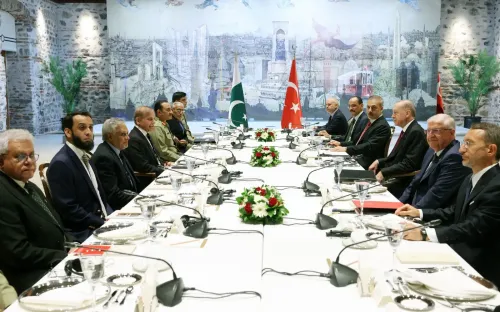
For the establishment of these desks, the ISI has enlisted the support of Turkey’s National Intelligence Organisation (NIO). Recently, Turkey assisted in setting up a similar desk in Bangladesh, known as the ISI’s Dhaka Desk.
Currently, the ISI is working on the creation of the Moscow Desk, which is intended to develop modules in Russia. This effort aims to conduct covert operations targeting the country, given its status as an ally of India.
Plans are also underway for desks in Myanmar, Nepal, and Sri Lanka. There are ongoing efforts to revive the Sri Lanka desk as the ISI seeks to focus on southern India.
The southern region is currently influenced by splinter factions of Al Qaeda and the Islamic State, which primarily operate in the online domain.
The Sri Lanka desk is crucial for the ISI as it views this as a chance to strengthen its network in southern India, especially in light of the vacuum left by the ban on the Popular Front of India (PFI).
To manage the establishment of these ISI desks, Brigadier Muhammad Asif Khan and two other senior officers from the Pakistani army have been appointed.
Officials state that the desk’s functions extend beyond merely creating modules and executing terror attacks. It will also involve intelligence-gathering missions to obtain sensitive information from the host country.
Moreover, members of these desks are tasked with infiltrating the intelligence agencies of the host nation, according to officials.
Another official remarked on the success of the Dhaka desk and noted that it remains to be seen how operations will evolve with the new democratically elected government.
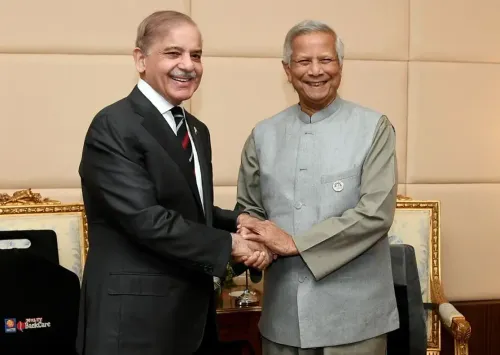
The Bangladesh Nationalist Party (BNP) achieved a significant victory in the recent elections, with Tarique Rahman set to take office as Prime Minister. This marks the first election since the ousting of Sheikh Hasina in August 2024 due to unrest. The Dhaka desk has successfully established several modules and has trained members of Harkat-ul-Jihadi Islami (HuJI) and Jamaat-ul-Mujahideen Bangladesh (JuMB) to infiltrate India and launch attacks in the northeastern states and West Bengal. The ISI found it relatively uncomplicated to operate this desk, as the interim government led by Muhammad Yunus has been accommodating towards Pakistan.
An official from the Intelligence Bureau stated that both Turkey and Pakistan are pursuing this mission to penetrate various countries more effectively. While establishing modules poses one challenge, the more alarming aspect is training members to infiltrate intelligence agencies. This indicates that both nations are orchestrating a significant strategy to gain influence over several countries and conduct covert operations.
Point of View
The emergence of ISI's foreign desks raises serious concerns for India. As a nation, we must remain vigilant against any attempts to undermine our security through covert operations. The collaboration between Pakistan and Turkey further complicates the geopolitical landscape, necessitating a robust response from our intelligence agencies.
NationPress
1 Oct 2026
Frequently Asked Questions
What is the purpose of ISI's foreign desks?
The ISI's foreign desks are established to conduct covert operations, gather intelligence, and infiltrate local agencies in various countries.
Which countries are affected by ISI's new strategy?
Countries such as Russia, Bangladesh, Myanmar, Nepal, and Sri Lanka are affected by the ISI's strategy.
How does this impact India's national security?
The establishment of ISI foreign desks poses a significant threat to India's national security by potentially facilitating terrorist activities and intelligence infiltration.