Lakshadweep, Andaman & Nicobar to lead India's tuna, seaweed fisheries push
Synopsis
India is betting on its island territories to unlock the next phase of fisheries growth. With ₹393 crore earmarked for Lakshadweep and Andaman & Nicobar — which together hold 40% of India's EEZ — and seafood exports already at ₹73,890 crore in FY26, the pivot to tuna, seaweed and ornamental fisheries is the most targeted deep-sea push the Centre has made yet.
Key Takeaways
Lakshadweep and the Andaman & Nicobar Islands have been designated the anchors of India's tuna, seaweed and ornamental fisheries expansion strategy.
The Centre has committed ₹39,272 crore to the fisheries sector since 2015 ; Andaman & Nicobar gets ₹218 crore and Lakshadweep gets ₹175 crore .
India's EEZ carries an estimated marine fisheries potential of 58.6 lakh MT , supporting livelihoods for nearly 50 lakh fishers .
Seafood exports reached approximately ₹73,890 crore in FY26 , ranking India among the world's top fisheries producers.
The two island groups together account for nearly 40 per cent of India's Exclusive Economic Zone.
The Union Budget 2025-26 outlined a framework for sustainable EEZ and High Seas fisheries with special emphasis on both island territories.
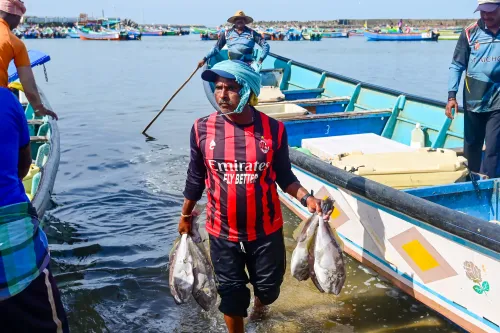
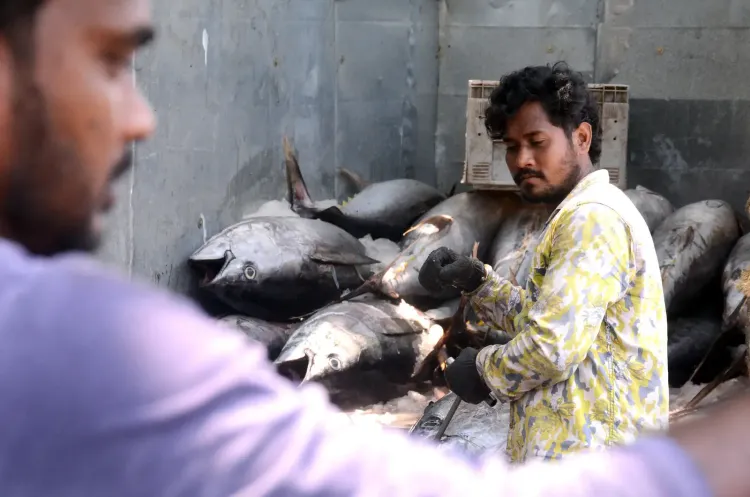
Lakshadweep and the Andaman & Nicobar Islands have been placed at the centre of India's strategy to expand tuna, seaweed, and ornamental fisheries, backed by dedicated investment allocations and infrastructure development, according to an official statement issued on Tuesday, 10 November 2026 by the Ministry of Fisheries, Animal Husbandry & Dairying. The two island territories, which together account for nearly 40 per cent of India's Exclusive Economic Zone (EEZ), are being positioned as the country's primary gateway to underutilised deep-sea and oceanic fishing grounds.
Investment Commitments and Allocations
The central government has committed ₹39,272 crore to the fisheries sector since 2015 through key schemes and programmes, according to the ministry statement. Within this broader outlay, Andaman & Nicobar Islands have been allocated ₹218 crore, while Lakshadweep has been earmarked ₹175 crore. Substantial investments have also been envisaged for both territories under the Pradhan Mantri Matsya Sampada Yojana (PMMSY), the flagship fisheries development scheme.
The Union Budget 2025-26 further reinforced this direction, outlining an enabling framework for the sustainable harnessing of fisheries resources from both the EEZ and the High Seas, with explicit emphasis on the two island groups. This marks a clear recognition of their strategic value in accessing fish stocks that remain largely untapped within Indian waters.
India's Marine Fisheries Potential
India's EEZ holds an estimated marine fisheries potential of 58.6 lakh MT, a resource base that sustains the livelihoods of nearly 50 lakh fishers across the country. The sector contributes meaningfully to food security, nutrition, employment, and export earnings. Seafood exports were valued at around ₹73,890 crore in FY26, underscoring the sector's growing weight in both the national economy and global seafood trade.
India already ranks among the leading fisheries and aquaculture producing nations globally. The ministry's statement described the sector as evolving from a production-focused activity into a 'dynamic, technology-driven and value-oriented pillar of the national economy.'
Why the Islands Are Strategic
Lakshadweep and the Andaman & Nicobar Islands extend India's maritime presence across the Arabian Sea and the Bay of Bengal respectively, providing access to rich oceanic fishing grounds and major tuna migration routes. Lakshadweep's lagoon systems, coral reefs, and surrounding deep-sea waters offer particularly favourable conditions for tuna fisheries, seaweed cultivation, and reef-based livelihoods, according to the statement.
Notably, the emphasis on ornamental fisheries — a high-value, export-oriented segment — alongside tuna and seaweed signals a deliberate pivot toward diversification and value addition, rather than a simple expansion of capture volumes. This aligns with the broader 'Blue Economy' policy framework that the Centre has been building incrementally since 2019.
What Comes Next
The focus on island-led fisheries development is expected to accelerate infrastructure upgrades, cold-chain logistics, and processing capacity in both territories. Industry stakeholders and coastal fishing communities in these regions stand to benefit from improved market access and livelihood support. The ministry's framing around sustainability and scientific management suggests future expansions will be calibrated against ecological carrying capacity, though independent assessments of that balance remain awaited.
Point of View
272 crore headline figure, which raises the question of whether island-specific infrastructure will receive genuinely priority-level funding or remain symbolic. India's seafood export earnings have grown impressively, but the deep-sea and oceanic segments — where these islands are most relevant — remain underdeveloped compared to coastal and inland aquaculture. The inclusion of ornamental fisheries alongside tuna and seaweed is the most commercially interesting signal in the statement: it points toward high-value, low-volume niches that could benefit island communities disproportionately. The harder test will be whether sustainability commitments translate into enforceable catch limits and marine protected area management, or simply serve as policy language that enables expansion without ecological guardrails.
NationPress
10 Nov 2026
Frequently Asked Questions
Why are Lakshadweep and Andaman & Nicobar central to India's fisheries strategy?
The two island groups together account for nearly 40 per cent of India's Exclusive Economic Zone and provide access to major tuna migration routes, deep-sea fishing grounds, and rich reef ecosystems across the Arabian Sea and Bay of Bengal. Their geographic position makes them the most direct gateway to underutilised marine fish stocks within Indian waters.
How much has the government invested in fisheries since 2015?
The central government has committed ₹39,272 crore to the fisheries sector since 2015 through key schemes and programmes. Within this, Andaman & Nicobar Islands have been allocated ₹218 crore and Lakshadweep ₹175 crore, with further investments envisaged under the Pradhan Mantri Matsya Sampada Yojana.
What is India's marine fisheries potential and how large is the sector?
India's EEZ holds an estimated marine fisheries potential of 58.6 lakh MT, sustaining nearly 50 lakh fishers. Seafood exports were valued at around ₹73,890 crore in FY26, and India ranks among the world's leading fisheries and aquaculture producing nations.
What types of fisheries are being developed in the island territories?
The focus is on three segments: tuna fisheries, seaweed cultivation, and ornamental fisheries. Lakshadweep's lagoon systems, coral reefs, and deep-sea waters are particularly suited to all three, while both island groups offer access to oceanic tuna grounds.
How does the Union Budget 2025-26 support island fisheries development?
The Union Budget 2025-26 outlined an enabling framework for the sustainable harnessing of fisheries resources from the EEZ and the High Seas, with special emphasis on Lakshadweep and the Andaman & Nicobar Islands. It places sustainability and scientific management at the centre of the expansion plan.