Lakshadweep targets 50,000 tonnes tuna output in five-year blue economy plan
Synopsis
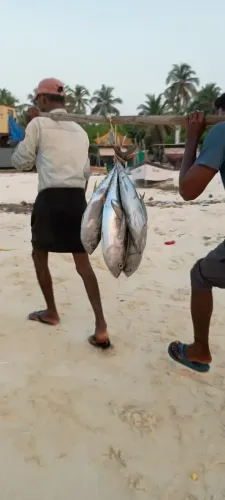
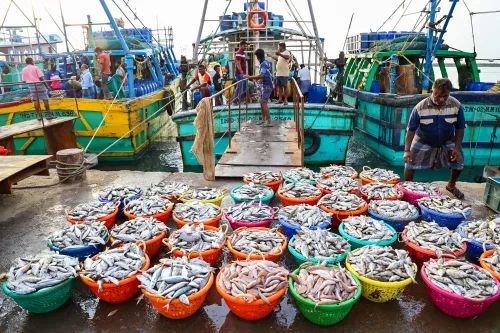
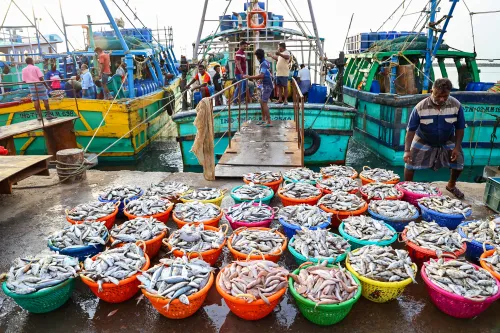
Lakshadweep has set a target to more than double its tuna output to 50,000 tonnes in five years — a plan that pairs deep-sea vessel inductions and seaweed farming with cold chain investment and cooperative strengthening. It is one of the most comprehensive fisheries blueprints ever drawn up for the archipelago, and its execution under PMMSY will be a key test of India's blue economy ambitions.
Key Takeaways
Lakshadweep aims to raise annual tuna and tuna-like fish production to 50,000 tonnes within five years, more than doubling current output.
The perspective plan was prepared by ICAR-CMFRI and finalised at a stakeholder consultation in Kochi on 7 July .
The plan proposes inducting 50 new deep-sea fishing vessels below 24 metres and developing seaweed cultivation over 5 sq. km .
Infrastructure proposals include 50 value addition units , two mother vessels , cold storage facilities, and boat-building yards.
The archipelago holds 4,200 sq. km of lagoon area , 20,000 sq. km of territorial waters , and over 300 ornamental reef fish species — resources described as currently underutilised.
Implementation will be funded under the Pradhan Mantri Matsya Sampada Yojana (PMMSY) .
Lakshadweep has finalised an ambitious five-year perspective plan to more than double its annual tuna and tuna-like fish production to 50,000 tonnes, positioning the archipelago as a significant node in India's blue economy. The roadmap, prepared by the ICAR-Central Marine Fisheries Research Institute (CMFRI) as the nodal agency, was adopted at a stakeholder consultation held in Kochi on 7 July.
What the Plan Proposes
The strategy covers the full fisheries value chain — from marine capture and mariculture to post-harvest management, value addition, marketing, and infrastructure. It will be implemented under the Pradhan Mantri Matsya Sampada Yojana (PMMSY), the Centre's flagship fisheries development scheme.
Among the headline proposals is the induction of 50 new deep-sea fishing vessels below 24 metres to expand offshore tuna operations. The plan also envisages seaweed cultivation over five square kilometres, the establishment of 10 medium-scale ornamental fish rearing units, and the promotion of recreational and sport fishing to complement the islands' expanding tourism sector.
Infrastructure and Value Addition
The plan calls for major capital investments in fisheries infrastructure, including new boat-building yards, cold storage facilities, 50 value addition units, two mother vessels, upgraded cold chain systems, and marine mechanical workshops. These are intended to modernise the fishing fleet and reduce post-harvest losses — a persistent drag on the sector's profitability.
Institutional strengthening is also a priority. The roadmap proposes support for fishermen's cooperative societies, fish farmer producer organisations, women's enterprises, and community-based organisations, with the explicit goal of generating sustainable livelihoods for island fishing communities.
The Marine Resource Base
The plan draws on Lakshadweep's considerable natural endowment: approximately 4,200 sq. km of lagoon area, 20,000 sq. km of territorial waters, and more than 300 species of ornamental reef fish. According to the plan document, these resources remain significantly underutilised, offering scope for diversification into seaweed farming and ornamental fisheries alongside the core tuna sector.
What Officials Said
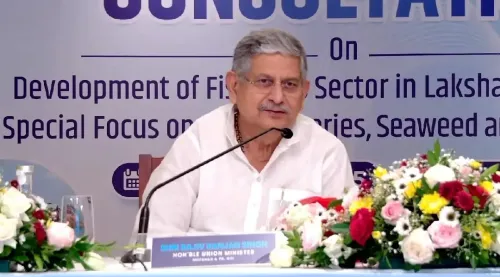
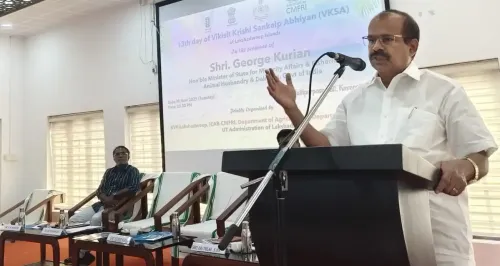
Lakshadweep Fisheries Secretary Raj Tilak, who inaugurated the stakeholder consultation, said enhancing fish production would be the administration's top priority over the next five years. CMFRI Director Dr Grinson George said the islands' rich marine resources remain underutilised and assured that the institute would provide scientific and technical support for expanding mariculture, seaweed cultivation, ornamental fish breeding, and other innovative fisheries-based livelihood initiatives.
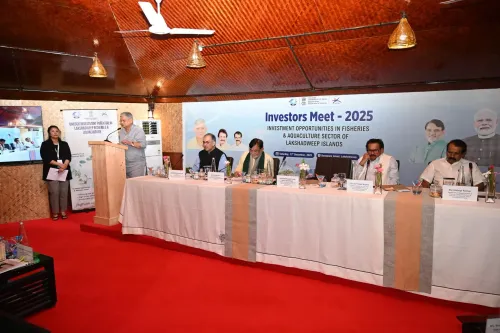
The consultation was attended by representatives from the Union Fisheries Department, the National Fisheries Development Board, the MPEDA, the Central Institute of Fisheries Technology, and other fisheries agencies, alongside fishermen, entrepreneurs, and cooperative society leaders from the islands.
What Comes Next
With the perspective plan now finalised, attention shifts to implementation timelines and fund allocation under PMMSY. The success of the strategy will depend on how quickly deep-sea vessel inductions and cold chain investments can be operationalised — and whether institutional support reaches small-scale fishers and self-help groups as intended.
Point of View
Territorial waters, and reef biodiversity are genuinely underutilised. But the gap between perspective plans and on-ground delivery in remote island territories is well-documented. The critical variables are vessel induction timelines, cold chain operationalisation, and whether cooperative societies receive the institutional support promised rather than being listed as beneficiaries in a document. PMMSY has delivered unevenly across states; for an archipelago with thin administrative bandwidth, execution risk is higher than average. The blue economy framing is politically convenient, but the real metric is whether island fishers' incomes move.
NationPress
6 Oct 2026
Frequently Asked Questions
What is Lakshadweep's five-year tuna production plan?
It is a comprehensive fisheries perspective plan prepared by ICAR-CMFRI that targets raising annual tuna and tuna-like fish production in Lakshadweep to 50,000 tonnes — more than double the current level — over five years. The plan covers deep-sea fishing, mariculture, seaweed farming, infrastructure, and livelihood support for island communities.
Who prepared the Lakshadweep fisheries perspective plan?
The plan was prepared by the ICAR-Central Marine Fisheries Research Institute (CMFRI) as the nodal agency and was finalised at a stakeholder consultation held in Kochi on 7 July.
How will the plan be funded?
The strategy is to be implemented under the Pradhan Mantri Matsya Sampada Yojana (PMMSY) , the Centre's flagship scheme for fisheries development and marine infrastructure.
What infrastructure investments does the plan include?
The plan proposes 50 new deep-sea fishing vessels, 50 value addition units, two mother vessels, cold storage facilities, boat-building yards, upgraded cold chain systems, and marine mechanical workshops to modernise the fleet and cut post-harvest losses.
Why is Lakshadweep considered significant for India's blue economy?
The archipelago holds around 4,200 sq. km of lagoon area, 20,000 sq. km of territorial waters, and over 300 species of ornamental reef fish — resources that officials and CMFRI describe as substantially underutilised, offering large potential for tuna fishing, mariculture, seaweed cultivation, and ornamental fisheries.