J&K Assembly erupts over power tariff hike, NHM workers' grievances on Day 1
Synopsis
The J&K Assembly's autumn session opened with BJP legislators storming the House over power tariff hikes, NHM workers' grievances and daily-wage regularisation — while the assembly quietly made history by breaking a long-standing tradition, proceeding to government business on the very first day after obituary references, a reform championed by Chief Minister Omar Abdullah.
Key Takeaways
The J&K Legislative Assembly autumn session opened in Srinagar on 21 September 2026 with BJP and NC legislators trading slogans.
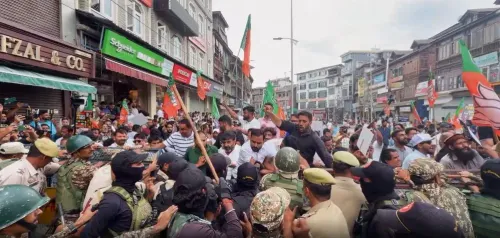
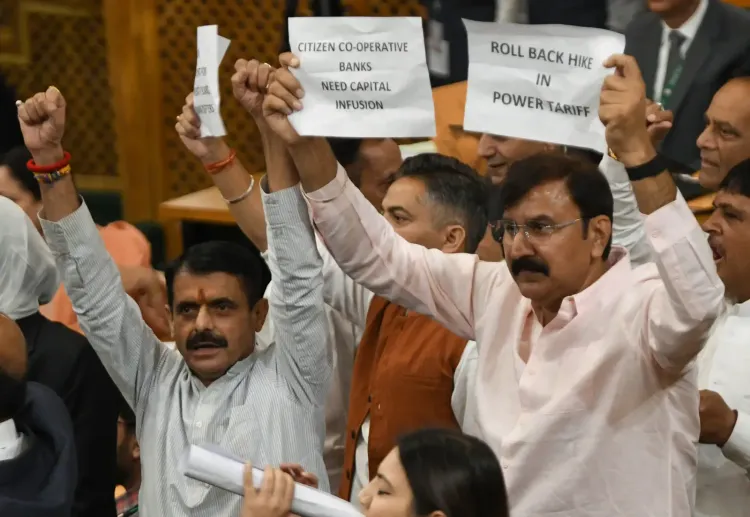
BJP MLAs carried placards demanding rollback of the power tariff hike , justice for NHM employees , and regularisation of daily-wage workers .
Speaker Abdul Rahim Rather directed that protest conduct be excluded from official proceedings.
The House observed a two-minute silence for former legislators Sheikh Mustafa Kamal , Dharam Paul , and Ghulam Hassan Khan — with no individual tribute speeches.
In a break with tradition, the Assembly proceeded to government business on Day 1 after obituary references, implementing a reform proposed by Chief Minister Omar Abdullah .
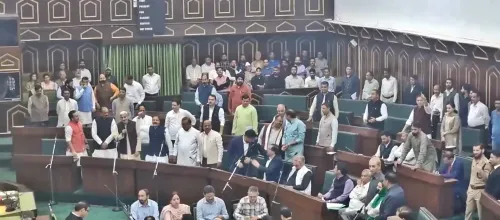
The autumn session of the Jammu and Kashmir Legislative Assembly opened on a combative note in Srinagar on Monday, 21 September 2026, as legislators from the ruling National Conference (NC) and the Opposition Bharatiya Janata Party (BJP) traded slogans, with the BJP foregrounding demands over National Health Mission (NHM) employees, a rollback of the increased power tariff, and regularisation of daily-wage workers.
BJP's Protest Inside the House
BJP legislators entered the chamber carrying placards and raising slogans, demanding justice for NHM employees, withdrawal of the revised electricity tariff structure, and regularisation of daily wagers. The party also flagged concerns over the outsourcing of government jobs and sought the government's direct intervention on workers' pending grievances.
The protest set the tone for a fractious opening day, signalling that employment, power pricing, and contract staffing are likely to remain flashpoints throughout the session. NC legislators responded with counter-slogans, adding to what observers described as unusually noisy scenes inside the House for an opening sitting.
Speaker Intervenes, Orders Proceedings Kept Clean
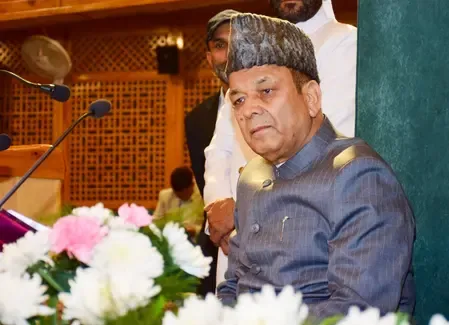
Speaker Abdul Rahim Rather intervened during the disruptions and directed that protest-related conduct should form no part of the official record and should not be reported as part of the proceedings. The directive effectively kept the sloganeering out of the formal Hansard, though its occurrence was widely witnessed.
Assembly Breaks with Tradition on Obituary References
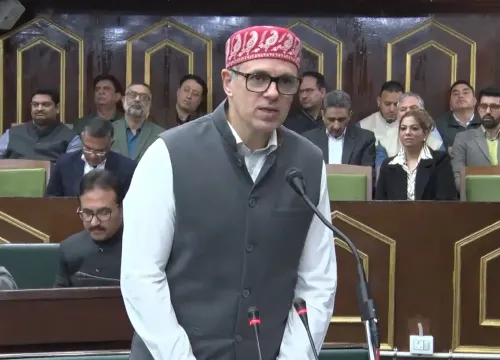
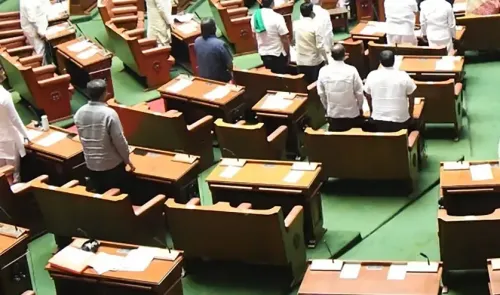
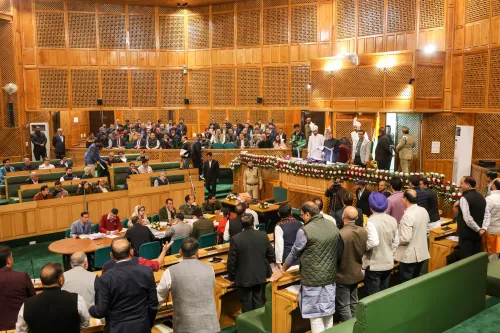
The session also marked a procedural departure from convention. Speaker Rather read out obituary references for three former legislators — Sheikh Mustafa Kamal, Dharam Paul, and Ghulam Hassan Khan — after which the House observed a two-minute silence. Notably, no individual legislator delivered a personal tribute speech, a significant break from the Assembly's long-standing practice.
Traditionally, the House would adjourn for the day after paying obituary tributes without transacting any further business. On Monday, however, the Assembly proceeded to government business immediately after the silence, implementing a procedural reform that Chief Minister Omar Abdullah had proposed during the previous autumn session.
The Omar Abdullah Reform and Its Rationale
Chief Minister Omar Abdullah had previously recalled his experience in Parliament, where individual obituary speeches once consumed entire sessions before the procedure was revised so that only the Speaker read the references, followed by a brief collective silence. He had suggested the J&K Assembly adopt the same approach.
Monday's sitting effectively put that proposal into practice for the first time, allowing the House to take up legislative business on the same day — a change that could meaningfully increase the session's working hours going forward.
What to Watch in the Days Ahead
With the BJP signalling it will press hard on power tariffs, NHM staffing, and contract employment during the session, the government is likely to face structured questions and potential adjournment motions on these subjects. The NC-led dispensation will need to offer substantive responses on each count, particularly on power pricing, which has drawn public discontent across both Jammu and Kashmir divisions. How the administration handles the NHM regularisation question — a long-running demand in the broader public-health workforce — will also be closely tracked.
Point of View
Precarious public-health employment, and the expanding footprint of outsourced government work. These are not niche concerns; they resonate across both divisions and give the Opposition a ready populist platform. The NC-led government, having won on a mandate of restoring normalcy and jobs, now faces the uncomfortable task of defending tariff and employment decisions that contradict that image. More quietly, the procedural reform on obituary references deserves attention: Omar Abdullah's Parliament-modelled change could recover meaningful legislative hours across future sessions — a structural improvement that rarely makes headlines but matters for the Assembly's credibility as a working institution.
NationPress
21 Sept 2026
Frequently Asked Questions
Why did the J&K Assembly erupt on the first day of the autumn session?
BJP legislators entered the House carrying placards and raising slogans on 21 September 2026, demanding a rollback of the increased power tariff, regularisation of daily-wage workers, and justice for NHM employees. NC legislators countered with their own slogans, creating an unusually disruptive opening to the session.
What are the BJP's specific demands in the J&K Assembly session?
The BJP is demanding a rollback of the revised electricity tariff structure, regularisation of daily-wage government employees, justice for National Health Mission (NHM) workers, and an end to the outsourcing of government jobs. The party has signalled it will pursue these through questions and motions during the session.
What procedural change did the J&K Assembly make on 21 September?
The Assembly departed from its traditional practice of adjourning for the entire day after obituary references. Instead, it proceeded to government business after a two-minute silence, implementing a reform proposed by Chief Minister Omar Abdullah based on Parliament's revised procedure.
Who were the former legislators honoured with obituary references?
Speaker Abdul Rahim Rather read out obituary references for three former legislators: Sheikh Mustafa Kamal, Dharam Paul, and Ghulam Hassan Khan. The House observed a two-minute silence; no individual member delivered a personal tribute speech.
What is the significance of the NHM employees issue in J&K?
NHM employees are contractual public-health workers whose regularisation has been a long-running demand in Jammu and Kashmir. The BJP has raised the issue as part of a broader push on employment security for government contract workers, a politically sensitive matter given the scale of contractual hiring across J&K's public sector.