BJP protests in Srinagar, accuses NC of pushing anti-national agenda in J&K Assembly
Synopsis
The BJP took its opposition to the streets of Srinagar, burning an effigy of Chief Minister Omar Abdullah and demanding LG rule — all over an assembly resolution that links J&K statehood restoration to autonomy demands. The confrontation lays bare the deep fault lines in post-Article 370 Jammu and Kashmir, where the NC and BJP are fighting a proxy battle over whether the constitutional clock can be turned back.
Key Takeaways
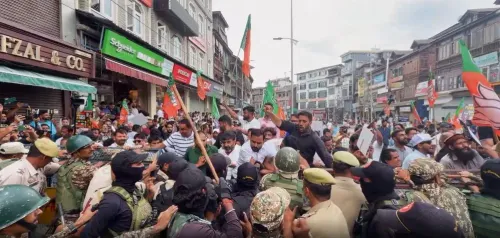
The BJP staged a protest in Srinagar on 30 September 2026 , burning an effigy of CM Omar Abdullah .
BJP leader Altaf Thakur accused the National Conference of advancing an 'anti-national' and allegedly 'ISI' agenda in the J&K Assembly .
The protest was triggered by a J&K Assembly resolution linking statehood restoration to demands for autonomy, Article 370 , and Article 35A .
Thakur demanded an FIR against the NC, dismissal of the government, and imposition of LG rule .
He invoked the Vajpayee-era precedent, noting a previous autonomy resolution was rejected when Omar Abdullah was a Union minister.
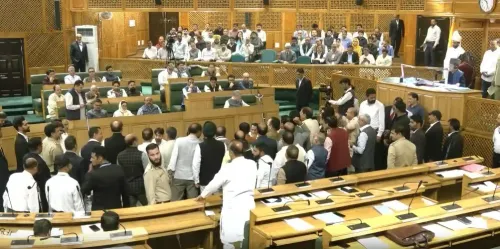
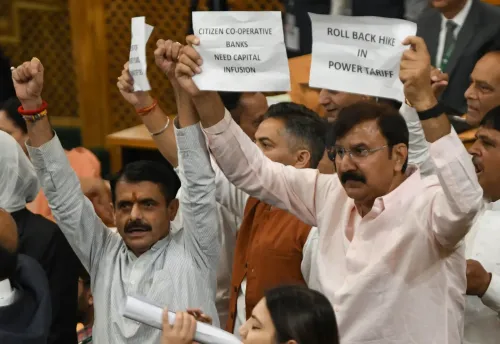
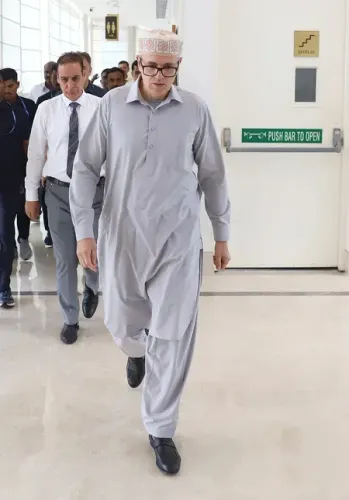
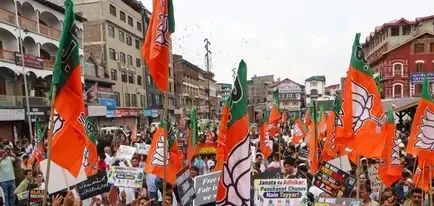
The Bharatiya Janata Party (BJP) on Wednesday, 30 September 2026, staged a public protest in Srinagar against the National Conference (NC) government led by Chief Minister Omar Abdullah, accusing the ruling party of advancing an 'anti-national' agenda inside the Jammu and Kashmir Legislative Assembly. The demonstration marks one of the BJP's sharpest public escalations since the NC passed a contentious resolution linking statehood restoration to earlier autonomy demands.
How the Protest Unfolded
BJP leader Altaf Thakur led the demonstration on the streets of Srinagar, during which protesters burnt an effigy of Chief Minister Omar Abdullah. Speaking to reporters at the site, Thakur accused the NC of deflecting from bread-and-butter governance issues by repeatedly raising the questions of autonomy and the pre-1953 constitutional position of Jammu and Kashmir.
'Talking of these things was an act of treason against the country,' Thakur told reporters, framing the NC's legislative moves as a deliberate attempt to revive a political debate the Centre had effectively closed with the abrogation of Article 370 in 2019.
The Resolution at the Heart of the Row
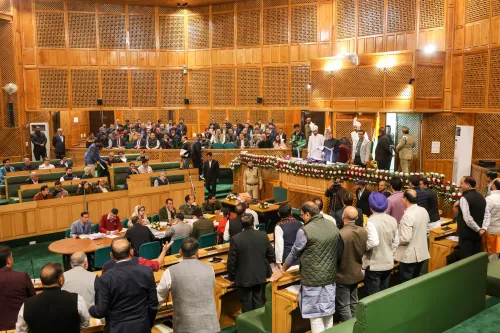
The BJP's protest is directly tied to a resolution recently passed by the J&K Assembly, in which the demand for statehood restoration was linked to earlier resolutions seeking autonomy and restoration of special status — including references to Article 370, Article 35A, and the concept of self-rule. The BJP has characterised this as an attempt to resurrect constitutional provisions that Parliament has already repealed.
Thakur invoked a historical precedent, pointing out that when Omar Abdullah served as a minister in the cabinet of former Prime Minister Atal Bihari Vajpayee, a previous autonomy resolution was rejected outright. 'No power on earth can bring autonomy to Jammu and Kashmir. When Omar Abdullah was a minister in the Atal Bihari government, the autonomy resolution was thrown into the dustbin, and the same should be done to the present resolution,' he said.
BJP's Allegations Against the NC Government
Beyond the constitutional debate, Thakur levelled a series of governance failures at the Abdullah administration, alleging that the NC had broken promises made to daily wagers and NHM workers ahead of the assembly elections. He argued that the government not only had not fulfilled those commitments, but reportedly had no intention of doing so.
In the sharpest charge of the day, Thakur demanded that an FIR be registered against the NC for allegedly promoting what he described as an 'ISI agenda' in Jammu and Kashmir — an allegation the NC has not yet formally responded to. He further called for the dismissal of the elected government and the imposition of Lieutenant Governor's rule in the Union Territory.
Context and What Comes Next
The BJP's protest reflects a broader political pattern in post-Article 370 Jammu and Kashmir, where the party has consistently challenged the NC's attempts to use the assembly as a platform for special-status demands. Critics argue the NC is raising legitimate constitutional grievances through democratic channels; the BJP contends these moves undermine national integration. Notably, this is not the first time the autonomy question has split J&K's political landscape — the debate dates back decades and has repeatedly shaped electoral contests in the region.
With the J&K Assembly session ongoing, further clashes over the statehood-versus-autonomy framing appear likely. Whether the Centre steps in to respond to the BJP's call for dismissing the government remains to be seen.
Point of View
In which Omar Abdullah served, rejected the autonomy resolution, but the NC's current move is through an elected assembly, not a back-channel — a distinction that matters for democratic legitimacy. The charge of 'ISI agenda' is a serious allegation levelled without documentary evidence, and it risks inflaming a region where trust in institutions is already fragile. The deeper story is whether the Centre will respond to the assembly resolution through legal or constitutional channels, or allow the political noise to define the narrative.
NationPress
30 Sept 2026
Frequently Asked Questions
Why is the BJP protesting against the NC government in Srinagar?
The BJP is protesting against the National Conference government led by Chief Minister Omar Abdullah over a J&K Assembly resolution that links statehood restoration to earlier demands for autonomy, Article 370, and Article 35A. The BJP has characterised this as an 'anti-national' move and is calling for the dismissal of the government and imposition of LG rule.
What was the J&K Assembly resolution that triggered the BJP protest?
The J&K Assembly recently passed a resolution connecting the demand for statehood restoration to previous resolutions seeking autonomy and special status — including references to Article 370 and Article 35A. The BJP argues this attempts to revive constitutional provisions that Parliament repealed in 2019.
What did BJP leader Altaf Thakur demand?
Altaf Thakur demanded that an FIR be registered against the National Conference for allegedly promoting what he called an 'ISI agenda', that the Omar Abdullah government be dismissed, and that Lieutenant Governor's rule be imposed in Jammu and Kashmir.
How did the BJP link Omar Abdullah to the Vajpayee era?
Thakur pointed out that Omar Abdullah served as a minister in the Atal Bihari Vajpayee government, during which a previous autonomy resolution was rejected. He argued the current resolution deserved the same fate.
Has the NC responded to the BJP's allegations?
The National Conference government had not issued a formal response to the BJP's specific allegations at the time of this report, according to available information. The dispute over the assembly resolution is ongoing as the J&K Assembly session continues.