BJP anti-liquor march to Omar Abdullah's residence foiled in Srinagar
Synopsis
BJP workers marching to J&K CM Omar Abdullah's high-security Gupkar Road home over the Valley's liquor debate were stopped and detained by police in Srinagar. With the NC anchoring its stance on fiscal pragmatism — and Farooq Abdullah demanding Centre compensation before any ban — the BJP has found a potent street-level issue in post-Article 370 Kashmir.
Key Takeaways
BJP leaders and workers were detained in Srinagar on 15 May while marching to CM Omar Abdullah's Gupkar Road residence over the liquor issue.
Those detained include Altaf Thakur , Sahil Bhat , and Sajid Yousuf Shah , along with several party workers.
CM Omar Abdullah has stated there are no plans to expand liquor outlets but called a complete ban 'not practically possible at present.' NC President Dr Farooq Abdullah said the party would support a ban only if the Centre compensates J&K for lost liquor revenue.
Liquor shops in the Valley had been forcibly shut by militant outfits in the early 1990s and gradually resumed as the security situation improved.
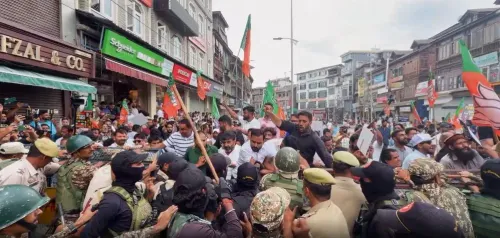
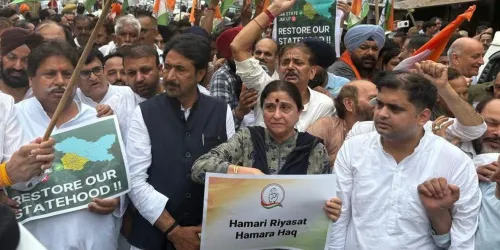
Police in Srinagar detained several Bharatiya Janata Party (BJP) leaders and workers on Friday, 15 May after they attempted a protest march to the high-security Gupkar Road residence of Jammu and Kashmir Chief Minister Omar Abdullah, demanding a complete ban on liquor sales in the Kashmir Valley. The demonstration was broken up before it could reach its destination.
How the Protest Unfolded
BJP members assembled at Ram Munshi Bagh in central Srinagar and began marching toward the Chief Minister's residence, raising slogans against the sale of alcohol in the Valley. Jammu and Kashmir Police intercepted the procession and detained multiple party figures, including Altaf Thakur, Sahil Bhat, and Sajid Yousuf Shah, along with several party workers, to prevent them from advancing toward Gupkar Road.
What the BJP Said
The BJP stated that the march was intended to amplify public sentiment against the continued operation of wine shops in the Valley. The party accused the ruling National Conference (NC) of actively defending and promoting liquor sales in the region — a charge the NC has not directly addressed.
The Government's Position
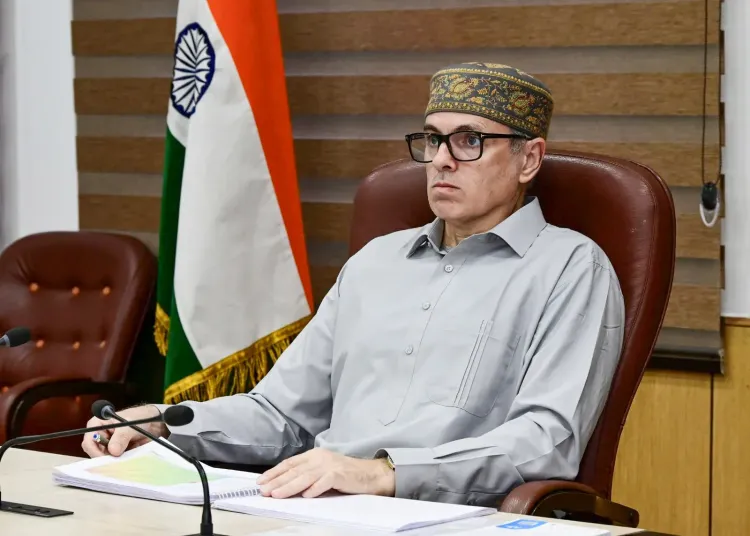
The protest comes days after Chief Minister Omar Abdullah stated that his administration had no plans to expand liquor outlets across Jammu and Kashmir, while simultaneously arguing that an outright ban was not practically feasible at present. Abdullah had questioned whether residents preferred regulated, legal sale channels over an unregulated underground trade.
NC President and former J&K Chief Minister Dr Farooq Abdullah also entered the debate, stating the NC government would be willing to ban liquor sales if the Centre compensated the Union Territory for the revenue it currently earns from that trade — a significant fiscal caveat that effectively shifts the decision to New Delhi.
Historical Context
The liquor debate in Kashmir carries deep historical weight. When armed militancy surged in the early 1990s, militant outfits forcibly shut liquor shops, cinema halls, and beauty parlours across the Valley as part of what they described as an Islamist movement. As the security situation gradually improved over subsequent decades, these establishments resumed operations. The Valley has since reclaimed its status as a major destination for both domestic and international tourists, with regulated commerce — including the hospitality trade — returning to relative normalcy.
What Happens Next
The BJP's detention is likely to intensify political pressure on the Omar Abdullah government over the liquor issue ahead of any future legislative session. With the NC anchoring its position on fiscal pragmatism and the BJP mobilising street sentiment, the debate is set to continue as a fault line in J&K's post-Article 370 political landscape.
Point of View
Then we will ban — is fiscally logical but politically awkward, effectively outsourcing the decision to the Centre and giving the BJP a second line of attack. What mainstream coverage underplays is the precedent: the last time liquor was 'banned' in the Valley, it was enforced by gun-wielding militants. A democratic government navigating that history while managing tourist footfall and UT finances has far less room to manoeuvre than the protest optics suggest.
NationPress
22 Sept 2026
Frequently Asked Questions
Why did BJP protest outside Omar Abdullah's residence in Srinagar?
The BJP organised a march to Chief Minister Omar Abdullah's Gupkar Road residence on 15 May to demand a complete ban on liquor sales in the Kashmir Valley. The party accused the ruling National Conference of defending the continuation of wine shops in the region.
Who was detained during the Srinagar anti-liquor protest?
Police detained several BJP leaders including Altaf Thakur, Sahil Bhat, and Sajid Yousuf Shah, along with a number of party workers, before they could reach the Chief Minister's high-security residence.
What is the J&K government's position on banning liquor in Kashmir?
Chief Minister Omar Abdullah has said his government has no plans to expand liquor outlets but maintains that a complete ban is not practically feasible at present, arguing that regulated legal sale is preferable to an underground trade.
What did Farooq Abdullah say about the liquor ban?
NC President Dr Farooq Abdullah said the party's government would be willing to ban liquor sales in J&K if the Centre compensates the Union Territory for the revenue it currently earns from that trade.
What is the historical background of liquor sales in Kashmir?
During the armed militancy of the early 1990s, militant outfits forcibly shut liquor shops, cinema halls, and beauty parlours across the Valley. As the security situation improved over subsequent decades, these establishments gradually resumed operations, and the Valley has since re-emerged as a major tourist destination.