J&K Assembly: BJP MLAs walk out over statehood resolution passed Monday
Synopsis
BJP MLAs walked out of the J&K Assembly the morning after it passed a statehood restoration resolution, demanding the Speaker's removal and objecting to references to older autonomy resolutions. Chief Minister Omar Abdullah's revelation that the law secretary and chief secretary wrote to the Speaker without his knowledge — and his pointed remark that 'this could only happen because we are a union territory' — underlines how deeply J&K's truncated status has constrained its own elected government.
Key Takeaways
BJP legislators staged a walkout from the J&K Legislative Assembly on 29 September 2026 over the statehood restoration resolution.
The statehood resolution was moved by Chief Minister Omar Abdullah and passed on 28 September 2026 amid BJP protests.
Leader of Opposition Sunil Sharma demanded the removal of Speaker Abdul Rahim Rather ; the Speaker said the motion could only be listed after 14 days per House procedure.
Abdullah revealed that the law secretary and chief secretary wrote to the Speaker against the resolution without informing him.
The resolution has been forwarded to the Chief Secretary for transmission to the Central government , where statehood restoration ultimately rests.
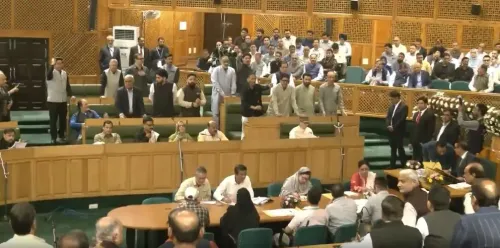
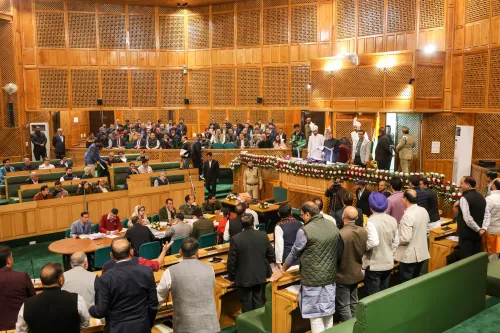
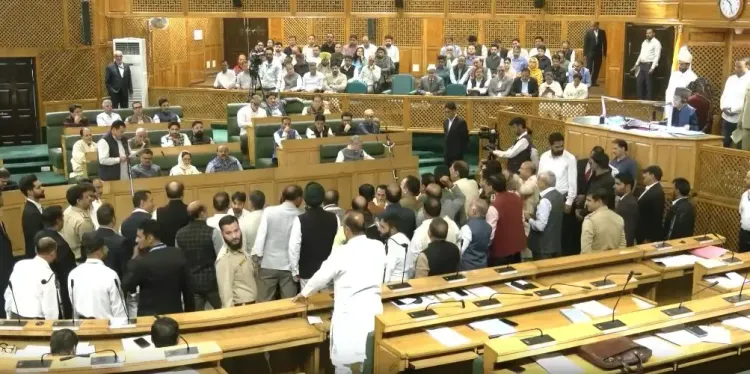
Bharatiya Janata Party (BJP) legislators staged a walkout from the Jammu and Kashmir Legislative Assembly in Srinagar on Tuesday, 29 September 2026, escalating their protest against the statehood restoration resolution that the House had passed a day earlier. The walkout signals a deepening political confrontation between the ruling National Conference-led government and the opposition BJP over the constitutional future of the union territory.
What Triggered the Walkout
Leader of Opposition Sunil Sharma again raised objections to the Speaker's conduct in the House on Tuesday, including a fresh demand for the removal of Speaker Abdul Rahim Rather. The BJP accused Rather of allowing discussion on the statehood resolution despite the party's formal objections — specifically, its opposition to references to the 2000 autonomy resolution and the 2024 special status resolution embedded in the text.
The Speaker had acknowledged that the BJP had moved a notice seeking his removal, but told the House that under established procedure, any such motion could only be listed 14 days after the notice was received — effectively allowing proceedings to continue.
What Happened in the Assembly on Monday
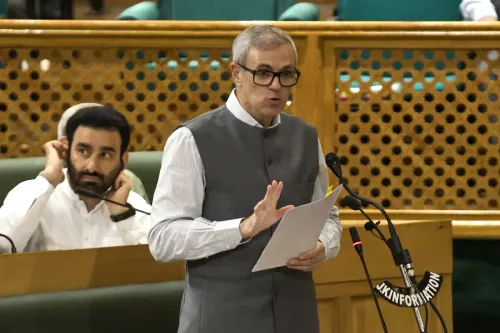
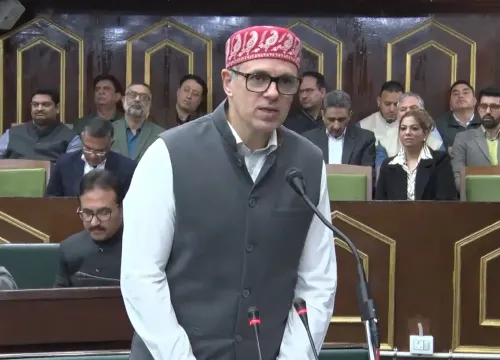
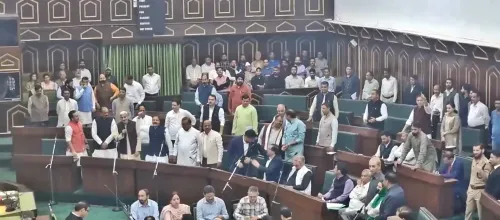
The statehood resolution, moved by Chief Minister Omar Abdullah, was passed on Monday, 28 September 2026 amid considerable disruption. BJP members entered the well of the House and held a mock proceeding in protest. Despite the din, Abdullah delivered his speech and the resolution was passed by the House.
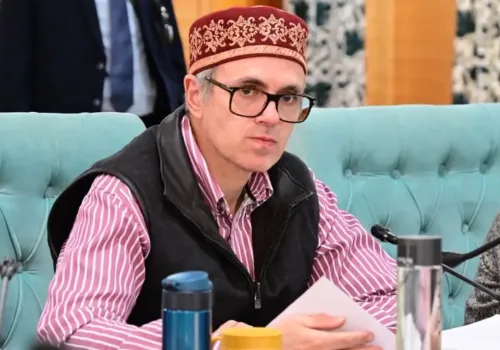
In a notable aside during that speech, the Chief Minister disclosed that the law secretary had written to the Assembly Speaker offering an opinion against the resolution — and that this had occurred without the knowledge of the Law and Parliamentary Affairs Minister, who, Abdullah noted, was himself. 'This could only happen because we are a union territory,' he said, framing the incident as evidence of the administrative constraints J&K faces under its current constitutional status.
The Chief Secretary had also reportedly written to the Speaker on the matter without informing the Chief Minister, according to Abdullah's statement to the House.
What Happens Next
Following its passage, the Legislative Assembly secretariat has forwarded the statehood resolution to the Chief Secretary, ostensibly for transmission to the Central government. Whether and how the Centre responds will determine the resolution's practical effect, as statehood restoration requires action at the Union level.
Notably, this is not the first time the J&K Assembly has passed resolutions touching on the territory's constitutional status — the 2000 autonomy resolution preceded the current dispute by over two decades and was similarly contentious. The BJP's sustained opposition, including its call for the Speaker's removal, suggests the stand-off is likely to continue into the next sitting.
Political Context
The confrontation comes at a sensitive moment in J&K's political calendar. The National Conference, which leads the government, has made the restoration of statehood a central campaign commitment. The BJP, which governed J&K as a union territory and broadly supported its bifurcation and downgrading from full statehood in 2019, has consistently resisted moves that it argues reopen settled constitutional questions or invoke resolutions it considers regressive.
The walkout and the Speaker standoff have added a procedural dimension to what is fundamentally a dispute about J&K's long-term constitutional standing — a question that ultimately rests with New Delhi, not Srinagar.
Point of View
But the substance underneath is serious: an elected government in J&K is passing resolutions its own bureaucracy is quietly countermanding — and the Chief Minister himself is publicly embarrassed by it. Abdullah's disclosure that the law secretary and chief secretary wrote to the Speaker without his knowledge is a telling admission of how hollowed-out executive authority becomes when the territory's IAS cadre reports upward to the Centre rather than downward to elected ministers. The BJP's opposition to the resolution is coherent on its own terms — it supported the 2019 reorganisation — but its strategy of disrupting the House and seeking the Speaker's removal risks making it look like it is blocking democratic expression rather than engaging with it. The deeper question the statehood resolution raises — whether the Centre will act on it — is the one neither side can answer from Srinagar.
NationPress
29 Sept 2026
Frequently Asked Questions
Why did BJP MLAs walk out of the J&K Assembly?
BJP MLAs walked out of the Jammu and Kashmir Legislative Assembly on 29 September 2026 to protest the statehood restoration resolution passed by the House the previous day. The party objected to the Speaker allowing debate on the resolution, particularly because it referenced the 2000 autonomy resolution and the 2024 special status resolution, which the BJP opposes.
What is the J&K statehood restoration resolution?
The statehood restoration resolution is a motion moved by Chief Minister Omar Abdullah and passed by the J&K Legislative Assembly on 28 September 2026, formally seeking the restoration of full statehood to Jammu and Kashmir. J&K was downgraded from a full state to a union territory in 2019. The resolution has been forwarded to the Chief Secretary for transmission to the Central government.
What did CM Omar Abdullah reveal about the law secretary's letter?
While speaking in favour of the resolution on 28 September, Chief Minister Omar Abdullah told the Assembly that the law secretary had written to the Speaker giving an opinion against the resolution — without the knowledge of Abdullah, who is also the Law and Parliamentary Affairs Minister. He also said the Chief Secretary had written to the Speaker without informing him.
Can the Speaker be removed by a BJP notice?
Under House procedure, a motion for the Speaker's removal can only be listed 14 days after the relevant notice is received. Speaker Abdul Rahim Rather told BJP legislators this on Monday, allowing proceedings to continue. The BJP had argued that Rather should have vacated the chair once the notice was filed.
What happens after the statehood resolution is sent to the Centre?
The resolution has been forwarded to the Chief Secretary to be moved to the Central government. Statehood restoration requires Union-level action, so the resolution is a formal request rather than an enforceable order. The Centre has not publicly responded to the resolution at the time of this report.