J&K statehood resolution: NC cites bureaucratic interference as key reason
Synopsis
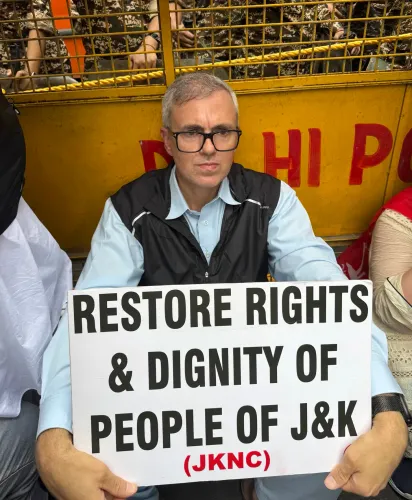
Senior J&K bureaucrats tried to block a statehood resolution moved by Chief Minister Omar Abdullah — without his knowledge. The National Conference says this is exactly why J&K needs full statehood: when civil servants can override elected representatives, democratic accountability is missing. The BJP, meanwhile, objects not to statehood itself but to the resolution's links to earlier bids to restore Article 370.
Key Takeaways
NC MLA Tanvir Sadiq on 29 September 2026 accused J&K bureaucracy of interfering in the statehood restoration resolution.
CM Omar Abdullah revealed that the J&K Law Secretary and Chief Secretary wrote to Speaker Abdul Rahim Rather to block the resolution — without his knowledge.
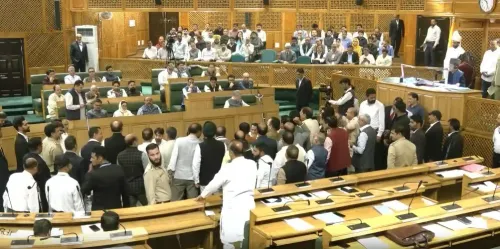
The J&K Legislative Assembly passed the resolution calling for 'immediate and urgent restoration of full statehood' and directed it be forwarded to the Government of India .
The resolution references earlier resolutions of 26 June 2000 and 6 November 2024 , which the BJP says links it to demands for Article 370 restoration, making it constitutionally unacceptable.
The episode underscores the accountability gap created by J&K's Union Territory status, where bureaucratic authority can override elected government decisions.
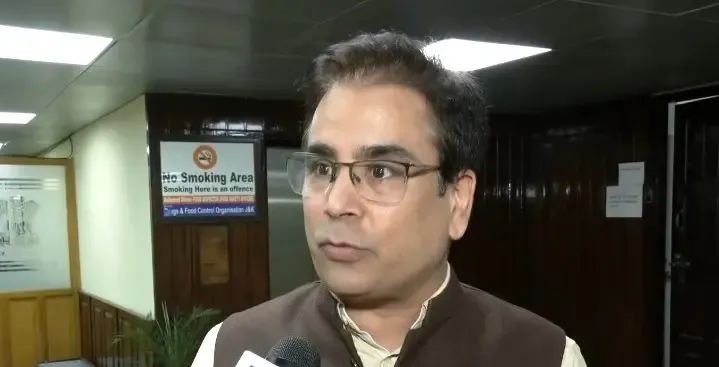
National Conference (NC) spokesperson and Jammu & Kashmir MLA Tanvir Sadiq on Tuesday, 29 September 2026, publicly called out what he described as 'bureaucratic interference' in the statehood restoration resolution passed by the J&K Legislative Assembly, arguing the episode vindicates the demand for full statehood. The remarks followed reports that senior bureaucrats had attempted to block the resolution without the knowledge of elected ministers.
What Triggered the Controversy
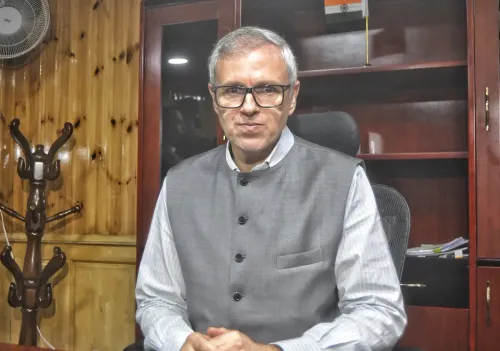
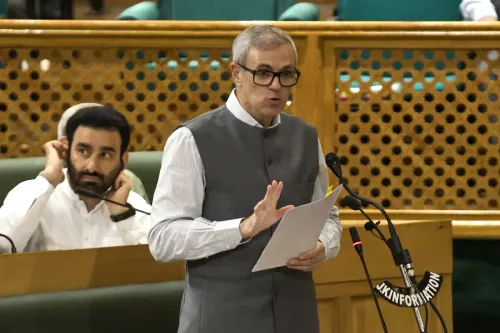
Chief Minister Omar Abdullah, while speaking in favour of the statehood resolution before the Legislative Assembly on Monday, disclosed that the J&K Law Secretary had written to Assembly Speaker Abdul Rahim Rather seeking to prevent the resolution from being placed before the House — and had done so without the Chief Minister's knowledge. Abdullah further revealed that the Chief Secretary had also written to the Speaker in the same regard.
The statehood restoration resolution was passed despite these attempts. The Legislative Assembly Secretariat subsequently forwarded it to the Chief Secretary, with a note stating: 'The resolution is, accordingly, forwarded for information and necessary action.' The letter stopped short of explicitly directing that the resolution be sent to the Central government.
NC's Sharp Reaction on X
Tanvir Sadiq took to X to frame the controversy as a structural argument for statehood. 'Next time anyone asks why J&K needs statehood, just read this,' he wrote. 'Can you imagine a state where senior bureaucrats write to the Assembly Speaker seeking to stop a resolution moved by the elected Chief Minister without even the knowledge of the concerned minister?' He added: 'This isn't about one government or one party. It is about who is ultimately accountable to the people. That is precisely why J&K needs its statehood back.'
The Resolution and Its Political Context
The resolution passed by the Assembly calls upon the Government of India for 'the immediate and urgent restoration of full statehood to Jammu and Kashmir,' and explicitly references earlier resolutions passed on 26 June 2000 and 6 November 2024. It resolves that the text be formally forwarded to the Government of India.
This linkage has drawn objections from the Bharatiya Janata Party (BJP). While the BJP has stated it supports statehood for J&K, it argued that tying the current resolution to the 2000 and 2024 resolutions — which had sought restoration of Article 370 and greater autonomy — makes it constitutionally flawed and, therefore, unacceptable to the party.
Broader Significance for J&K Governance
The episode highlights an enduring tension at the core of J&K's governance architecture: as a Union Territory, the elected government operates under a framework that reserves significant administrative authority with Lt. Governor-appointed bureaucrats and the Centre. Critics argue this creates accountability gaps where civil servants can act in ways that bypass elected representatives. The NC has long maintained that only full statehood can restore genuine democratic accountability to the region. Notably, this is not the first time the bureaucracy-versus-elected-government fault line has surfaced since the Assembly was reconstituted following the 2024 elections.
The resolution now awaits a response from the Centre, with political observers watching whether the Government of India acts on it or allows it to remain symbolic — a pattern that has defined J&K's statehood demand since its reorganisation in 2019.
Point of View
Yet nearly seven years on, the institutional architecture still allows unelected officials to countermand elected ones. The BJP's objection to the resolution's wording is legally defensible but politically convenient: it allows the party to claim statehood support while opposing the specific vehicle. The real question is whether the Centre will treat this resolution as a genuine mandate from J&K's first elected assembly since 2019, or let it join its predecessors as a symbolic gesture with no operational consequence.
NationPress
29 Sept 2026
Frequently Asked Questions
What is the J&K statehood restoration resolution?
It is a resolution passed by the Jammu & Kashmir Legislative Assembly calling on the Government of India for the 'immediate and urgent restoration of full statehood' to J&K. It references earlier resolutions from 26 June 2000 and 6 November 2024 and has been forwarded to the Chief Secretary for onward action.
Why did the NC accuse bureaucrats of interference?
Chief Minister Omar Abdullah revealed that the J&K Law Secretary and Chief Secretary had written to Assembly Speaker Abdul Rahim Rather seeking to block the statehood resolution — without informing him or the concerned minister. NC MLA Tanvir Sadiq argued this showed senior bureaucrats could override elected representatives, underscoring why full statehood is needed.
Why is the BJP objecting to the resolution?
The BJP says it supports J&K's statehood in principle but objects to the resolution's linkage to earlier resolutions from 2000 and 2024, which sought restoration of Article 370 and greater autonomy. The party considers this linkage constitutionally flawed and unacceptable.
What happens next with the resolution?
The Legislative Assembly Secretariat has forwarded the resolution to the Chief Secretary for 'information and necessary action.' Political observers are watching whether the Centre formally responds or allows the resolution to remain symbolic, as has been the pattern since J&K's reorganisation in 2019.
Why does J&K's Union Territory status matter for this debate?
As a UT, J&K's elected government operates alongside Lt. Governor-appointed bureaucrats who retain significant administrative powers not subject to the elected cabinet's oversight. This structure is at the heart of the NC's argument: full statehood would shift accountability squarely to elected representatives answerable to voters.