Amarnath Yatra 2025: J&K appoints nodal officers for Pahalgam, Baltal routes

Synopsis
With the Amarnath Yatra just days away, Jammu and Kashmir has put a two-officer nodal framework in place — one senior official each for the Pahalgam and Baltal axes — reporting directly to the SASB CEO. The move signals a deliberate push to close coordination gaps before lakhs of pilgrims begin arriving on 3 July.
Key Takeaways
The J&K government appointed nodal officers for the Amarnath Yatra via a GAD order dated 22 June .
Shahid Iqbal Choudhary has been designated Nodal Officer for the Pahalgam axis (Anantnag district).
Rahul Yadav , MD of JKPDC , has been appointed Nodal Officer for the Baltal axis (Ganderbal district).
Both officers will report to Mandeep K.
Bhandari , CEO of the Shri Amarnathji Shrine Board (SASB) .
The yatra runs from 3 July to 28 August 2025 — a period of 57 days — ending on Raksha Bandhan .
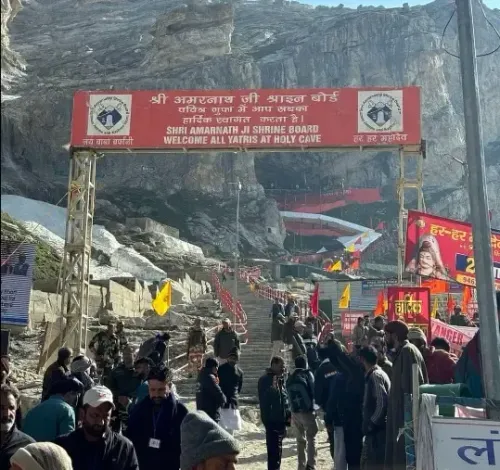
The cave shrine is located at 3,888 metres above sea level in the Kashmir Himalayas.
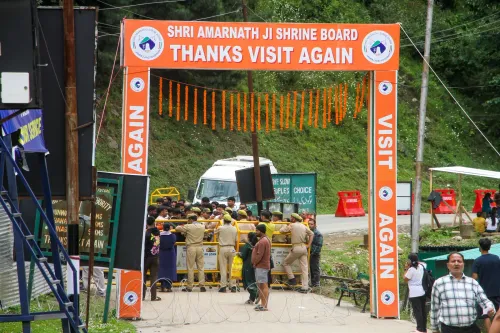
The Jammu and Kashmir government on Tuesday appointed two senior nodal officers to oversee the smooth conduct of the upcoming Shri Amarnath Yatra, which is scheduled to begin on 3 July and run for 57 days through 28 August 2025. The appointments, formalised through a government order dated 22 June issued by the General Administration Department (GAD), are in addition to the officers' existing responsibilities.
Key Appointments
Shahid Iqbal Choudhary, Commissioner/Secretary to the Jammu and Kashmir government and head of the Youth Services and Sports Department, has been designated as the Nodal Officer for the Pahalgam axis — the longer, traditional route that passes through Anantnag district and takes pilgrims approximately four days to reach the cave shrine.
Rahul Yadav, Managing Director of the Jammu and Kashmir Power Development Corporation (JKPDC) and holding additional charge of the Jammu and Kashmir Power Corporation Limited (JKPCL), has been appointed as the Nodal Officer for the Baltal axis — the shorter route in Ganderbal district from which devotees complete the darshan and return to base camp the same day.
Mandate and Coordination
Both officers have been directed to closely monitor all arrangements related to the pilgrimage and maintain active coordination with all concerned departments and agencies. They are also required to regularly liaise with and report to Mandeep K. Bhandari, Chief Executive Officer of the Shri Amarnathji Shrine Board (SASB).
The government order was issued by M. Raju, Commissioner/Secretary of the General Administration Department, on behalf of Lieutenant Governor Manoj Sinha. The appointments are aimed at strengthening inter-departmental coordination and ensuring seamless management of logistics, infrastructure, public services, and safety measures for the lakhs of devotees expected this season.
About the Pilgrimage Routes
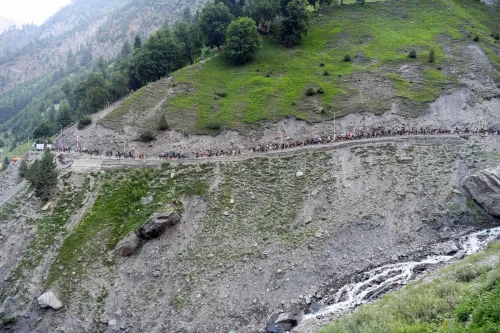
The Amarnath cave shrine is situated at an altitude of 3,888 metres above sea level in the Kashmir Himalayas. It houses a naturally occurring ice stalagmite structure that is believed by devotees to symbolise the mythical powers of Lord Shiva. The structure reportedly waxes and wanes with the phases of the moon.
Pilgrims have two route options: the Pahalgam route, which is longer and takes four days to reach the shrine, and the Baltal route, which allows devotees to complete the yatra in a single day. Both routes converge at the cave shrine.
What's Next
With the yatra commencing on 3 July and concluding on 28 August — coinciding with Shravan Purnima and Raksha Bandhan — authorities are expected to intensify ground-level preparations in the coming days. The nodal officer framework signals an effort to pre-empt coordination gaps that have historically posed challenges during peak footfall periods.
Point of View
But they carry operational weight. Amarnath Yatra management has historically been tested by weather emergencies, security logistics, and inter-agency gaps — the 2022 cloudburst that killed pilgrims near Pahalgam being the starkest recent example. Placing two senior officers with direct reporting lines to the SASB CEO is a structural improvement, but the real measure will be whether the framework enables real-time decision-making on the ground rather than post-incident reviews. With lakhs of devotees expected over 57 days, the margin for coordination failure is narrow.
NationPress
22 Sept 2026
Frequently Asked Questions
Who has been appointed as nodal officers for Amarnath Yatra 2025?
The J&K government has appointed Shahid Iqbal Choudhary as Nodal Officer for the Pahalgam axis and Rahul Yadav as Nodal Officer for the Baltal axis. Both appointments were formalised via a GAD order dated 22 June.
When does Amarnath Yatra 2025 start and end?
Amarnath Yatra 2025 begins on 3 July and concludes on 28 August, spanning 57 days. The yatra ends on Shravan Purnima, which coincides with Raksha Bandhan this year.
What is the difference between the Pahalgam and Baltal routes?
The Pahalgam route, starting in Anantnag district, is the longer traditional path and takes approximately four days to reach the cave shrine. The Baltal route in Ganderbal district is shorter, allowing pilgrims to complete the darshan and return to base camp on the same day.
What are the nodal officers responsible for?
The nodal officers are tasked with monitoring all pilgrimage arrangements, coordinating with relevant departments and agencies, and reporting regularly to Mandeep K. Bhandari, CEO of the Shri Amarnathji Shrine Board. Their mandate covers logistics, infrastructure, public services, and safety measures.
Where is the Amarnath cave shrine located?
The Amarnath cave shrine is situated at an altitude of 3,888 metres above sea level in the Kashmir Himalayas. It houses a naturally formed ice stalagmite that devotees believe symbolises the powers of Lord Shiva.