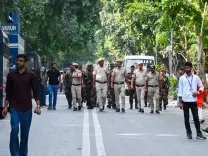
Army Northern Command chief reviews Amarnath Yatra security on Pahalgam route
Synopsis
With the Shri Amarnath Ji Yatra 2026 just days away, the Army's Northern Command chief personally walked the Pahalgam route — a signal that security planning this year is being handled at the highest command level. The suspension of helicopter services adds a new operational dimension to an already complex pilgrimage security framework.
Key Takeaways
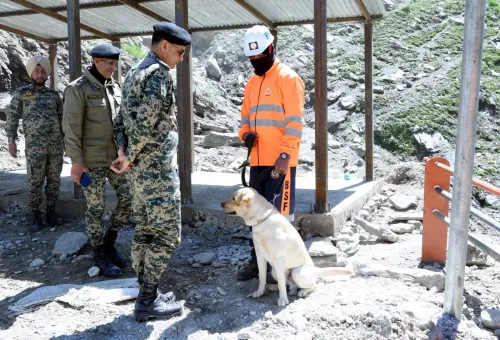
Lt Gen Pratik Sharma , GOC-in-C of the Army's Northern Command , visited Pahalgam and Chandanwari on 18 June 2026 to review Yatra security.
The Shri Amarnath Ji Yatra 2026 runs from 3 July to 28 August 2026 , coinciding with Raksha Bandhan .
Helicopter services will not be available to pilgrims this year due to security concerns.
J&K Police and CAPFs handle overall route security; the Army secures peripheral areas.
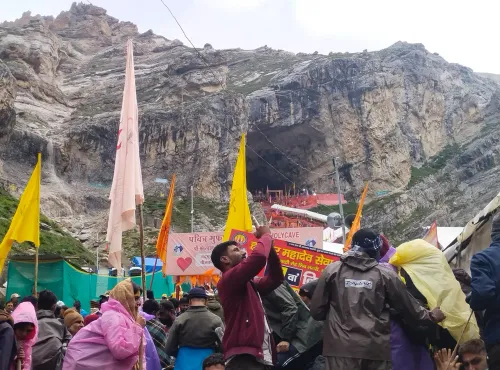
The cave shrine sits at 3,880 metres above sea level; two routes — Pahalgam (4 days) and Baltal (same-day) — serve pilgrims.
Lieutenant General Pratik Sharma, General Officer Commanding-in-Chief (GOC-in-C) of the Indian Army's Northern Command, headquartered at Udhampur, on Thursday, 18 June visited Pahalgam and Chandanwari in south Kashmir to review security arrangements and assess operational preparedness along the southern route of the Shri Amarnath Ji Yatra 2026. The inspection comes ahead of the pilgrimage's commencement on 3 July 2026.
What the Army Said
The Army's Northern Command, in a post on X, confirmed the visit, stating that Lt Gen Sharma reviewed 'the security situation and assessed operational preparedness along the Southern Route ahead of the commencement of Shri Amarnath Ji Yatra 2026.' The post added that the Indian Army is 'committed to ensure safe pilgrimage for all devotees through seamless coordination with all stakeholders, vigilant security measures and comprehensive preparedness.'
Security Framework for the Yatra
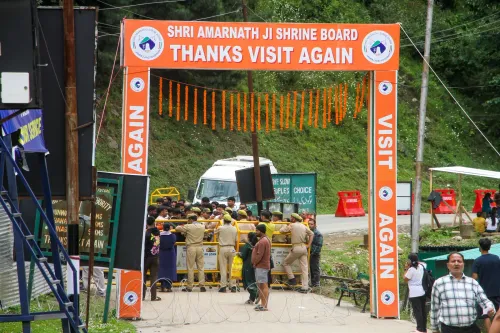
The Jammu and Kashmir Police and the Central Armed Police Forces (CAPFs) are responsible for overall security along the pilgrimage route, while the Army is tasked with securing the peripheral areas. The layered security structure reflects the scale and sensitivity of the annual pilgrimage, which draws hundreds of thousands of devotees from across the country.
Notably, helicopter services will not be available to pilgrims this year for security reasons — a significant operational change from previous editions of the Yatra.
About the Yatra Routes and the Shrine
The Shri Amarnath Ji Yatra 2026 runs from 3 July to 28 August 2026, concluding on Shravan Purnima, which coincides with Raksha Bandhan. The holy cave shrine is situated at an altitude of 3,880 metres above sea level in the Kashmir Himalayas.
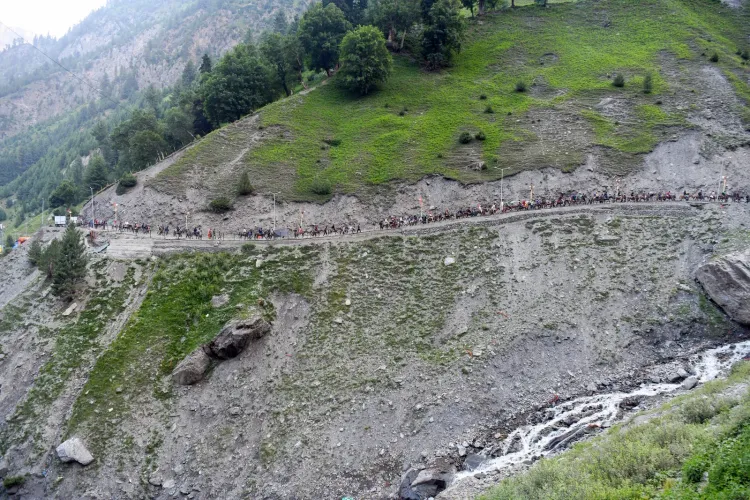
Pilgrims may approach the shrine via two routes: the longer, traditional Pahalgam route in Anantnag district, which takes approximately four days to complete, or the shorter Baltal route in Ganderbal district, which allows same-day darshan and return. The cave shrine houses an ice stalagmite that waxes and wanes with the phases of the moon, believed by devotees to symbolise the mystical powers of Lord Shiva.
Local Communities as Stakeholders
Beyond the security apparatus, local residents play an integral role in the Yatra's success. Members of the local Muslim community traditionally welcome pilgrims and serve as porters, labourers, ponywallahs, and guides — underscoring the pilgrimage's character as a collective, cross-community effort in the Kashmir Valley.
What Comes Next
With the Yatra less than a fortnight away, security agencies are expected to complete final coordination exercises across both routes. The GOC-in-C's ground-level visit signals that the Army is treating preparedness at the highest command level, particularly given the heightened security environment in the region following recent incidents in south Kashmir.
Point of View
Almost certainly shaped by the security climate in south Kashmir following the Pahalgam attack earlier this year. The suspension of helicopter services is the most operationally significant detail in this story and deserves more scrutiny: it limits evacuation options for pilgrims at altitude and shifts the burden of crowd management entirely onto ground forces. Whether that trade-off has been stress-tested publicly remains unclear. The multi-agency framework — Army on the periphery, CAPFs and J&K Police on the route — is sound in design but has historically faced coordination gaps at the ground level. The real test will come in the first week of July.
NationPress
19 Sept 2026
Frequently Asked Questions
When does the Shri Amarnath Ji Yatra 2026 begin and end?
The Shri Amarnath Ji Yatra 2026 commences on 3 July 2026 and concludes on 28 August 2026, coinciding with Shravan Purnima and Raksha Bandhan. The pilgrimage covers the holy cave shrine situated at 3,880 metres above sea level in the Kashmir Himalayas.
Why did the Army's Northern Command chief visit Pahalgam?
Lieutenant General Pratik Sharma visited Pahalgam and Chandanwari on 18 June 2026 to review the security situation and assess operational preparedness along the southern Pahalgam route ahead of the Yatra's start. The inspection reflects the Army's commitment to ensuring safe passage for pilgrims.
Will helicopter services be available during Amarnath Yatra 2026?
No, helicopter services will not be available to pilgrims during the Shri Amarnath Ji Yatra 2026, owing to security reasons. This marks a significant change from previous years and places greater reliance on ground-based security and logistics.
What are the two routes to the Amarnath cave shrine?
Pilgrims can reach the Amarnath cave shrine via the traditional Pahalgam route in Anantnag district, which takes approximately four days, or the shorter Baltal route in Ganderbal district, which allows same-day darshan and return to base camp.
Who is responsible for security during the Amarnath Yatra?
The Jammu and Kashmir Police and the Central Armed Police Forces (CAPFs) are responsible for overall security along the pilgrimage route, while the Indian Army secures the peripheral areas. Local communities also contribute as porters, guides, and ponywallahs.