Amarnath Yatra 2026: J&K L-G Manoj Sinha reviews security, logistics for July 3 start

Synopsis
The Amarnath Yatra 2026 kicks off on 3 July and runs 57 days — but this year there are no helicopters. With the entire route declared a no-fly zone, the J&K administration faces heightened pressure to deliver flawless ground logistics, medical cover, and disaster response for one of India's most demanding high-altitude pilgrimages.
Key Takeaways
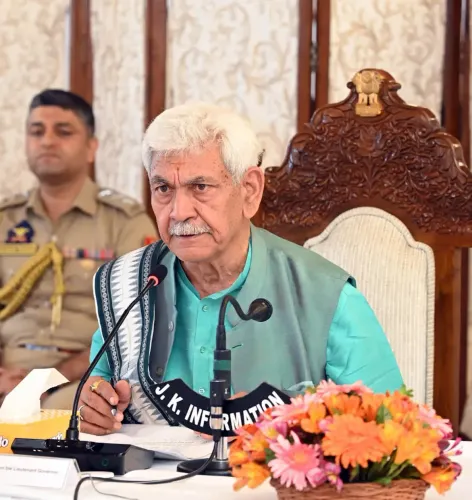
J&K L-G Manoj Sinha chaired a high-level Yatra review meeting in Srinagar on 10 June .
The Shri Amarnath Yatra 2026 will run for 57 days , from 3 July to 28 August .
The entire Yatra route has been declared a no-fly zone ; no helicopter services will be available this year.
Preparations reviewed across security, healthcare, transportation, disaster management , and other key sectors.
The cave shrine sits at 3,888 metres above sea level and is accessible via the Pahalgam and Baltal base camp routes.
The Yatra concludes on 28 August , coinciding with Shravan Purnima and Raksha Bandhan .
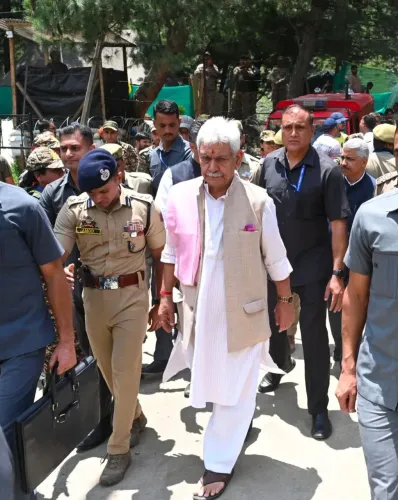
Jammu & Kashmir Lieutenant Governor Manoj Sinha on Wednesday, 10 June chaired a high-level review meeting in Srinagar to assess preparations for the Shri Amarnath Yatra 2026, which is scheduled to begin on 3 July and run for 57 days until 28 August. The pilgrimage, one of India's largest annual religious gatherings, will this year be conducted entirely on foot and by land, with the entire Yatra route declared a no-fly zone and no helicopter services available to pilgrims.
Key Developments from the Review Meeting
Senior bureaucrats and officials from across the Jammu & Kashmir Administration attended the meeting. Departments briefed the Lieutenant Governor on readiness across critical areas including security, transportation, healthcare, accommodation, sanitation, power supply, water availability, and disaster management along both Yatra routes. Officials confirmed that preparations are progressing on schedule, with all departments working in coordination.
What the L-G Directed
Sinha underscored the importance of inter-departmental coordination, directing officials to ensure that all essential services and infrastructure are fully operational well before the Yatra commences. He also called for continuous monitoring of all arrangements and instructed that any emerging issues be addressed promptly. The meeting reviewed contingency plans, emergency response mechanisms, and traffic management strategies to manage the anticipated volume of pilgrim movement efficiently.
About the Yatra Route and the Shrine
The Amarnath cave shrine is situated at an altitude of 3,888 metres above sea level in the Kashmir Himalayas. It houses a naturally occurring ice stalagmite that devotees believe symbolises the powers of Lord Shiva, with the formation reportedly waxing and waning in accordance with the lunar cycle. Pilgrims can access the shrine via two routes: the traditional, longer Pahalgam base camp route or the shorter Baltal base camp route.
No-Fly Zone and Pilgrim Safety
Notably, the administration has declared the entire Yatra route a no-fly zone this year, meaning helicopter services — previously available to pilgrims — will not operate during the 2026 season. This decision places a heightened emphasis on ground-level logistics, medical infrastructure, and crowd management along both approach routes. The Yatra concludes on 28 August, coinciding with Shravan Purnima and the Raksha Bandhan festival.
With the review process now formally under way, all departments have been tasked with finalising action plans and ensuring full readiness ahead of the 3 July commencement.
Point of View
And the review meeting's emphasis on ground logistics reflects that. Helicopter services had long served as a safety valve — for medical evacuations and for pilgrims unable to complete the trek on foot. Removing them entirely raises the stakes for ground-level medical infrastructure and emergency response, which have historically been stretched during peak footfall days. The administration's assurances of coordinated readiness are routine pre-Yatra language; the real measure will be response times during the first major weather event or medical emergency on the high-altitude route.
NationPress
26 Oct 2026
Frequently Asked Questions
When does the Amarnath Yatra 2026 start and end?
The Shri Amarnath Yatra 2026 begins on 3 July and concludes on 28 August, spanning 57 days. It ends on Shravan Purnima, which this year coincides with the Raksha Bandhan festival.
Why are there no helicopter services for Amarnath Yatra 2026?
The entire Amarnath Yatra route has been declared a no-fly zone for 2026, which means helicopter services that were previously available to pilgrims will not operate this season. The administration has not publicly detailed the specific reasons behind the decision.
What routes can pilgrims take to reach the Amarnath cave shrine?
Pilgrims can access the Amarnath cave shrine via two routes: the traditional, longer Pahalgam base camp route or the shorter Baltal base camp route. Both routes are managed by the Jammu & Kashmir Administration during the Yatra season.
What preparations has the J&K administration made for the Yatra?
The administration has reviewed arrangements across security, transportation, healthcare, accommodation, sanitation, power supply, water availability, and disaster management. Contingency plans, emergency response mechanisms, and traffic management strategies have also been assessed.
Where is the Amarnath cave shrine located?
The Amarnath cave shrine is situated at 3,888 metres above sea level in the Kashmir Himalayas. It houses a naturally formed ice stalagmite that devotees associate with Lord Shiva, believed to wax and wane with the lunar cycle.