J&K Assembly rejects bill to mandate govt school enrolment for officials' children
Synopsis
The J&K Assembly voted down a bill that would have forced ministers, MLAs, and government employees to enrol their children in state-run schools. The bill's defeat lays bare a trust deficit: officials who could drive reform are exempt from its consequences, while government schools average fewer than 5 teachers each and 20% lack girls' toilet facilities.
Key Takeaways
The J&K Assembly rejected a private member's bill on 24 September 2026 that sought mandatory enrolment of officials' children in government schools.
The bill was moved by Langate MLA Sheikh Khursheed Ahmad and opposed by Education Minister Sakina Itoo .
Itoo argued the measure was not feasible and violated children's fundamental right to choose their school.
Government schools in J&K average 4.8 teachers per school versus 13.7 in private schools, according to Ministry of Education data.
20 per cent of J&K government schools reportedly lack functional toilet facilities for female students.
Teachers in government schools are frequently diverted to non-teaching duties such as election and census work, leaving classrooms unattended.
The Jammu & Kashmir Legislative Assembly on Thursday, 24 September 2026, rejected a private member's bill that sought to make enrolment of children of government servants and public representatives in government schools compulsory. The bill, introduced by Langate MLA Sheikh Khursheed Ahmad, was voted down after the government opposed it on constitutional and practical grounds.
What the Bill Proposed
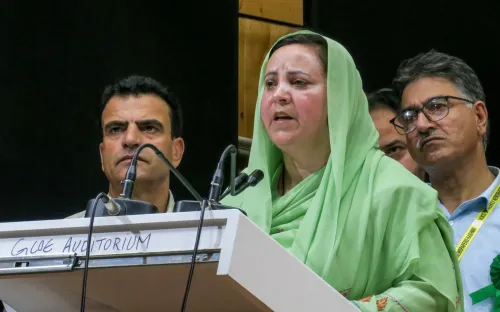
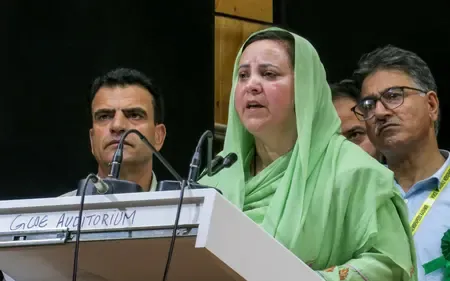
Sheikh Khursheed Ahmad moved the bill seeking leave to introduce legislation that would legally oblige children of ministers, MLAs, and government employees to attend state-run schools. The MLA argued that the crisis in government schools was not merely one of infrastructure — enrolment numbers mattered equally, and compelling officials to send their own children to these institutions could help rebuild public trust in the system.
He contended that policymakers who have a stake in the outcome are more likely to push for meaningful reforms, and that enrolment by the children of the powerful would catalyse improvements in overall school quality.
Why the Government Opposed It
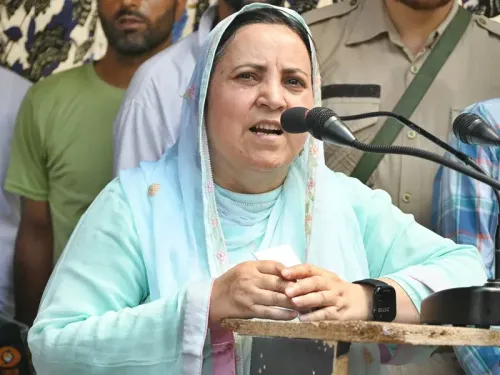
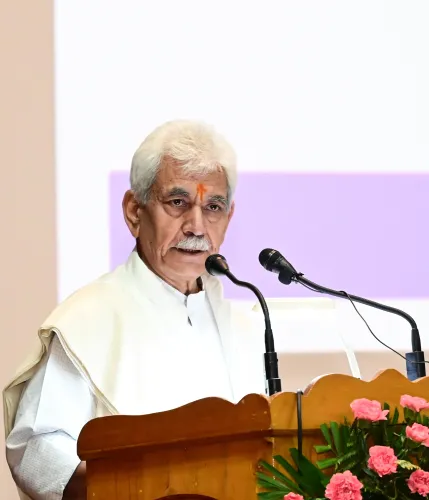
Education Minister Sakina Itoo acknowledged the bill's intent but argued that mandatory enrolment was neither feasible nor constitutionally sound. She stressed that children hold a fundamental right and liberty to choose where they pursue their education — a right that a compulsory enrolment law would curtail.
Itoo noted that infrastructure upgradation of government schools was already underway, and that the remaining institutions would be taken up in future phases. She cited NEET qualifiers from government schools as evidence that students from these institutions were capable of competing at the national level, and urged Khursheed to withdraw the bill. He declined, pressing for a vote — which the House ultimately decided against the bill.
The Ground Reality in J&K Government Schools
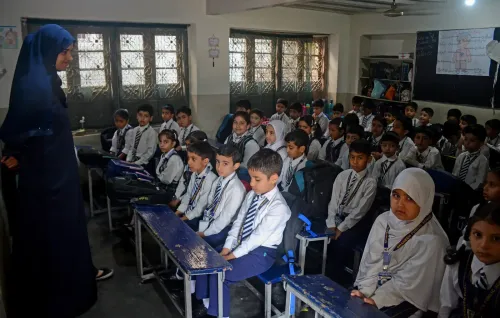
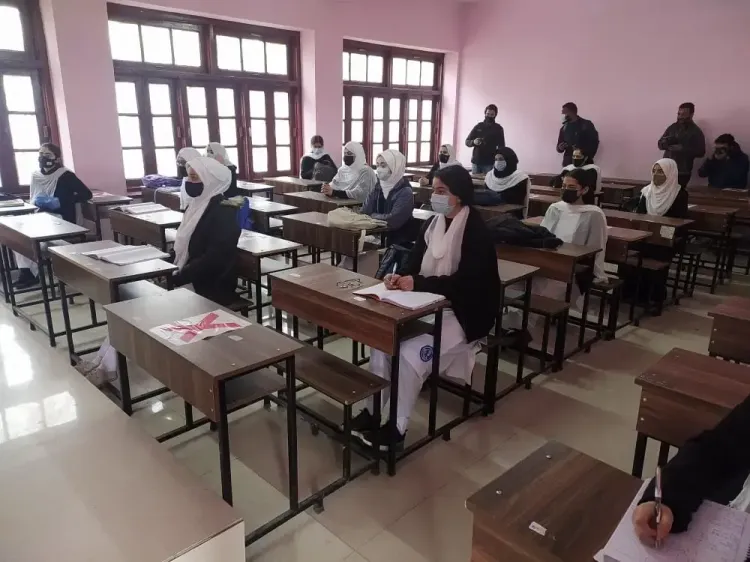
The debate surfaces deep structural concerns about the state of public education in Jammu & Kashmir. According to official data from the Ministry of Education, government schools in J&K average only 4.8 teachers per school, compared to 13.7 teachers per school in private institutions — a gap that creates significant pedagogical and administrative strain.
Government school teachers are frequently deployed for non-teaching duties, including roles as Booth Level Officers (BLOs) during elections and for census data collection, leaving classrooms unattended. Unlike private schools, which maintain internal substitute rosters to ensure daily timetables are met, government schools have no comparable replacement mechanism when a teacher is absent or reassigned.
Infrastructure deficits compound the problem. Many rural government schools reportedly suffer from crumbling walls, lack basic electricity, and face acute shortages of classroom equipment. Infrastructure reports indicate that 20 per cent of government schools in the region lack functional toilet facilities for female students — a figure that has drawn concern from education advocates and rights groups alike.
Context and Significance
The rejection of the bill reflects a recurring tension in Indian public policy: the gap between the ideals of a shared civic institution and the reality of a two-tier education system where those with means — including policymakers — opt out of government schools. This dynamic weakens the political incentive to invest meaningfully in reform.
Notably, similar proposals have been floated in other Indian states over the years, often running into the same objections around personal liberty and administrative feasibility. The J&K bill's defeat keeps that pattern intact, even as data points to a widening trust deficit between government schooling and the families it is meant to serve.
With assembly discussions now on record, pressure may mount on the Education Department to table a credible roadmap for school upgradation — particularly on the teacher deployment and sanitation fronts — before the next budget session.
Point of View
Removing the personal incentive to act. Education Minister Itoo's invocation of children's 'fundamental right to choose' is constitutionally accurate but sidesteps the harder question — whether a system so visibly unequal can self-correct without forcing accountability upward. The teacher-to-student ratio data (4.8 vs 13.7) and the sanitation gap are not new disclosures; they have appeared in official reports for years. The real story is that the Assembly now has these figures on its floor record and still chose inaction. The next test is whether the Education Department produces a time-bound upgradation plan, or whether this becomes another shelved debate.
NationPress
24 Sept 2026
Frequently Asked Questions
What did the rejected J&K Assembly bill propose?
The bill, moved by Langate MLA Sheikh Khursheed Ahmad, sought to make it mandatory for children of government servants, ministers, and MLAs to attend government schools. It was voted down by the J&K Assembly on 24 September 2026 after the government opposed it.
Why did the J&K government oppose the mandatory school enrolment bill?
Education Minister Sakina Itoo argued that mandatory enrolment in government schools was not constitutionally feasible, as children hold a fundamental right to choose where they pursue their education. She also said infrastructure upgradation of government schools was already in progress.
What is the current state of government schools in Jammu & Kashmir?
According to Ministry of Education data, government schools in J&K average only 4.8 teachers per school compared to 13.7 in private institutions. Additionally, 20 per cent of government schools reportedly lack functional toilet facilities for female students, and teachers are often diverted to non-teaching duties.
Who moved the bill in the J&K Assembly?
The bill was a private member's bill introduced by Sheikh Khursheed Ahmad, the MLA from Langate constituency. He argued that enrolment of officials' children in government schools would create a political incentive to improve them.
Has a similar bill been proposed elsewhere in India?
Yes, similar proposals mandating enrolment of officials' children or government employees in public schools have been floated in several Indian states over the years. They have generally faced the same objections around personal liberty and administrative feasibility, and none have been enacted into law at the national level.