SC issues contempt notice to Education Secretary over religious, secular school regulation order
Synopsis
The Supreme Court has hauled the Union Education Secretary into contempt proceedings for allegedly ignoring a May 2026 directive to act on a petition seeking mandatory registration and monitoring of unrecognised religious and secular schools for children under 14 — raising sharp constitutional questions about Article 30, Article 21A, and the state's oversight role over religious educational institutions.
Key Takeaways
The Supreme Court on 15 September 2026 issued contempt notice to Union Education Secretary T.K.
The bench of Justices Dipankar Datta and Sheel Nagu sought a response on a contempt petition filed by advocate Ashwini Kumar Upadhyay .
Upadhyay alleged the Centre failed to act on his representation dated 10 February 2026 , despite the court's 11 May direction to decide within a stipulated period.
The petition seeks mandatory registration, recognition, and monitoring of all institutions imparting secular or religious education to children up to 14 years .
Upadhyay alleged a 'massive mushrooming' of unregistered institutions in bordering districts, following visits to Uttar Pradesh in January .
The Supreme Court will next hear the contempt proceedings on 16 October .
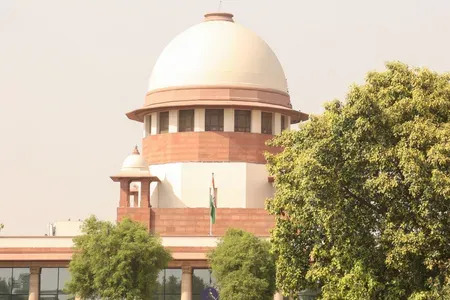
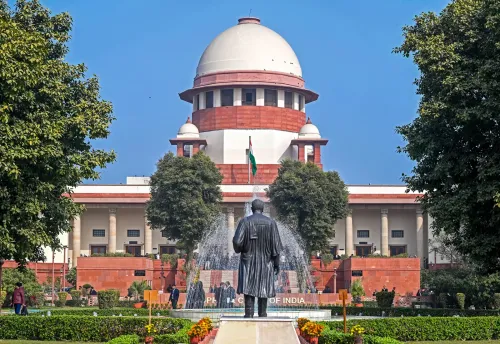
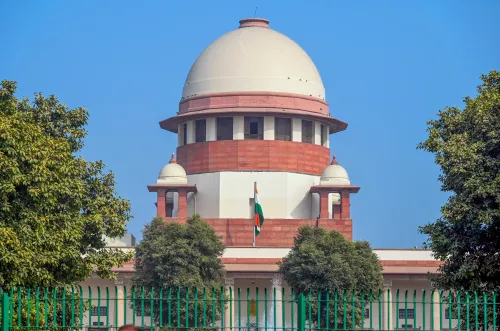
The Supreme Court on Tuesday, 15 September 2026, issued notice in contempt proceedings against the Secretary of the Union Education Ministry, T.K. Anil Kumar (IAS), over alleged non-compliance with its direction to act on a representation seeking registration, recognition, and monitoring of institutions imparting secular or religious education to children below the age of 14 years. The move escalates a prolonged legal battle that has now entered its contempt phase.
Background of the Case
A bench of Justices Dipankar Datta and Sheel Nagu sought a response from the Education Secretary on the contempt petition filed by advocate Ashwini Kumar Upadhyay. Upadhyay alleged that the Centre failed to comply with the apex court's direction within the stipulated period, despite a specific order passed on 11 May.
The 11 May order had disposed of Upadhyay's original writ petition after the court took note of his representation dated 10 February 2026 before the Union Education Ministry. The court at that stage had declined to entertain the writ petition directly and instead directed the Centre to take a decision on the representation within a specified timeframe.
What the Petitioner Alleged
In his contempt petition, Upadhyay claimed that despite the Supreme Court's clear direction, the Education Secretary did not take any decision on his representation. He alleged a 'massive mushrooming' of non-registered and non-recognised institutions, particularly in bordering districts of the country, following visits to several bordering districts of Uttar Pradesh in January.
Upadhyay contended that children were being adversely affected by the absence of registration, recognition, supervision, and monitoring of such institutions. His original representation sought directions to both the Centre and state governments to register, recognise, supervise, and monitor all institutions imparting secular education and/or religious instruction to children up to the age of 14 years.
Constitutional Arguments Raised
The petition raises significant constitutional questions, including the scope of Article 30(1) of the Constitution — which deals with the right of minorities to establish and administer educational institutions. Upadhyay has sought a declaration that Article 30(1) is a specific reiteration of Article 19(1)(g) (right to practise any profession), and that institutions imparting religious instruction fall under Article 26 of the Constitution.
The petition also invoked Article 21A — the right to free and compulsory education — and relied on the Supreme Court's observations in State of Tamil Nadu v. K. Shyam Sunder, arguing that equal quality education for children cannot be ensured without proper oversight of educational institutions.
History of Litigation on the Issue
This is not the first time Upadhyay has approached the apex court on this issue. In August, the Supreme Court dismissed as withdrawn his third petition on the same matter, clearly indicating it would not entertain successive petitions after earlier proceedings concerning the same cause. An earlier writ petition had been disposed of by granting Upadhyay liberty to approach the competent authority, while a second was dismissed with an observation that he should await a decision on his representation.
The contempt proceedings are now scheduled to be taken up by the Supreme Court on 16 October, when the Education Secretary's response will be expected before the bench.
Point of View
Even after an explicit court direction, is the kind of institutional non-response that the Supreme Court has historically taken seriously. However, mainstream coverage misses the deeper tension: any mandatory registration framework for religious schools risks challenging minority rights under Article 30, meaning a final ruling could reshape how India balances state oversight with constitutionally protected religious education. The next hearing on 16 October will test whether the government chooses compliance or continued delay.
NationPress
15 Sept 2026
Frequently Asked Questions
Why did the Supreme Court issue a contempt notice to the Union Education Secretary?
The Supreme Court issued the contempt notice because the Union Education Secretary allegedly did not act on a representation seeking registration and monitoring of religious and secular schools for children under 14, despite the court directing the Centre to do so by a stipulated deadline in its 11 May order. Advocate Ashwini Kumar Upadhyay filed the contempt petition after the Ministry failed to respond.
What does Ashwini Kumar Upadhyay's petition seek?
The petition seeks directions to the Centre and state governments to register, recognise, supervise, and monitor all institutions imparting secular or religious education to children up to 14 years. It also seeks constitutional declarations on the scope of Article 30(1), Article 19(1)(g), and Article 26.
What did Upadhyay allege about unrecognised schools?
Upadhyay alleged a 'massive mushrooming' of non-registered and non-recognised educational institutions, particularly in bordering districts of the country, following his visits to several such districts in Uttar Pradesh in January. He claimed children were being harmed by the lack of oversight.
When will the Supreme Court next hear this case?
The contempt proceedings are scheduled to be taken up by the Supreme Court on 16 October, when the Education Secretary's response to the notice is expected.
How many petitions has Upadhyay filed on this issue?
Upadhyay has filed multiple petitions on this issue. In August, the Supreme Court dismissed as withdrawn his third petition on the same matter, stating it would not entertain successive petitions after earlier proceedings on the same cause. The current contempt petition arises from the court's 11 May direction in one of the earlier proceedings.