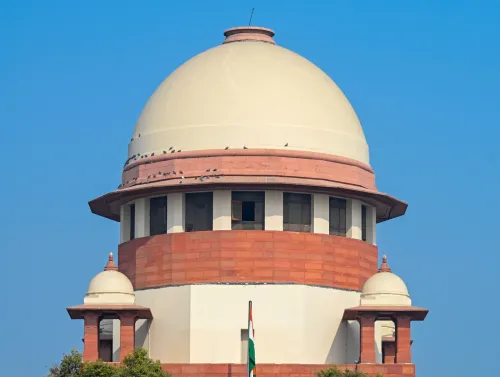
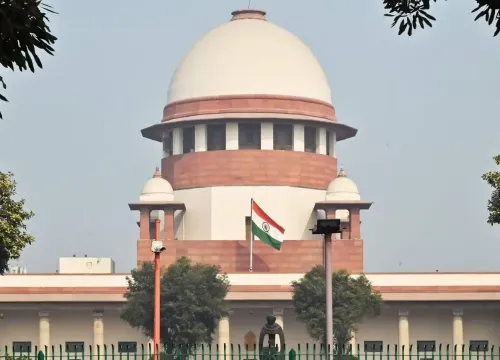
Supreme Court dismisses Ashwini Upadhyay's PIL on regulating religious instruction bodies
Synopsis
The Supreme Court refused to entertain advocate Ashwini Kumar Upadhyay's third attempt to get judicial directions for regulating institutions that impart religious instruction to children under 14 — dismissing it as withdrawn after signalling it would not hear a repeat petition. The constitutional questions he raised about Article 30, minority institutions, and state oversight remain judicially unresolved.
Key Takeaways
The Supreme Court dismissed as withdrawn a PIL by advocate Ashwini Kumar Upadhyay on 10 August seeking regulation of institutions imparting religious instruction to children up to 14 years .
A bench of Justice Aravind Kumar and Justice Vipul M.
Pancholi refused to entertain the petition, noting it was Upadhyay's third petition on the same subject.
The PIL sought registration, recognition, supervision, and monitoring of all such institutions by the Centre and state governments .
The petitioner alleged unregistered institutions were proliferating in border districts of Uttar Pradesh and across the country, raising internal security concerns.
Constitutional questions on Articles 19, 25, 26, 28, and 30 raised in the petition remain unresolved by the court.
The Supreme Court on Monday, 10 August dismissed as withdrawn a public interest litigation (PIL) filed by advocate Ashwini Kumar Upadhyay, which sought directions to register, recognise, supervise, and monitor all institutions imparting secular education and/or religious instruction to children up to the age of 14 years. The bench made clear at the outset that it would not entertain the petition.
Court's Position on the PIL
A bench of Justice Aravind Kumar and Justice Vipul M. Pancholi observed that this was the third petition filed by Upadhyay on the same subject, after the apex court had already declined to entertain two earlier similar petitions. The court noted that the first writ petition had been disposed of by directing Upadhyay to make a representation to the relevant authorities, and the second was dismissed after the court observed that he needed to await a decision on that representation.
Faced with the bench's firm refusal to entertain a fresh petition on identical grounds, the petitioner chose to withdraw the PIL rather than contest the court's position.
What the PIL Sought
Filed under Article 32 of the Constitution, the petition urged the Centre and state governments to register, recognise, supervise, and monitor all educational institutions — whether imparting secular or religious instruction — catering to children up to 14 years of age. It also sought constitutional declarations on the interplay between Articles 19, 25, 26, 28, and 30, including whether Article 30(1) is a specific reiteration of Article 19(1)(g), and whether the phrase 'educational institutions of their choice' under Article 30 refers exclusively to secular or professional institutions rather than religious ones.
Allegations and Security Concerns Raised
The petition claimed that Upadhyay, during visits to the districts of Gonda, Bahraich, Shravasti, Balrampur, Siddharthnagar, and Maharajganj in Uttar Pradesh from 23 January 2026 onwards, encountered non-registered and non-recognised institutions. It alleged that further inquiry revealed the proliferation of such institutions in bordering districts across the country.
The petitioner alleged that thousands of unregistered and unregulated institutions were reportedly 'radicalising gullible young children under the garb of imparting religious instruction', and contended that the absence of government oversight had implications for internal security, fraternity, unity, and national integration. The plea also raised concerns about child safety, alleging that such institutions could facilitate trafficking and child labour and impede the delivery of welfare schemes.
Constitutional Arguments Raised
The petition argued that the government is obligated under Article 21-A, read with Articles 39(f), 45, and 51A(k), to ensure registration, recognition, supervision, and monitoring of all institutions imparting education or religious instruction to children up to 14 years. It further contended that Article 21-A mandates not just free and compulsory education but also equal quality education — which, the plea argued, cannot be ensured without government oversight of such institutions. The petition relied on the Supreme Court's earlier judgment in State of Tamil Nadu vs. K. Shyam Sunder in support of this position.
What Happens Next
With the PIL dismissed as withdrawn, the legal challenge on this issue — at least through this petitioner — comes to a close for now. The broader constitutional questions raised regarding minority educational institutions, religious instruction, and state oversight remain unsettled by judicial pronouncement, leaving the policy debate to the legislative and executive domains.
Point of View
But the underlying policy question — whether the state can or should regulate institutions imparting religious instruction to minors — remains live and contested. The court's silence on the constitutional merits of Articles 26 and 30 leaves a significant ambiguity that legislators and regulators will eventually have to confront. Upadhyay's repeated filings reflect a broader political current seeking to bring minority religious institutions under state oversight; the court's consistent reluctance to engage suggests the judiciary views this as a matter for the executive and legislature, not litigation. That restraint is notable — but it does not resolve the governance gap the petition pointed to.
NationPress
25 Sept 2026
Frequently Asked Questions
Why did the Supreme Court dismiss Ashwini Kumar Upadhyay's PIL on religious instruction institutions?
The Supreme Court dismissed the PIL as withdrawn because it was the third petition filed by Upadhyay on the same subject. The bench of Justice Aravind Kumar and Justice Vipul M. Pancholi made clear at the outset that it would not entertain a repeat petition after having declined two earlier similar ones.
What did the PIL seek from the Supreme Court?
The PIL sought directions to the Centre and state governments to register, recognise, supervise, and monitor all institutions imparting secular education or religious instruction to children up to 14 years of age. It also sought constitutional declarations on the scope of Articles 19, 26, and 30 concerning minority educational institutions.
What allegations did the petitioner make about unregistered religious institutions?
The petitioner alleged that thousands of unregistered and unregulated institutions were reportedly radicalising children under the guise of religious instruction, based on visits to districts in Uttar Pradesh from January 2026 onwards. He also alleged these institutions posed risks to internal security, child safety, and the implementation of welfare schemes.
What constitutional provisions were at the centre of this PIL?
The PIL raised questions about the interplay between Articles 19, 25, 26, 28, and 30 of the Constitution, particularly whether Article 30(1) is a reiteration of Article 19(1)(g) and whether 'educational institutions of their choice' under Article 30 includes religious institutions. It also invoked Article 21-A on the right to free and compulsory education.
What happens to the constitutional questions raised after the PIL's withdrawal?
The withdrawal means the Supreme Court has not ruled on the constitutional merits of the petition. The questions raised about state regulation of religious instruction institutions and the scope of minority educational rights under Article 30 remain judicially unresolved and open to future legislative or executive action.