Did 70 Youth from J&K Experience Legislative History at Delhi Assembly?

Synopsis
A remarkable journey for 70 youths from Jammu and Kashmir as they explore the Delhi Assembly, gaining insights into India's legislative history and democratic practices. This visit, part of the Kashmiri Youth Exchange Programme, aims to foster national integration and youth engagement.
Key Takeaways
70 youths from J&K engaged with legislative history.
Visit fostered national integration and youth involvement.
Delhi Assembly is India's first fully solar-powered legislative body.
Participants learned about the digitalized legislative system .
Insights on democratic practices were shared.
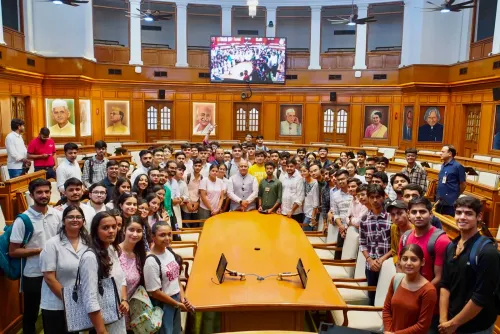
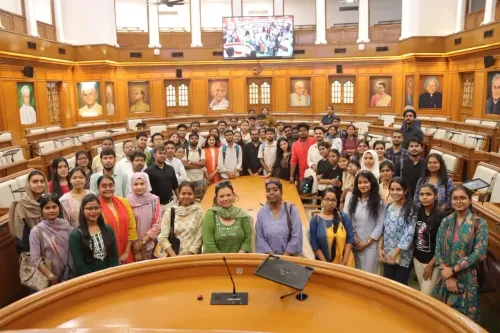
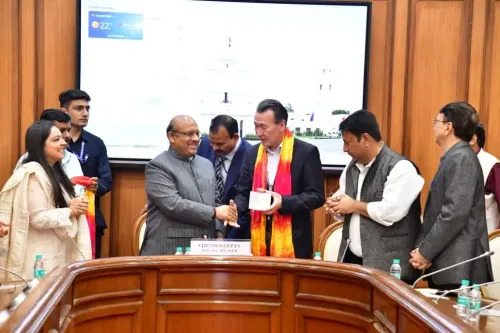
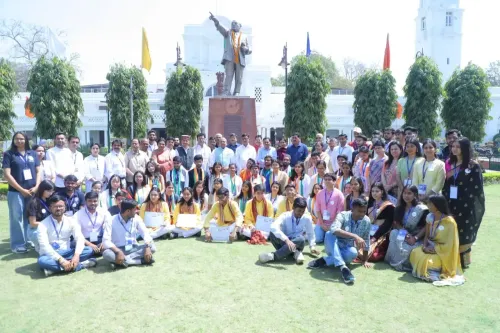
New Delhi, Jan 19 (NationPress) Emphasizing the essence of national unity and youth involvement, 70 young individuals from Jammu and Kashmir toured the Delhi Assembly on Monday, according to an official statement.
These youths, hailing from the districts of Anantnag, Kupwara, Baramulla, Budgam, Srinagar, and Pulwama, participated in this visit as part of the Kashmiri Youth Exchange Programme (KYEP). This initiative is organized under the 'Mera Yuva Bharat' program, a collaborative effort of the Union Ministry of Youth Affairs and Sports and the Ministry of Home Affairs.
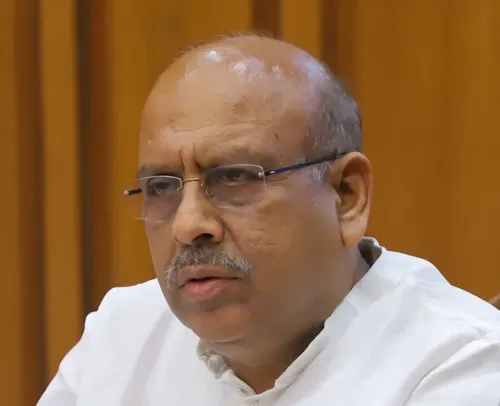
During their visit, officials from the Assembly Secretariat informed the youth that, under the guidance of Delhi Assembly Speaker Vijender Gupta, the Assembly has become India's pioneering fully solar-powered legislative body.
The youth learned about the fully digitalized system for conducting House proceedings, integrated with the National e-Vidhan Application (NeVA).
They were also introduced to Speaker Gupta's vision of transforming the Delhi Assembly into a site of cultural and national heritage.
According to a statement from the Delhi Assembly Secretariat, this was a first-time visit to the national capital for many participants, making the experience both significant and unforgettable.
Throughout the visit, the youth gained insight into the workings of the House, including legislative debates, question hours, and the role of elected officials in democratic governance.
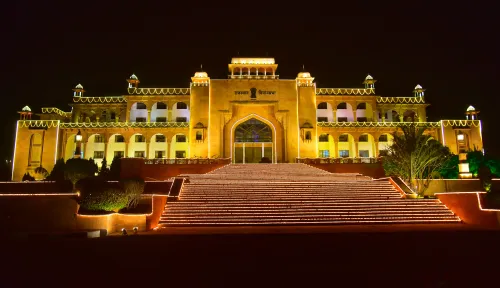
They were also enlightened about the historical and architectural significance of the Vidhan Sabha building, which formerly served as the seat of British India, hosting the Central Legislative Council (now the Parliament of India) and a temporary Central Secretariat after the national capital's relocation from Kolkata to Delhi in December 1911.
The participants engaged with Assembly Secretariat officers, posing questions regarding legislative operations, public administration, and democratic practices. They learned about the contributions of notable leaders like Vithalbhai Patel in strengthening parliamentary traditions.
This visit offered young people valuable perspectives on India's constitutional heritage, democratic institutions, and governance structure.
Point of View
It is heartening to see initiatives like the Kashmiri Youth Exchange Programme fostering unity and engagement among the youth of India. Such programs are vital in bridging divides and promoting a deeper understanding of our democratic framework, enabling the next generation to actively participate in nation-building.
NationPress
27 Sept 2026
Frequently Asked Questions
What was the purpose of the youth's visit to the Delhi Assembly?
The visit aimed to enhance national integration and engage youth by familiarizing them with legislative history and democratic governance.
How many youth participated in the visit?
A total of 70 youths from Jammu and Kashmir participated in the visit.
What significant features were highlighted during the visit?
The visit highlighted the assembly's solar-powered initiative, digitalized proceedings, and the historical significance of the Vidhan Sabha building.
Which districts did the youth come from?
The youth came from Anantnag, Kupwara, Baramulla, Budgam, Srinagar, and Pulwama.
What was the impact of this visit on the participants?
Participants gained valuable insights into India's constitutional legacy, legislative practices, and the role of elected representatives in governance.