650-year-old Chinar tree in J&K's Budgam among Asia's oldest
Synopsis
A 650-year-old Chinar tree in Budgam — disclosed to the J&K Assembly on Wednesday — stands as one of Asia's oldest of its species. Its survival, protected by iron fencing and strict laws, spotlights a wider crisis: Chinar numbers across Kashmir are shrinking under the combined pressure of urbanisation, disease, and climate change.
Key Takeaways
A 650-year-old Chinar tree in Chattergam, Budgam is among the oldest of its species in Asia , the J&K Assembly was informed on 23 September 2026 .
The Forest, Ecology and Environment Department has installed an iron fence around the tree's root zone to prevent soil compaction and vehicular damage.
Cutting even a single branch of any Chinar requires prior permission from the local administration; carving, nailing, and bark damage are prohibited.
Chinar numbers across Kashmir Valley are declining due to ageing, disease, pest attacks, urban expansion, and climate change.
The J&K government has launched a comprehensive geo-tagging census of tens of thousands of Chinar trees, assigning each a unique digital identity.
The Chinar ( Platanus orientalis ), or 'Booni' , is the official state tree of J&K and takes around 150 years to reach full size.
A 650-year-old Chinar tree in Chattergam, Budgam district, Jammu and Kashmir, is among the oldest of its species in Asia, the Jammu and Kashmir Legislative Assembly was informed on Wednesday, 23 September 2026. The disclosure came in response to a question raised by Budgam MLA Aga Syed Muntazir Mehdi, placing the ancient tree's conservation status firmly on the legislative record.
Condition and Protection Measures
The Forest, Ecology and Environment Department told the Assembly that some older and dried branches of the tree had naturally fallen over time, while the remaining portions continue to stay green. The government has installed an iron fence around the tree's critical root zone to prevent soil compaction, root suffocation, and vehicular movement in its immediate vicinity.
Under existing legal safeguards, even cutting a single branch of a Chinar requires prior permission from the local administration. Activities such as hammering nails into the trees, affixing signboards, carving on the bark, and damaging the bark or roots are strictly prohibited.
Why Chinar Numbers Are Declining
The department attributed the decline in Chinar numbers across the Kashmir Valley to a combination of natural ageing, diseases, pest attacks, felling for developmental activities, shrinking land availability, and rapid population growth. Threats including urbanisation, illegal logging, and climate change continue to exert pressure on the species.
This is not an isolated concern — conservationists have long warned that the iconic tree is losing ground across the valley at a pace that outstrips natural regeneration.
Kashmir's Living Heritage
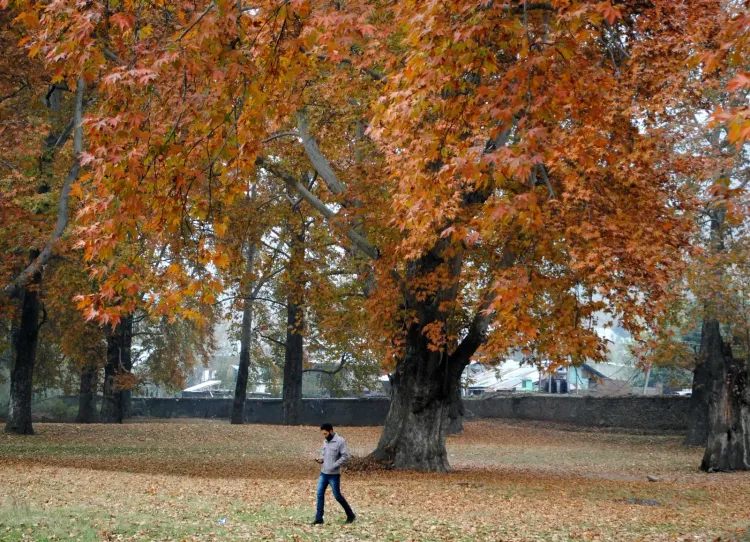
The Chinar (Platanus orientalis), locally called the 'Booni', is the official state tree of Jammu and Kashmir, celebrated for its majestic canopy and fiery red autumn foliage. The tree takes approximately 150 years to reach full size and can grow up to 30 metres tall with a massive trunk.
Widely planted and popularised across the Kashmir Valley by Mughal Emperors Akbar and Jahangir — most famously at the Naseem Bagh in Srinagar — the Chinar features prominently in Kashmiri art, papier-mâché crafts, and literature, and is a defining presence near historical shrines and Mughal gardens.
Government's Broader Conservation Drive
Beyond the Budgam tree, the Jammu and Kashmir government has undertaken a comprehensive census, geo-tagging tens of thousands of Chinar trees across the union territory. Each tree has been assigned a unique digital identity to enable continuous health monitoring. Cutting or felling a Chinar remains strictly illegal without formal permission from the district administration, and even standard branch pruning requires technical oversight, including the application of protective paste to cuts.
With the Budgam tree's extraordinary age now officially on record, attention will likely turn to whether the state's digital census and legal protections are sufficient to secure its survival for the next century.
Point of View
But the harder question is whether legislative attention translates into enforceable action on the ground. Geo-tagging tens of thousands of trees is a meaningful step, yet the department's own testimony acknowledges that urbanisation, illegal logging, and climate change continue unabated. Kashmir's Chinar crisis is ultimately a land-use crisis — heritage protection laws mean little when developmental pressures dictate on-the-ground decisions. The Mughal emperors who planted these trees built institutional culture around them; the modern state must match that commitment with verifiable enforcement, not just enumeration.
NationPress
23 Sept 2026
Frequently Asked Questions
How old is the Chinar tree in Budgam, Jammu and Kashmir?
The Chinar tree located at Chattergam in Budgam district is approximately 650 years old, making it one of the oldest of its species in Asia. This was officially confirmed to the J&K Legislative Assembly on 23 September 2026.
What protections are in place for the historic Chinar tree in Budgam?
The government has installed an iron fence around the tree's critical root zone to prevent soil compaction and restrict vehicular movement. Under existing rules, cutting even a branch requires prior administrative permission, and activities like nailing, carving, or damaging the bark are prohibited.
Why are Chinar trees declining in Kashmir?
Chinar numbers are falling due to a combination of natural ageing, diseases, pest attacks, felling for developmental projects, shrinking land availability, population growth, urbanisation, illegal logging, and climate change, according to the Forest, Ecology and Environment Department.
What is the Chinar tree and why is it important to Kashmir?
The Chinar (Platanus orientalis), locally called 'Booni', is the official state tree of Jammu and Kashmir. Introduced widely by Mughal emperors such as Akbar and Jahangir, it is central to Kashmiri art, literature, and cultural identity, and takes about 150 years to reach its full height of up to 30 metres.
What steps has the J&K government taken to conserve Chinar trees broadly?
The Jammu and Kashmir government has launched a comprehensive census and geo-tagging programme covering tens of thousands of Chinar trees across the union territory, assigning each a unique digital identity for health monitoring. Felling without formal district administration approval remains strictly illegal.