Nadda Plants Chinar Sapling in Shimla, Backs Ek Ped Maa Ke Naam
Synopsis
Union Health Minister J. P. Nadda planted a chinar sapling at Van Vihar, Gram Panchayat Shoghi in Shimla on 13 June 2026, renewing his pledge to nature conservation and calling on citizens to participate in PM Modi's Ek Ped Maa Ke Naam afforestation movement, which he described as a nationwide people's movement.
Key Takeaways
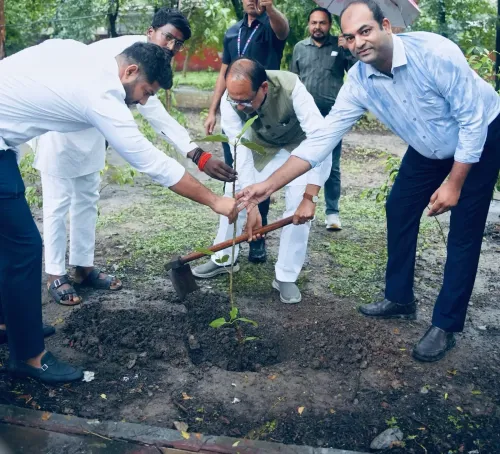
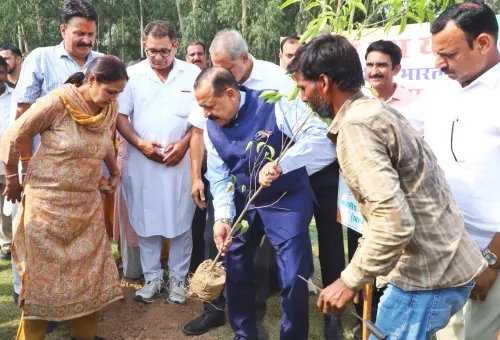
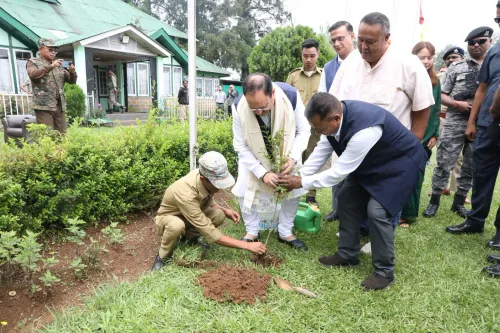
Nadda planted a chinar sapling at Van Vihar, Gram Panchayat Shoghi , Shimla on 13 June 2026 .
He renewed his pledge to nature conservation and called tree plantation 'the foundation of a clean and safe future for coming generations.' The event was linked to the Ek Ped Maa Ke Naam campaign launched by PM Narendra Modi on World Environment Day 2024 .
Nadda described the campaign as having grown into a 'large people's movement' across India.
The post carried the hashtag #12YearsOfSeva , connecting the act to a broader BJP communication exercise marking twelve years of Central governance.
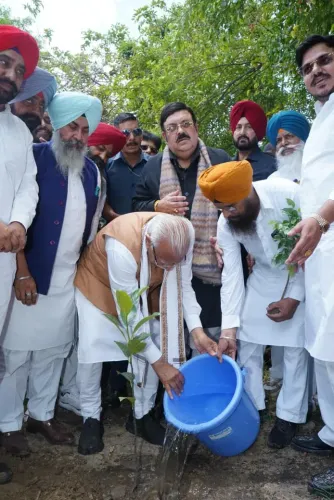
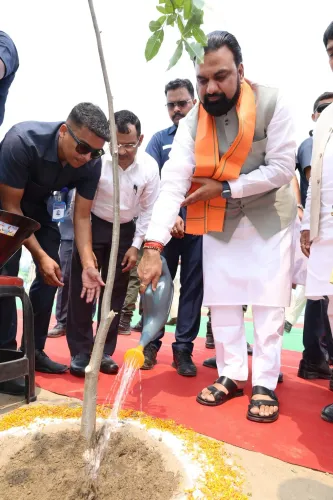
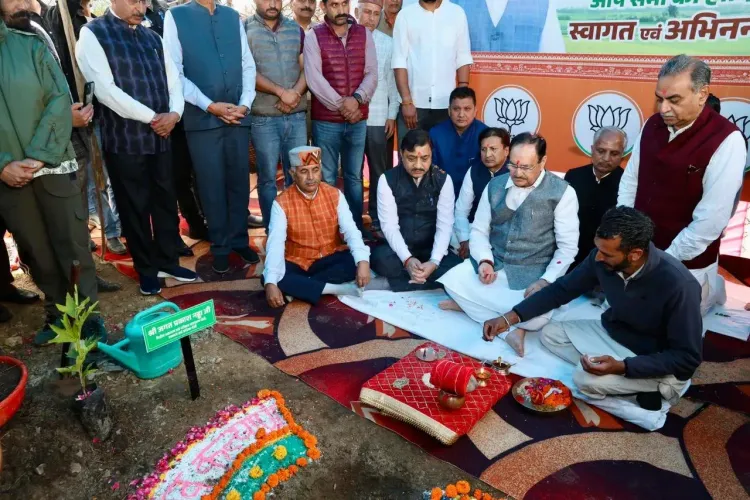
Union Health Minister J. P. Nadda planted a chinar sapling at Van Vihar, Gram Panchayat Shoghi, in Shimla on Saturday, 13 June 2026, reaffirming his commitment to nature conservation and environmental protection. The act was accompanied by a call for citizens to join the nationwide afforestation movement led under Prime Minister Narendra Modi.
Context
Posting on X, Nadda wrote — 'आज शिमला के वन विहार, ग्राम पंचायत शोघी में चिनार का पौधा रोपित कर प्रकृति के संरक्षण और संवर्धन का संकल्प दोहराया' — 'Today, at Van Vihar, Gram Panchayat Shoghi in Shimla, I planted a chinar sapling and renewed my pledge towards the conservation and promotion of nature.' He added that tree plantation is not merely a means of environmental protection, but also 'the foundation of a clean and safe future for our coming generations.'
The chinar, a broad-leafed maple tree native to the Himalayan and Kashmir regions, carries cultural and ecological significance in the hill states of northern India. Shimla, the capital of Himachal Pradesh, provides a natural backdrop for such conservation gestures given its forest cover and mountainous terrain.
Policy Backdrop
Nadda specifically invoked the Ek Ped Maa Ke Naam (One Tree in Mother's Name) campaign, describing it as having grown into a 'large people's movement' (vṛhad jan-āndolan) across the country. The campaign was launched by Prime Minister Narendra Modi on World Environment Day 2024 with the aim of encouraging every citizen to plant a tree in honour of their mother, embedding an emotional and cultural dimension into large-scale afforestation.
Since its launch, the campaign has been promoted by ministers, legislators, and public figures across party lines and state governments, making it one of the more visible civilian-participation drives in India's environmental policy calendar. India has committed to ambitious forest and tree cover targets under its nationally determined contributions to the Paris Agreement, and mass plantation drives form a key plank of that strategy.
Stakeholders and Impact
The primary audience for events of this kind is the general public, particularly in semi-urban and rural communities such as Gram Panchayat Shoghi, where local participation in plantation drives can translate into measurable green cover. Senior political leaders visibly engaging in such activities are intended to normalise and incentivise citizen action at the grassroots level.
Environmental groups and state forest departments typically track sapling survival rates following such campaigns, which remain a persistent challenge in mass plantation exercises. The involvement of a Union Cabinet minister also signals continued Central government attention to Himachal Pradesh's ecological priorities, particularly as the hill state grapples with issues of landslides, deforestation, and climate-induced weather events.
What's Next
With World Environment Day falling on 5 June each year, the weeks around it typically see a surge in plantation events and policy announcements. State governments are expected to report aggregated plantation figures under the Ek Ped Maa Ke Naam campaign, and the run-up to the next edition may see fresh targets or expanded outreach. The hashtag #12YearsOfSeva attached to Nadda's post also signals a broader BJP communication exercise marking twelve years of the party's governance at the Centre, framing environmental stewardship as part of that legacy.
Point of View
Using senior leaders as visible proxies to sustain momentum between formal policy announcements. The choice of a chinar sapling — ecologically and culturally resonant in India's hill states — adds a layer of regional sensitivity to what is otherwise a centrally driven campaign. The #12YearsOfSeva hashtag is telling: the party is actively weaving environmental stewardship into its governance narrative ahead of electoral cycles, positioning green action as a deliverable rather than a slogan. Whether sapling survival data eventually backs that narrative remains the key accountability question for civil society and state forest departments.
NationPress
13 Sept 2026
Frequently Asked Questions
What is the Ek Ped Maa Ke Naam campaign?
Ek Ped Maa Ke Naam, meaning 'One Tree in Mother's Name,' is a nationwide afforestation campaign launched by Prime Minister Narendra Modi on World Environment Day 2024, encouraging every citizen to plant a tree in honour of their mother.
Where did JP Nadda plant a tree in June 2026?
J. P. Nadda planted a chinar sapling at Van Vihar, Gram Panchayat Shoghi, in Shimla, Himachal Pradesh, on 13 June 2026.
What is a chinar tree and why is it significant?
The chinar is a broad-leafed maple tree native to the Himalayan and Kashmir regions. It holds cultural and ecological significance in northern India's hill states and is valued for its shade and biodiversity contribution.
What does #12YearsOfSeva mean in JP Nadda's post?
#12YearsOfSeva refers to twelve years of BJP-led governance at the Centre, a hashtag the party has used to highlight its record across sectors including environment, health, and infrastructure.
How does India's tree plantation drive connect to climate commitments?
India has committed to expanding forest and tree cover as part of its nationally determined contributions under the Paris Agreement. Mass plantation campaigns such as Ek Ped Maa Ke Naam are a key instrument for meeting those targets by mobilising citizen participation at scale.