Jaunpur SHG women stitch 5 lakh flags for Har Ghar Tiranga 2025
Synopsis
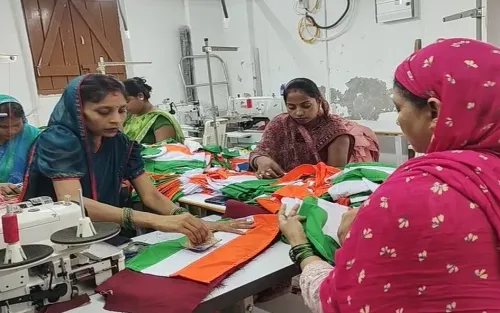
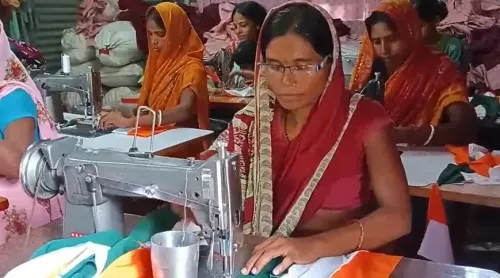
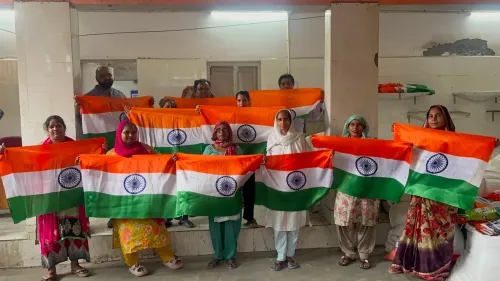
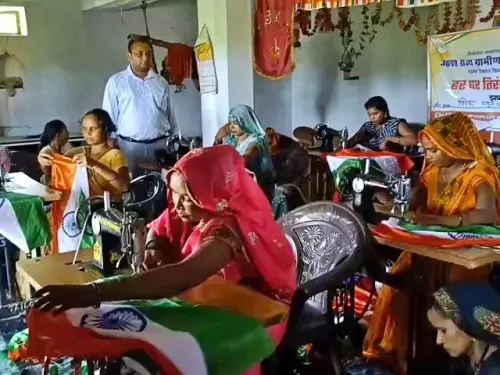
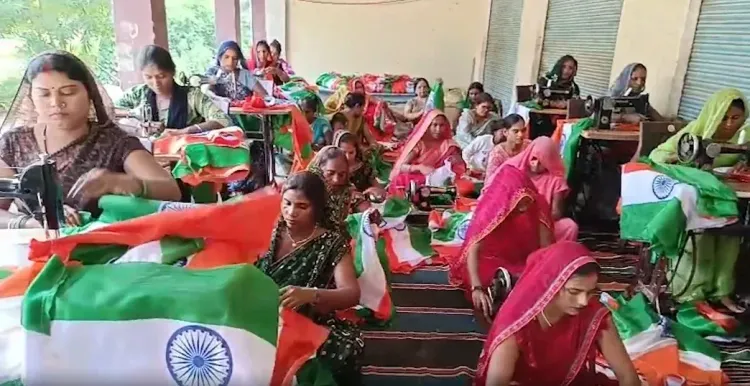
In Jaunpur, UP, 300 rural women from 62 self-help groups are stitching 5 lakh national flags for the Har Ghar Tiranga campaign — turning a patriotic drive into a livelihood opportunity. One member alone is earning up to ₹40,000, showing how NRLM is quietly converting government procurement into grassroots income.
Key Takeaways
300 women from 62 self-help groups in Jaunpur, UP , are manufacturing national flags ahead of Independence Day 2025 .
The district's production target is 5 lakh flags under the Centre's Har Ghar Tiranga and Tiranga Yatra campaigns.
Cluster-level organisations earn approximately ₹20 per flag ; individual SHG women earn ₹2–₹3 per flag .
Vijaylaxmi Maurya of the Bajrang Self-Help Group said her group alone is stitching 17,000 flags , earning her up to ₹40,000 .
The initiative is funded through the National Rural Livelihood Mission (NRLM) and is being executed across multiple blocks in Jaunpur.
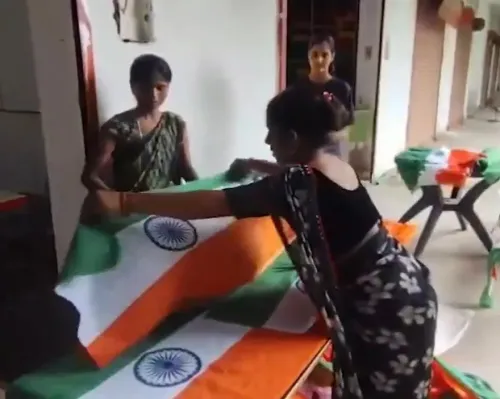
Around 300 women from 62 self-help groups (SHGs) in Jaunpur, Uttar Pradesh, are stitching national flags ahead of Independence Day, powering the Centre's 'Har Ghar Tiranga' campaign at the grassroots level. The district has been assigned a target of producing 5 lakh national flags under the National Rural Livelihood Mission (NRLM).
How the Campaign Is Being Executed
The flag-making drive is being carried out through cluster-level self-help groups spread across multiple blocks in Jaunpur. Each cluster-level organisation receives approximately ₹20 per flag prepared, while individual women working through SHGs are expected to earn between ₹2 and ₹3 per flag, depending on the work arrangement, according to officials.
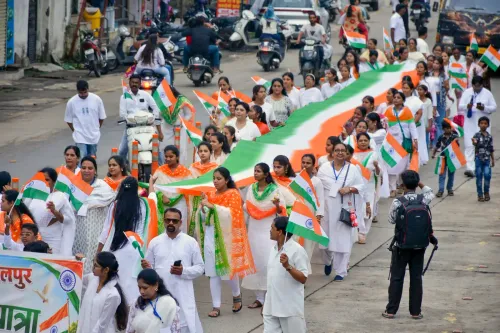
The initiative runs parallel to the 'Tiranga Yatra' campaign, with both drives feeding into the broader national push to hoist the tricolour at every household by 15 August.
Women Earn While They Stitch
Vijaylaxmi Maurya, a member of the Bajrang Self-Help Group, said her group has been assigned a target of stitching 17,000 flags, with more than 10 women from the group actively involved. 'By taking up this work, I am able to earn around ₹30,000 to ₹40,000,' Maurya said, highlighting the income boost the campaign has delivered to rural households.
Officials noted that the initiative is simultaneously helping the administration meet its production quota and generating supplementary livelihood for women who might otherwise have limited earning avenues.
What the Administration Said
Deputy Commissioner Jitendra Pratap Singh confirmed the district's 5 lakh flag production target and said work is being driven primarily through cluster-level self-help groups. 'We are working to achieve the target given by the government under the Har Ghar Tiranga campaign,' Singh said.
This is consistent with the NRLM's broader mandate of channelling government procurement through women-led rural collectives, giving SHGs a direct stake in national programmes.
Broader Significance
The Har Ghar Tiranga campaign, now in its third consecutive year, has increasingly relied on NRLM-linked SHGs for flag production — turning a patriotic drive into a rural employment mechanism. For Jaunpur's women, the exercise is both a civic contribution and a tangible economic opportunity, with collective earnings running into lakhs of rupees across the district's participating groups. Officials say the model could serve as a template for other districts in Uttar Pradesh looking to blend national campaigns with livelihood generation.
Point of View
And the government's decision to route flag procurement through NRLM self-help groups is one of its less-discussed structural choices. It converts a symbolic national exercise into a rural income transfer — but the per-flag rate of ₹2–₹3 for individual women, against ₹20 at the cluster level, raises questions about how equitably the margin is distributed within the supply chain. The model deserves scrutiny alongside celebration: if SHG members are doing the bulk of the labour, the arithmetic of who captures value matters. Scaling this to other districts, as officials suggest, should come with a closer look at the earnings split.
NationPress
23 Sept 2026
Frequently Asked Questions
What is the Har Ghar Tiranga campaign?
Har Ghar Tiranga is a Centre-led campaign that encourages every household in India to hoist the national flag on Independence Day, 15 August. Now in its third consecutive year, it is implemented at the district level through government agencies and, increasingly, through NRLM-linked self-help groups for flag production.
How many flags are being made in Jaunpur for Independence Day 2025?
Jaunpur district has been assigned a target of producing 5 lakh national flags for the Har Ghar Tiranga and Tiranga Yatra campaigns. The work is being carried out by around 300 women from 62 self-help groups across multiple blocks in the district.
How much are the women earning from this flag-making work?
Individual SHG members earn approximately ₹2 to ₹3 per flag, depending on the work arrangement. Vijaylaxmi Maurya of the Bajrang Self-Help Group said she is earning between ₹30,000 and ₹40,000 from the assignment, which includes a target of stitching 17,000 flags.
What is the National Rural Livelihood Mission (NRLM) and its role here?
The National Rural Livelihood Mission (NRLM) is a Centre-sponsored programme that organises rural women into self-help groups and connects them with income-generating work. In Jaunpur, NRLM-linked SHGs have been tasked with flag production, turning government procurement into a livelihood opportunity for rural women.
Who oversees the flag production in Jaunpur?
Deputy Commissioner Jitendra Pratap Singh is overseeing the district's flag production drive. He confirmed the 5 lakh flag target and said the work is being executed primarily through cluster-level self-help groups under the Har Ghar Tiranga campaign framework.