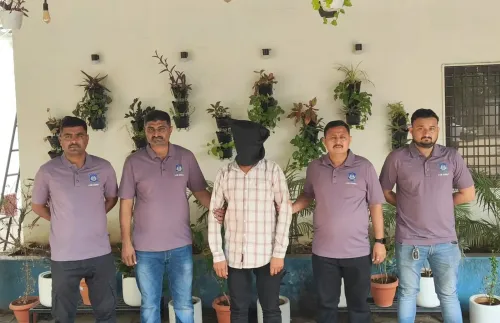
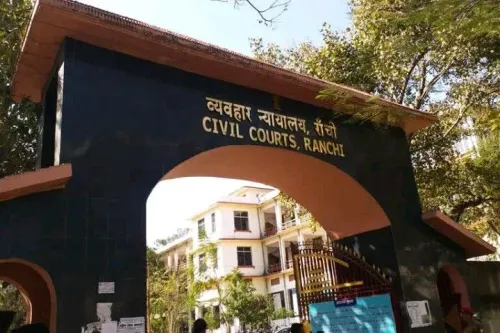
Jhansi court jails 3 for 10 years over 2,230 kg ganja seizure
Synopsis
Four years after the NCB found 2,230 kg of ganja hidden inside an LPG tanker at Jhansi’s Babina Toll Plaza, three traffickers from three states have each been sentenced to 10 years of rigorous imprisonment and fined ₹2 lakh. The verdict comes as the agency pivots from counting seizures to dismantling networks.
Key Takeaways
A Jhansi court sentenced three traffickers to 10 years of rigorous imprisonment on 28 November 2026 .
Each convict was fined ₹2 lakh under the NDPS Act .
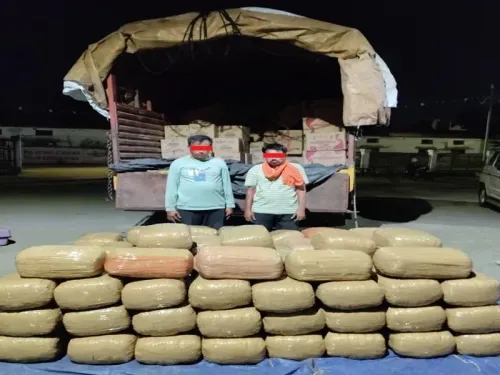
The NCB seized 2,230 kg of ganja hidden in an LPG tanker at Babina Toll Plaza in July 2022 .
The convicts are from Guna (MP) , Nagpur (Maharashtra) and Sambhal (UP) .
The NCB is implementing its Vision Document on Narcotics Control (2026–2029) , shifting to a network-centric approach.
A court in Jhansi, Uttar Pradesh, has sentenced three drug traffickers to 10 years of rigorous imprisonment and fined each of them ₹2 lakh over the seizure of 2,230 kg of ganja by the Narcotics Control Bureau (NCB) in 2022. The court of the Additional District and Sessions Judge, Jhansi, pronounced the sentence on Saturday, 28 November 2026, after finding the three guilty under the Narcotic Drugs and Psychotropic Substances (NDPS) Act. An NCB official disclosed the verdict on Sunday.
Who Was Convicted
The convicts are Hari Singh Meena of Guna, Madhya Pradesh; Satish P. Helonde of Nagpur, Maharashtra; and Jalaluddin Safi of Sambhal, Uttar Pradesh. The court held that the contraband was in their possession for the purpose of sale, according to an NCB statement.
The three come from three different states, which points to the inter-state nature of the supply chain the agency intercepted.
How the Ganja Was Seized
Acting on specific intelligence, the NCB seized the 2,230 kg consignment in July 2022 at the Babina Toll Plaza in Jhansi. Officials found the drugs hidden inside the LPG tanker of a vehicle.
According to the NCB statement, the consignment had originated from Raigarh, Odisha, and was meant to be delivered in Jhansi. Concealing narcotics inside tankers and other specialised cargo vehicles is a method enforcement agencies have repeatedly flagged on long-haul highway routes.
What the Prosecution Argued
During the hearing, the prosecution stressed the gravity of the offence and the commercial quantity of ganja involved. It also highlighted the harm drug trafficking causes to society and asked for stringent punishment, the statement said.
The court weighed the evidence on record and the circumstances of the case before convicting the accused. Under the NDPS Act, a ganja seizure above 20 kg counts as commercial quantity. Offences involving commercial quantity carry a minimum of 10 years of rigorous imprisonment and a fine of at least ₹1 lakh.
Notably, the verdict came about four years after the seizure, a timeline that reflects how long NDPS trials often take to reach conclusion.
NCB’s Shift to a Network-Centric Approach
The NCB said the conviction reinforces its zero-tolerance approach towards drug trafficking. It urged citizens to report information through the MANAS Helpline – 1933 and said informants’ identities are kept confidential.
The verdict comes as the agency holds regular discussions with multiple law enforcement bodies on implementing the Vision Document on Narcotics Control (2026–2029). The document marks a move from a seizure-centric to a network-centric approach.
On Saturday, the quarterly state-level Joint Co-ordination Committee (JCC) meeting for Jammu & Kashmir was convened in Jammu. According to an official statement, the meeting focused on several measures:
- 360-degree investigations.
- A whole-of-government approach to dismantling trafficking networks.
- Identifying and breaking up drug cartels.
- Financial investigations.
- Effective use of the PITNDPS Act.
What Comes Next
The convicts may challenge the verdict before a higher court. For the NCB, the case serves as a test of whether convictions in large-haul seizures can be secured consistently as the agency deepens its focus on dismantling entire trafficking networks.
Point of View
230 kg haul ending in the statutory minimum sentence, four years on, shows both the strength and the limits of India’s narcotics enforcement. The convictions matter, but the three men in the dock were couriers spread across three states. The suppliers who loaded the tanker and the buyers waiting in Jhansi remain unnamed. The NCB’s new network-centric vision will be judged by whether cases like this one eventually lead to financial trails and kingpins, not just to the drivers caught at toll plazas.
NationPress
29 Nov 2026
Frequently Asked Questions
What sentence did the Jhansi court give in the 2,230 kg ganja case?
The court of the Additional District and Sessions Judge, Jhansi, sentenced three traffickers to 10 years of rigorous imprisonment and fined each of them ₹2 lakh. They were convicted under the NDPS Act on 28 November 2026.
Who are the three convicts in the Jhansi ganja case?
They are Hari Singh Meena of Guna, Madhya Pradesh; Satish P. Helonde of Nagpur, Maharashtra; and Jalaluddin Safi of Sambhal, Uttar Pradesh.
How did the NCB seize the ganja in Jhansi?
Acting on specific intelligence, the NCB seized 2,230 kg of ganja hidden inside the LPG tanker of a vehicle at Babina Toll Plaza, Jhansi, in July 2022. According to the NCB, the consignment originated from Raigarh, Odisha, and was headed to Jhansi.
How can people report drug trafficking to the NCB?
People can report drug trafficking through the MANAS Helpline by dialling 1933. The NCB says informants’ identities are kept confidential.
What is the NCB’s Vision Document on Narcotics Control (2026–2029)?
It is a framework that shifts drug enforcement from a seizure-centric to a network-centric approach. It emphasises 360-degree investigations, financial probes, dismantling cartels and effective use of the PITNDPS Act.