Why Did the Jharkhand HC Rebuke the Government Over Madrasa Teacher Benefits?

Synopsis
The Jharkhand High Court's latest ruling highlights the ongoing struggle for retired madrasa educators to receive their rightful benefits. With the government summoned to court, this situation raises critical questions about accountability and justice in education.
Key Takeaways
The Jharkhand HC has criticized the government for failing to pay benefits to madrasa teachers.
Officials have been summoned to explain their non-compliance with court orders.
The case highlights the importance of judicial adherence and accountability.
Petitioners argue that the government has not implemented prior court rulings.
The issue affects many retired educators awaiting their rightful benefits.
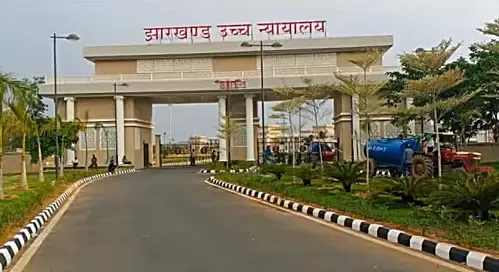
Ranchi, Dec 8 (NationPress) The Jharkhand High Court has criticized the state administration for its failure to provide pension and gratuity benefits to retired madrasa educators, despite clear judicial orders established nearly a decade ago.
Characterizing it as a serious oversight, the court has summoned two high-ranking officials to appear personally at the next session.
A bench led by Justice Ananda Sen, while addressing a contempt petition, remarked that the state had neglected to adhere to its previous directive dated June 13, 2024.
The bench has instructed the Principal Secretary of the School Education and Literacy Department, Rahul Purwar, alongside the Director of Secondary Education and Literacy, to be present in court for the upcoming hearing.
Moreover, the court has requested these officials to clarify why contempt proceedings should not be initiated against them for their “intentional and deliberate” disobedience of judicial commands.
Justice Sen pointed out that disregarding court orders is tantamount to undermining the judicial process itself.
The matter is set for further review in eight weeks.
During the proceedings, petitioners stated that the state issued a resolution in 2014 that denied pension and gratuity to madrasa teachers who retired after that year. When this resolution was contested, the High Court, on October 24, 2014, annulled the decision and instructed the government to disburse post-retirement benefits to all qualifying teachers.
However, the petitioners claimed that the government did not execute the ruling. Consequently, they filed a contempt petition, after which the state provided an affidavit asserting that payments had been made.
The petitioners countered this assertion, claiming no such payments were received. Subsequently, Mohammad Aijabul Haque and several other affected educators returned to the High Court, accusing the authorities of misleading the court and delaying justice.
Recognizing the conflicting statements, the court has ordered the summoned officials to present a clear status report during the next hearing.
Point of View
I believe this ruling by the Jharkhand High Court underscores the critical need for governmental accountability in educational matters. The plight of retired madrasa teachers reflects a larger issue of justice and respect for the judiciary. It is imperative that all stakeholders prioritize the welfare of educators, who are foundational to society.
NationPress
18 Sept 2026
Frequently Asked Questions
What prompted the Jharkhand High Court to take action?
The court acted due to the government's failure to pay pension and gratuity benefits to retired madrasa teachers, despite prior judicial orders.
Who are the officials summoned to court?
The Principal Secretary of the School Education and Literacy Department and the Director of Secondary Education and Literacy have been summoned.
What was the government's defense regarding the payments?
The government submitted an affidavit claiming that all payments had been made, which the petitioners disputed.
What is the significance of the court's decision?
The decision emphasizes the importance of judicial compliance and the rights of educators to receive their entitled benefits.
When will the case be heard again?
The matter is scheduled for a follow-up hearing in eight weeks.