JKSA backs CJP protest, slams Delhi Police crackdown on NEET students
Synopsis
The Jammu and Kashmir Students Association has thrown its weight behind the CJP-led NEET protest in New Delhi, demanding an independent inquiry into Delhi Police's alleged lathi-charge on peaceful demonstrators. With student groups from J&K to the capital now aligned, the NEET-2026 paper leak controversy is fast becoming a wider constitutional flashpoint — not just an examination scandal.
Key Takeaways
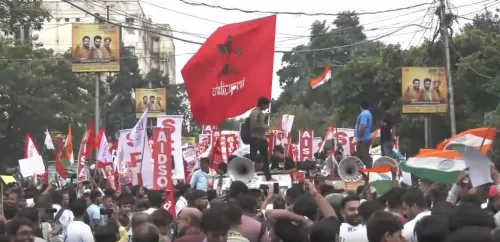
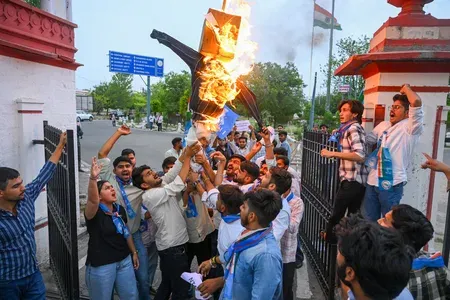
The Jammu and Kashmir Students Association (JKSA) on 21 July backed the CJP-led protest in New Delhi over the NEET-2026 paper leak .
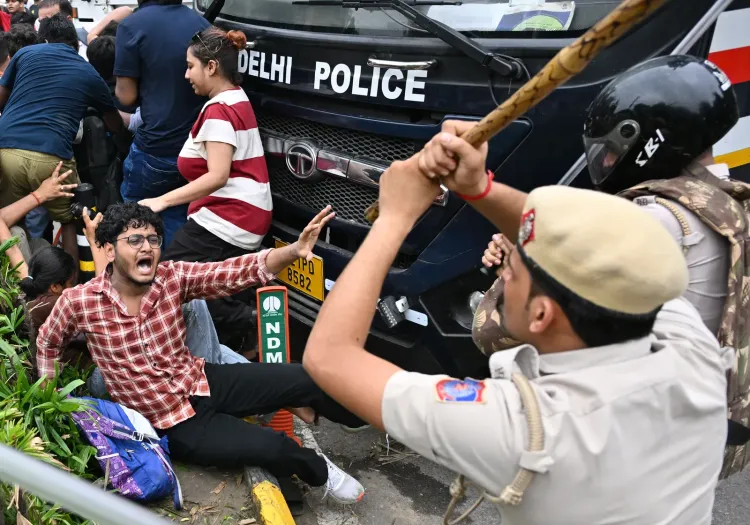
National convenor Nasir Khuehami condemned alleged lathi-charges, tear-gas use, and detentions by Delhi Police against peaceful student demonstrators.
The JKSA invoked Article 19 of the Constitution, framing the police response as a violation of democratic rights.
The association demanded an independent, time-bound inquiry into the use of force and called on Education Minister Dharmendra Pradhan to accept moral responsibility for examination failures.
JKSA office-bearers are set to visit the New Delhi protest site to express direct solidarity with agitating students.
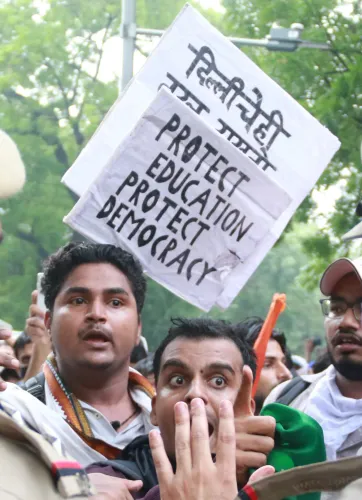
The Jammu and Kashmir Students Association (JKSA) on Tuesday, 21 July extended full support to the Citizens for Justice and Peace (CJP)-led protest in New Delhi, strongly condemning what it described as excessive use of force by the Delhi Police against students demonstrating over the NEET-2026 paper leak. The association's statement marks one of the sharper institutional responses to the crackdown from a student body outside the capital.
JKSA's Condemnation of Police Action
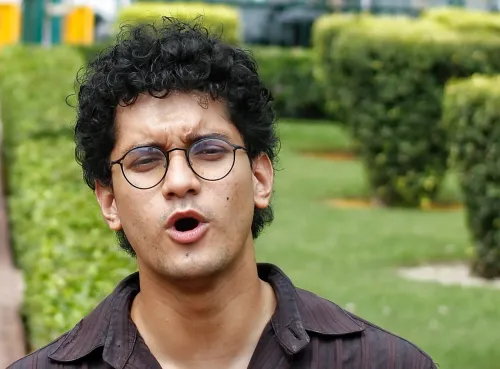
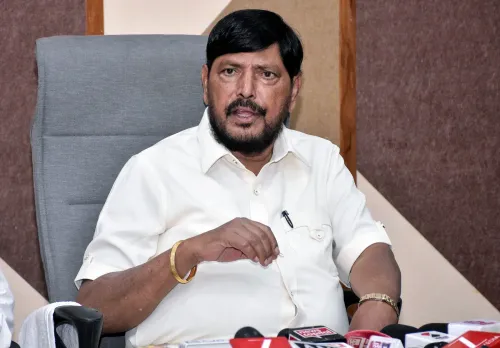
Nasir Khuehami, national convenor of the JKSA, said in a statement that the association 'extends its unequivocal support to the students and youth participating in the CJP-led protest in New Delhi and strongly condemns the excessive and disproportionate use of force by the Delhi Police against peaceful demonstrators exercising their democratic and constitutional right to assemble and voice their concerns.'
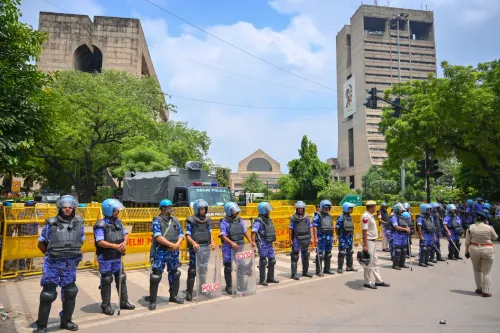
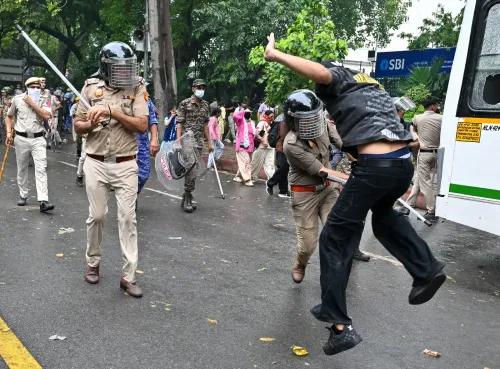
Khuehami described visuals from the protest site — allegedly showing unarmed students being lathi-charged, tear-gassed, dragged, and detained — as having 'shocked the conscience of the nation.' He noted that women and peaceful participants were among those subjected to physical force during what was intended as a democratic march.
Constitutional Rights at the Centre of the Debate
The JKSA invoked Article 19 of the Constitution of India, which guarantees the right to peaceful assembly, freedom of speech, and expression of dissent. Khuehami argued that responding to constitutionally protected protest with coercion 'weakens the very constitutional values that public institutions are duty-bound to uphold.'
The association demanded that the concerned Deputy Commissioner of Police publicly explain under whose directions the lathi-charge, tear gas, and mass detentions were authorised — a call for administrative accountability that Delhi Police has not yet formally responded to, according to available reports.
NEET-2026 Paper Leak: A Pattern of Examination Failures
The JKSA framed the NEET-2026 paper leak not as an isolated incident but as 'the latest in a disturbing series of examination scandals' that have, it said, severely eroded the credibility of India's examination and recruitment infrastructure. The association pointed to repeated incidents of paper leaks, irregularities, and administrative failures over several years that have, in its assessment, shattered the aspirations of lakhs of students who invest years of preparation in competitive examinations.
Notably, this is not the first time NEET has faced allegations of malpractice — the examination has been at the centre of controversy in multiple preceding cycles, drawing scrutiny from courts, student groups, and opposition parties alike.
Demand for Accountability and Dialogue
The association called upon the Government of India and Delhi Police to protect the constitutional rights, dignity, and safety of every peaceful protester, and demanded an 'independent, impartial, transparent, and time-bound enquiry' into allegations of excessive force.
It also urged Union Education Minister Dharmendra Pradhan to accept moral responsibility for what it described as repeated institutional failures that have undermined the integrity of national examinations. The JKSA said it would send office-bearers to the protest site in New Delhi to express solidarity with the agitating students and extend direct support to the movement.
Khuehami questioned why the government had not engaged students in dialogue: 'Why can the government not engage with students who are peacefully seeking justice? Why can it not concede genuine and legitimate demands instead of responding with force?'
What Comes Next
The JKSA's intervention adds to growing pressure on both the Centre and Delhi Police to respond to the crackdown allegations. With student bodies from multiple regions now publicly aligning with the CJP-led movement, the political and institutional stakes around the NEET-2026 controversy appear set to escalate further in the coming days.
Point of View
Yet neither Delhi Police nor the Centre has offered a public accounting. What is missing from the mainstream conversation is scrutiny of the CJP protest's own organisational claims and whether the government's silence on dialogue is tactical or institutional. The pattern of responding to examination-linked protests with force rather than engagement has now repeated across multiple cycles — and each repetition raises the political cost of inaction.
NationPress
20 Oct 2026
Frequently Asked Questions
Why did JKSA support the CJP protest in New Delhi?
The Jammu and Kashmir Students Association backed the CJP-led protest because it supports students demanding accountability over the NEET-2026 paper leak and condemns the alleged use of excessive force by Delhi Police against peaceful demonstrators. The association invoked Article 19 of the Constitution, arguing that peaceful assembly and dissent are fundamental rights.
What did Delhi Police allegedly do at the NEET protest?
According to the JKSA statement, Delhi Police allegedly used lathi-charges, tear gas, and physical force against unarmed student protesters, including women, and detained demonstrators. These allegations have not been independently verified, and Delhi Police has not issued a public response as per available reports.
What is the NEET-2026 paper leak controversy?
The NEET-2026 paper leak refers to alleged irregularities in the National Eligibility cum Entrance Test for the year 2026, which students and organisations claim compromised the fairness of the examination. The JKSA described it as the latest in a series of recurring examination scandals that have eroded public confidence in India's competitive examination system.
What has JKSA demanded from the government?
The JKSA has demanded an independent, impartial, transparent, and time-bound inquiry into the alleged use of excessive force at the protest site, accountability for the NEET-2026 paper leak, and has called on Union Education Minister Dharmendra Pradhan to accept moral responsibility for repeated examination failures. It has also urged the government to engage students through dialogue rather than force.
Who is Nasir Khuehami?
Nasir Khuehami is the national convenor of the Jammu and Kashmir Students Association (JKSA), the student body that issued the statement backing the CJP-led NEET protest. He is the primary spokesperson cited in the association's public condemnation of Delhi Police's alleged crackdown.