JMB Launches All-Women 'Sister Wing' to Recruit in Southern India

Key Takeaways
JMB is reviving its all-women's 'Sister Wing' in South India.
Focus on recruitment rather than immediate attacks.
Social media is a key tool for outreach and recruitment.
Previous efforts faced setbacks due to government crackdowns.
Increased need for de-radicalization initiatives.
New Delhi, March 16 (NationPress) A rising trend has emerged among terrorist organizations seeking to enlist women and establish dedicated factions. Both the Lashkar-e-Taiba and Jaish-e-Mohammad have successfully created all-female units. Intelligence reports indicate that the Jamaat-ul-Mujahiddeen, Bangladesh (JMB) has reinitiated a previous initiative to form an all-women’s unit known as the "Sister Wing."
The concept of such a unit was first proposed by the JMB in 2016; however, the plan was halted due to a crackdown by Bangladeshi authorities on similar groups.
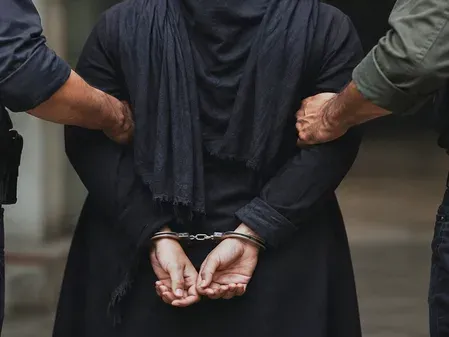
Information about the women's unit was revealed following the apprehensions of Asmani Khatun, also known as Asma, and Shrine Khatun in early 2020.
Intelligence evaluations suggest that the JMB is trying to expand its influence in conjunction with the Islamic State in South India. While these organizations have made some progress, their reach has primarily been confined to Kerala and Tamil Nadu.
Now, they are setting their sights on states like Karnataka, Telangana, and Andhra Pradesh.
An official disclosed that both the JMB and Islamic State are looking to revive the women's unit and recruit in all southern states.
Investigations following the arrests of Asma and Shirina revealed they were tasked with leading recruitment efforts and launching propaganda initiatives.
Recently, women affiliated with the JMB network have been directed to connect with their contacts in South India to execute a significant recruitment campaign for women.
Another official mentioned that while the JMB does not currently plan to execute strikes in South India, their immediate focus is on recruiting women and conducting extensive propaganda.
Establishing the ‘Sister Wing’ in South India represents a significant advancement for the JMB. An Intelligence Bureau official noted that their confidence stems from the fact that numerous women from Kerala have previously left to join the Islamic State Khorasan Province (ISKP) in Afghanistan. The official pointed out that in 2016, a group of 21 individuals from Kerala included several women who joined the ISKP.
These women underwent extensive indoctrination before being convinced to join ISKP, often marrying the men accompanying them.
Another official clarified that the JMB and Islamic State do not intend to send their female recruits to other countries. Their strategy indicates a greater interest in building a substantial local force, emphasizing recruitment over propaganda. The kind of exodus seen in 2016 may be challenging due to heightened vigilance from agencies. Furthermore, reports from Afghanistan about the dire conditions faced by the 21 recruits have deterred many potential followers.
Nevertheless, officials are aware that many individuals in Southern states adhere to the ideologies of these terror groups. They may be more inclined to join the JMB-Islamic State’s ‘Sister Wing’ and engage in propaganda within their home states, according to one official.
Authorities are closely monitoring online activities. Female members have been instructed to create multiple social media accounts to actively seek women recruits in South India.
This recruitment initiative represents the initial phase of their plan. Once a substantial number of women are recruited, a leader will be appointed to provide training to these recruits in South India.
The JMB recognizes that propaganda is a more effective approach in the early stages compared to direct attacks. Their aim is to influence minds, and once they achieve this, subsequent processes will become easier. While it is crucial to remain vigilant and monitor such activities, officials stress the need for more de-radicalization camps. Although several camps already exist, the evolving tactics employed by the JMB necessitate additional efforts, as noted by one official.
Point of View
Targeting women in Southern India. The commitment to propaganda over immediate attacks raises concerns about the evolving landscape of radicalization in the region. Authorities must remain vigilant and proactive in countering these efforts.
NationPress
19 Sept 2026
Frequently Asked Questions
What is the 'Sister Wing'?
The 'Sister Wing' is an all-women's module being established by the Jamaat-ul-Mujahiddeen, Bangladesh (JMB) aimed at recruiting women for terrorist activities.
Why was the initial plan for the 'Sister Wing' halted?
The initial plan for the 'Sister Wing' was put on hold in 2016 due to a crackdown by Bangladeshi authorities on similar extremist modules.
Which regions are being targeted for recruitment?
The JMB is primarily focusing on Southern states such as Kerala, Tamil Nadu, Karnataka, Telangana, and Andhra Pradesh for recruitment.
What is the significance of social media in their recruitment efforts?
Social media is being utilized to connect with potential recruits, with female members instructed to create multiple accounts to reach out to women in South India.
How has the response been to previous recruitment efforts?
While there has been interest in the past, heightened vigilance by authorities and negative reports from conflict zones have deterred potential recruits.