ISI plots women-led terror recruitment network in J&K as pipeline weakens
Synopsis
With conventional terror pipelines into J&K choked after Operation Sindoor, the ISI is reportedly turning to a new playbook — small, women-led recruitment cells modelled on JeM and LeT's women's wings in Pakistan. A previous attempt via the Dukhtaran-e-Millat was busted by J&K Police in November 2025; now intelligence intercepts suggest the ISI is building a fresh, independent network from scratch.
Key Takeaways
The ISI is reportedly planning an all-women terror recruitment network in Jammu and Kashmir , according to Intelligence Bureau officials.
The initial cell is planned to comprise five to six women targeting a limited, carefully selected audience in the first phase.
The plan mirrors women's wings already established by Jaish-e-Mohammed (JeM) and Lashkar-e-Taiba (LeT) in Pakistan.
A previous revival attempt of the all-women outfit Dukhtaran-e-Millat (DeM) was busted by J&K Police's CIU in November 2025 through raids in Srinagar , Budgam , and Kulgam .
Asiya Andrabi , founder of DeM, was sentenced to life imprisonment by a Delhi court in March 2026 .
The shift follows a sharp decline in traditional infiltration and OGW networks after Operation Sindoor in May 2025 .
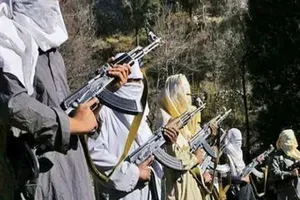
Pakistan's spy agency, the Inter-Services Intelligence (ISI), is reportedly planning to establish an all-women recruitment network in Jammu and Kashmir (J&K), according to Intelligence Bureau (IB) officials. The move comes as traditional terror recruitment channels in the Valley have dried up significantly, pushing the ISI to experiment with a model it has already tested through the women's wings of Jaish-e-Mohammed (JeM) and Lashkar-e-Taiba (LeT) in Pakistan.
Why Women Recruiters — The ISI's Calculus
According to IB officials, women operatives are considered more effective recruiters, particularly when targeting youth. Their outreach methods are described as 'more subtle and persuasive' compared to male counterparts, enabling deeper influence over potential cadres.
'It has been observed in several cases that the men recruited through women operatives often display a higher degree of loyalty and can become highly committed to the cause. This is largely because women recruiters are generally more effective in influencing and convincing young people than their male counterparts,' an official said.
The ISI's initial plan, based on multiple intelligence intercepts, is to form a small cell of five to six women who would target a 'limited and carefully selected audience' during the first phase of the operation. Officials noted that the ISI is proceeding cautiously to avoid detection, deliberately keeping the network small to reduce exposure.
Security Clampdown After Pahalgam and Operation Sindoor
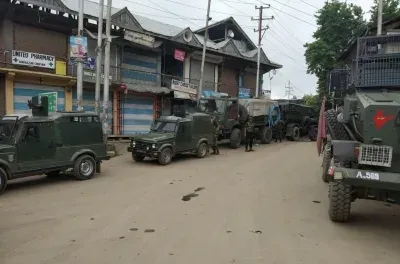
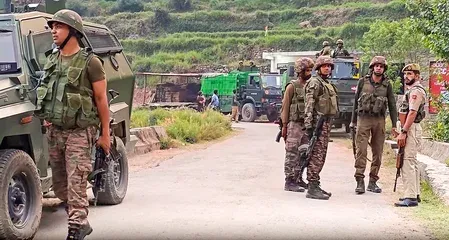
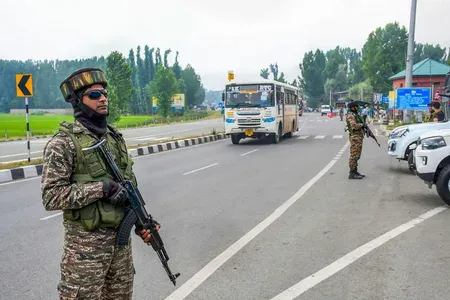
The intensified push for alternative recruitment strategies follows a sharp deterioration in the ISI's operational capacity in J&K. After the Pahalgam terror attack and the subsequent Operation Sindoor in May 2025, security scrutiny across the Union Territory increased considerably. Infiltration from Pakistan-occupied Kashmir (PoK) declined steeply, with Pakistani terrorists at launch pads largely unable to cross into Indian territory. The overground worker (OGW) network in the region was also significantly weakened.
'The ISI has realised that none of its plans can be effectively executed unless recruitment levels in Jammu and Kashmir increase. Several recruiters linked to the LeT and JeM have struggled to expand their networks in the Valley, which has affected their ability to mobilise new cadres,' a second official said.
The Dukhtaran-e-Millat Precedent
The ISI's interest in women-led modules in J&K is not new. The Dukhtaran-e-Millat (DeM), an all-women outfit with close ties to the Hizbul Mujahideen, had historically been used for recruitment drives in the Valley. Its founder, Asiya Andrabi, was sentenced to life imprisonment by a Delhi court in March 2026, dealing a major blow to the organisation's revival prospects.
A subsequent attempt to resurrect the DeM was thwarted by the Counter Intelligence Unit (CIU) of the J&K Police in November 2025, following raids in Srinagar, Budgam, and Kulgam districts. A woman suspect, Shahzada Akhtar, was allegedly involved in radicalising local women under the pretext of community interaction, according to officials.
With the DeM effectively neutralised and Hizbul Mujahideen's support absent, officials say the ISI has pivoted to building a fresh, independent women-led structure rather than attempting further DeM revival.
What Security Agencies Are Watching
Indian security agencies have been monitoring the ISI's intent through intelligence intercepts. Officials noted that the ISI also plans a parallel all-women OGW network in J&K as part of the broader strategy. The agency is reportedly not rushing the initiative and intends to proceed in phases to minimise detection risk.
The ISI's cautious, phased approach — and its deliberate effort to recruit individuals with no prior police records — signals a structural adaptation to tighter security conditions in J&K, rather than a temporary tactical shift. Security agencies are expected to remain on heightened alert as the first phase of this reported plan takes shape.
Point of View
The early-warning indicators that security agencies currently rely on may prove inadequate. The Shahzada Akhtar case in November 2025 was caught — but it was also a reminder of how easily 'community interaction' can serve as cover. The phased, low-footprint design of the new network is precisely what makes it harder to disrupt at inception.
NationPress
15 Sept 2026
Frequently Asked Questions
What is the ISI's reported plan for Jammu and Kashmir?
According to Intelligence Bureau officials, the ISI is planning to establish a small all-women recruitment network in J&K, initially comprising five to six operatives, to target a carefully selected audience. The plan is modelled on women's wings already operational within JeM and LeT in Pakistan.
Why is the ISI turning to women recruiters in J&K?
Officials say women operatives are considered more effective recruiters among youth, using subtler and more persuasive methods than male counterparts. Men recruited through women operatives reportedly display higher loyalty. The shift also reflects the weakening of traditional male-led recruitment networks after Operation Sindoor.
What happened to the Dukhtaran-e-Millat, the previous women's outfit in J&K?
The Dukhtaran-e-Millat (DeM), historically linked to Hizbul Mujahideen, was effectively neutralised after its founder Asiya Andrabi was sentenced to life imprisonment by a Delhi court in March 2026. A revival attempt was busted by J&K Police's Counter Intelligence Unit in November 2025 through raids in Srinagar, Budgam, and Kulgam.
How has Operation Sindoor affected terror recruitment in J&K?
Following the Pahalgam terror attack and Operation Sindoor in May 2025, security scrutiny in J&K intensified sharply. Infiltration from Pakistan-occupied Kashmir declined steeply, and the overground worker network was significantly weakened, forcing the ISI to seek recruits with no prior police records.
Is the ISI planning to expand this women's network quickly?
No — officials say the ISI is deliberately proceeding cautiously and in phases to minimise detection risk. The initial plan is limited to five to six women targeting a small, selected audience. A larger network, officials note, would face a greater risk of disruption by Indian security agencies.