ISI recruits retired Pak army, navy men to fast-track J&K terror ops
Synopsis
Pakistan's ISI is reportedly recruiting retired army and navy veterans — operationally ready and pre-radicalised — directly into LeT, JeM and Hizbul Mujahideen to sidestep the training bottleneck exposed after Operation Sindoor. If confirmed, it represents a qualitative upgrade in the cross-border terror apparatus targeting Jammu and Kashmir.
Key Takeaways
ISI has reportedly launched a large-scale drive to induct retired Pakistani army and navy personnel into terror outfits targeting Jammu and Kashmir .
The drive is a direct response to recruitment and training shortfalls faced by Lashkar-e-Taiba , Jaish-e-Mohammed , and Hizbul Mujahideen after Operation Sindoor .
Former soldiers would be embedded one-per-batch in three-man terror cells at launchpads in Pakistan-occupied Kashmir .
Lashkar-e-Taiba is the primary target of recruitment, with Talha Saeed now in full control of the outfit.
An Intelligence Bureau official said a major attack is not believed to be imminent, but Pakistan wants its groups to remain fully operational.
Officials linked the strategy to Pakistan's long-standing 'bleeding by a thousand cuts' doctrine and drew parallels with the role of military figures in the 26/11 Mumbai attacks .
Pakistan's Inter-Services Intelligence (ISI) has reportedly launched a large-scale drive to induct retired Pakistani army and navy personnel into terror outfits targeting Jammu and Kashmir, according to intelligence officials. The tactical pivot is aimed at bypassing lengthy training cycles and rapidly restoring the operational capacity of groups such as Lashkar-e-Taiba (LeT), Jaish-e-Mohammed (JeM), and Hizbul Mujahideen — all of which have struggled with recruitment shortfalls since Operation Sindoor.
Why the ISI Is Shifting Strategy
Following Operation Sindoor in May last year, the three principal terror outfits faced severe difficulties recruiting fresh cadres. Although recruitment has reportedly picked up pace since then, new recruits require extensive training before they can be considered deployment-ready — a bottleneck the ISI appears determined to eliminate.
'Former soldiers and commandos are the preferred choice. They are operation-ready and would require a bare minimum amount of training before they can be sent out to carry out terror operations in Jammu and Kashmir,' an intelligence official said.
By drawing on veterans who are already operationally experienced, the ISI can also bypass the radicalisation stage — such individuals, officials noted, may already have undergone extensive ideological conditioning during their years of military service, making them more readily deployable.
Scale and Structure of the Recruitment Drive
A second official said that while Pakistan has used former military personnel in terror operations before, the current drive is significantly larger in scale. The ISI, with the assistance of Pakistan's army, has reportedly been preparing a list of individuals who have retired or resigned from service, and is offering 'huge incentives' to those willing to join designated terror groups.
Once selected, these recruits are to be sent to launchpads in Pakistan-occupied Kashmir (PoK). At present, terrorists at those launchpads are organised in batches of three — one each from JeM, LeT, and Hizbul Mujahideen. The ISI reportedly plans to embed one fully trained former soldier in each such batch to provide battlefield leadership and command.
'Such personnel could lead the attacks more effectively because of their experience. Having served in the field for several years, they are also familiar with the terrain and other logistical aspects involved,' an official said.
Lashkar-e-Taiba in Focus
Officials indicated the immediate focus of recruitment is the Lashkar-e-Taiba, which is described as currently better prepared than the other two outfits to execute operations in Jammu and Kashmir. The group has reportedly resolved its internal leadership disputes, with Talha Saeed — son of Hafiz Saeed — consolidating full control.
The former military personnel being recruited are also expected to impart training in terror tactics, fidayeen attack planning, and logistics management to other operatives in their batch.
The 26/11 Precedent
The strategy echoes patterns seen in the 26/11 Mumbai attacks of November 2008, which highlighted the extensive role allegedly played by Pakistan's military establishment. Individuals such as Major Iqbal were reportedly involved in training the attackers and were said to have been present alongside handlers in Karachi, providing instructions to the 10 terrorists who entered Mumbai. Officials characterised the current drive as part of Pakistan's long-standing 'bleeding by a thousand cuts' doctrine against India.
Near-Term Threat Assessment
An Intelligence Bureau official said Pakistan is not believed to be planning a major attack in the immediate future. However, the objective appears to be keeping terror groups fully operational and prepared to strike when required. With former soldiers providing both leadership and legitimacy within mixed-outfit batches, analysts warn the upgrade in capability — if confirmed — could mark a qualitative shift in the cross-border terror threat to Jammu and Kashmir.
Point of View
If fully corroborated, represents more than a tactical adjustment — it signals that Operation Sindoor inflicted a structural wound on Pakistan's proxy war infrastructure, forcing the ISI to cannibalise its own retired military cohort. The 26/11 parallel is instructive but also limiting: past use of military figures was largely in a training and coordination role, whereas this drive reportedly aims at combat-leadership embedding. The 'bleeding by a thousand cuts' framing also deserves scrutiny — it is a doctrine India's security establishment has cited for decades without it producing a decisive policy response on cross-border accountability. The real question is whether India's intelligence community converts this early warning into disruption at the launchpad stage, or whether it becomes another well-documented threat that reaches J&K before it is neutralised.
NationPress
1 Oct 2026
Frequently Asked Questions
Why is the ISI recruiting retired Pakistani military personnel for terror groups?
The ISI is reportedly doing so to overcome acute recruitment shortfalls and training delays caused by the impact of Operation Sindoor on groups like Lashkar-e-Taiba, Jaish-e-Mohammed and Hizbul Mujahideen. Retired soldiers are operation-ready and already ideologically conditioned, allowing them to be deployed far faster than newly recruited cadres.
Which terror outfits are being targeted for this recruitment drive?
The drive focuses primarily on Lashkar-e-Taiba, Jaish-e-Mohammed and Hizbul Mujahideen. Officials said the Lashkar is the immediate priority, partly because it has resolved its internal leadership issues with Talha Saeed — son of Hafiz Saeed — now in full control.
What was Operation Sindoor and how did it affect these groups?
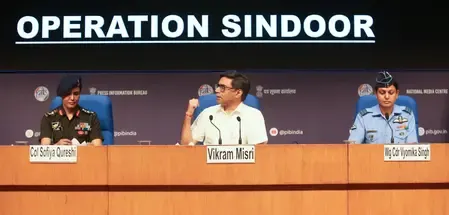
Operation Sindoor, carried out in May last year, severely disrupted the recruitment pipelines of the major Pakistan-based terror outfits operating in Jammu and Kashmir. The fallout left these groups with a shortage of trained cadres, which the ISI's latest drive is designed to address.
Is a major terror attack in Jammu and Kashmir considered imminent?
According to an Intelligence Bureau official cited in reports, Pakistan is not believed to be planning a major attack in the immediate future. However, the objective appears to be keeping terror groups fully operational and ready to strike when ordered.
How does this strategy compare to Pakistan's past use of military figures in terror operations?
Pakistan has used retired military personnel in terror operations before, most notably in the 26/11 Mumbai attacks, where figures such as Major Iqbal were reportedly involved in training and directing the attackers. Officials say the current drive is larger in scale and specifically aimed at embedding veterans as combat leaders within mixed-outfit cells at PoK launchpads.