Jamia Millia Islamia opens 3-day skilling meet on Assam tea garden communities
Synopsis
Jamia Millia Islamia is hosting a three-day national consultative meet examining skilling access for Assam's tea-tribe communities in Dibrugarh and Lakhimpur — one of India's most underserved plantation workforces. The ICSSR-backed research aims to develop training methodologies that could shape skill development policy for plantation workers nationwide.
Key Takeaways
Jamia Millia Islamia inaugurated a three-day National Consultative Meet on 29 September 2026 at Mir Anis Hall , New Delhi.
The event is organised under an ICSSR Longitudinal Research Project on empowering tea tribes of Assam through digital and non-digital skill development.
Research focuses on tea-garden communities in Dibrugarh and Lakhimpur districts of Assam.
Keynote address was delivered by Vinoj Abraham , Ministry of Commerce Chair at the Centre for Development Studies, Thiruvananthapuram .
Project Coordinator Quazi Ferdoushi Islam leads a team of six researchers across the project.
The meet concludes on 1 October 2026 and aims to refine field-access methodology for the main study.
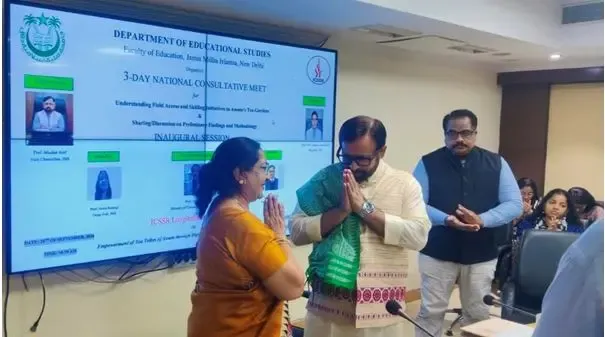
Jamia Millia Islamia (JMI) in New Delhi inaugurated a three-day National Consultative Meet on Tuesday, 29 September 2026, focused on skilling initiatives and field research methodology in Assam's tea garden communities. The event, held at Mir Anis Hall on the JMI campus, is scheduled to conclude on Wednesday, 1 October 2026.
About the Research Initiative
The consultative meet is organised under an Indian Council of Social Science Research (ICSSR) Longitudinal Research Project titled 'Empowerment of the Tea Tribes of Assam through Digital and Non-digital Skill Development Programmes'. The project centres on tea-garden communities in Dibrugarh and Lakhimpur districts of Assam, two regions with historically marginalised tribal populations whose livelihoods are deeply tied to the plantation economy.
The initiative focuses on mapping tea gardens, evaluating existing skilling programmes, improving field-access strategies, and developing training methodologies suited to the socio-economic conditions of tea-tribe workers.
Key Speakers and Inaugural Session
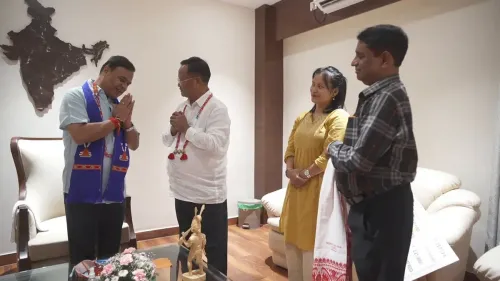
The inaugural session opened with a Qirat recitation by Md. Inzemamul Haque. Kaushal Kishore, one of the project directors, welcomed guests and participants and presented a traditional Assamese tribal gamocha as a symbol of respect and hospitality.
The keynote address was delivered by Vinoj Abraham, who holds the Ministry of Commerce Chair at the Centre for Development Studies in Thiruvananthapuram, Kerala. Abraham offered perspectives on skill development, livelihoods, and the broader socio-economic dimensions affecting tea-tribe communities.
The Vice-Chancellor of Jamia Millia Islamia delivered the Presidential Remarks, underscoring the initiative's academic and social significance. Anita Rastogi, Dean of the Faculty of Education at JMI, stressed the importance of integrating academic inquiry with field experience and research-based understanding.
Project Scope and Team
Quazi Ferdoushi Islam, the Project Coordinator, provided an overview of the research and outlined the rationale for holding the consultative meeting. She emphasised that structured consultation and dialogue are central to refining the project's methodology and identifying relevant skilling opportunities for tea-garden workers.
The project team comprises Quazi Ferdoushi Islam as Project Coordinator, and Kaushal Kishore, Ahrar Husain, Nivedita Goswami, Sameer Babu, and Zeba Tabassum as Project Directors.
Why This Research Matters
Tea-tribe communities in Assam have long faced systemic barriers to education, skill development, and economic mobility. Despite being a critical labour force in India's largest tea-producing state, workers in these gardens often lack access to structured vocational training or digital literacy programmes. This comes amid growing national emphasis on skilling under frameworks such as the Skill India Mission.
The consultative discussions aim to support the selection and mapping of tea-garden sites for the main study, while strengthening field-access strategies that will ultimately shape training interventions. The findings from this project could inform policy recommendations for similar plantation communities across India.
Point of View
Under-served by formal skilling infrastructure, and largely absent from national policy conversations. An ICSSR-backed academic intervention is a step toward evidence generation, but the real test will be whether the methodology translates into actionable training frameworks rather than shelved research reports. India's Skill India Mission has consistently struggled to penetrate informal and geographically remote workforces; Assam's tea belts are a direct test of that gap. If this longitudinal project yields implementable recommendations, it could become a replicable template for plantation communities in Darjeeling, Munnar, and the Nilgiris.
NationPress
29 Sept 2026
Frequently Asked Questions
What is the National Consultative Meet at Jamia Millia Islamia about?
It is a three-day academic consultation inaugurated on 29 September 2026 at Jamia Millia Islamia, New Delhi, focusing on skilling initiatives and field research methodology for tea-tribe communities in Assam's Dibrugarh and Lakhimpur districts. The meet is held under an ICSSR Longitudinal Research Project on empowering tea tribes through digital and non-digital skill development.
Which areas of Assam does this research cover?
The project focuses on tea-garden communities in Dibrugarh and Lakhimpur districts of Assam — two regions with large populations of historically marginalised plantation workers whose livelihoods depend almost entirely on the tea industry.
Who are the key figures behind this ICSSR project?
The project is coordinated by Quazi Ferdoushi Islam, with Kaushal Kishore, Ahrar Husain, Nivedita Goswami, Sameer Babu, and Zeba Tabassum serving as Project Directors. The keynote at the inaugural session was delivered by Vinoj Abraham of the Centre for Development Studies, Thiruvananthapuram.
Why is skilling research in Assam's tea gardens significant?
Tea-tribe workers in Assam face deep-rooted barriers to formal education and vocational training despite being a core part of India's tea industry. Research that maps existing gaps and develops suitable training methodologies could directly inform national skill development policy for plantation communities.
When does the consultative meet conclude?
The three-day National Consultative Meet is scheduled to conclude on Wednesday, 1 October 2026.