Is the Kalka-Shimla Highway Reviving Colonial Landmarks?
Synopsis
The ongoing transformation of the Kalka-Shimla highway is a blend of modern infrastructure and rich colonial history. As the final touch is added with the Kandaghat tunnel, discover how this route continues to shape the travel experience while preserving its past.
Key Takeaways
The Kalka-Shimla highway is nearing completion after significant delays.
Modern infrastructure is being developed while preserving historical landmarks.
The highway enhances connectivity between Shimla and the plains.
Construction includes tunnels and flyovers to improve travel efficiency.
Local culture and heritage remain integral to the highway's significance.
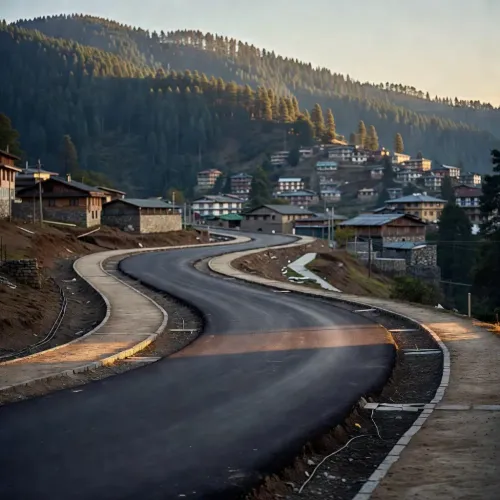
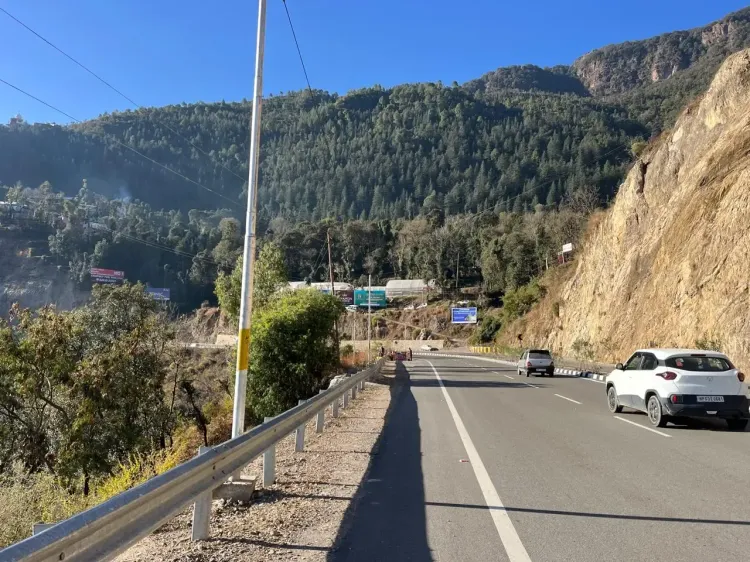
Shimla, Feb 9 (NationPress) The four-laning of the historic Kalka-Shimla highway via Parwanoo in Himachal Pradesh, a winding stretch of asphalt weaving through the hills and soaring above flyovers, is nearing completion after over a decade of diligent construction.
Driving on it currently is quick, smooth, and seemingly effortless, but it comes with a trade-off. The national highway 5, part of the revered Hindustan-Tibet Road, has bypassed several colonial-era landmarks: the charming train crossings, the gentle curves where tracks once ran parallel to the road, and the subtle echoes of Shimla’s British heritage. The only remaining task is a tunnel near Kandaghat in Solan district, renowned for its bustling vegetable markets.
The air in Kandaghat is filled with the fragrance of fresh produce and rich soil, with lively streets bustling as vendors call out to passersby. This tunnel is set to transport vehicles past this vibrant scene, saving time while preserving the town’s lively essence for its residents.
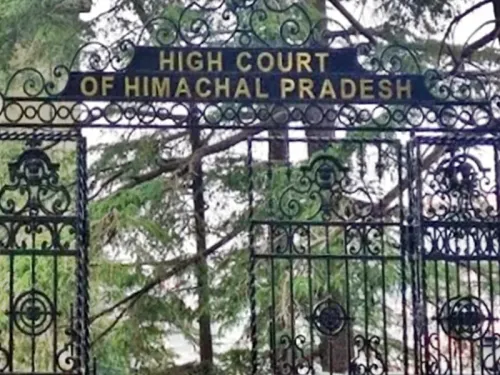
Years of landslides and various challenges delayed the project, but increased scrutiny from the Himachal Pradesh High Court appears to have accelerated progress.
Officials indicate that the remaining tasks, particularly the Kandaghat tunnel, are advancing quickly, bringing drivers closer to a seamless travel experience between the plains and the hills of Shimla.
Upon completion, the highway will flow like a silver thread through pine forests, across flyovers that seem to float above deep ravines, and through tunnels that carve neatly into the hillsides. Mist will swirl around deodars, sunlight will glisten on stone bridges, and Shimla, poised at the summit, will welcome travelers with its timeless allure.
In the 1970s, the Parwanoo-Shimla route was designated as a national highway. Motorists traveling to the former summer capital of British India now bypass the historic towns of Parwanoo, Kumarhatti, Barog, and Kandaghat. They miss out on landmarks such as the railway crossings along the UNESCO World Heritage-listed Kalka-Shimla narrow gauge track, the bustling markets of Dharampur and Barog, and the statue of Rani Jhansi at Chambaghat.
Work on this ambitious project commenced on September 21, 2015, with an initial completion date set for March 21, 2018. According to Union Minister for Road Transport and Highways Nitin Gadkari, a 160-meter-long viaduct has been built using the hydraulic push launching method, marking a significant achievement.
Currently, construction is ongoing for a 667-meter twin-tube tunnel and a 368-meter flyover in Kandaghat. The four-laning of the 88-km stretch between Shimla and Parwanoo, designed to reduce travel time by 17 km, is largely completed.
Additionally, a 936-meter one-way tunnel on the Barog bypass is now operational. Built at a cost of Rs 100 crore, it shortens the highway distance by 3.5 km. Two overbridges crossing the Kalka-Shimla narrow gauge heritage railway line in Sanwara and Chambaghat, along with a flyover in Kumarhatti, further reduce the distance by three km.
“It’s remarkable to see the infrastructure in Himachal Pradesh improving day by day,” remarked Neha Dubey, a motorist from New Delhi, as she pointed to the British-era Solan Brewery while standing on a flyover above its premises.
Edward Dyer established a brewery near Kasauli in 1855 and a distillery in Solan, known as India’s Mushroom and Red Gold City due to the extensive cultivation of mushrooms and tomatoes, respectively.
Looking back nostalgically, her husband Virain noted, “At high speeds, one might miss the Solan distillery, a significant British landmark.”
As they drove uphill to Shimla, he added that the new highway had caused them to overlook Chakki Mod, once a favored hangout for youth near Kasauli.
Long-time residents remember the zigzag paths of the old highway, alongside the tunnels of the heritage rail tracks, which were once popular selfie spots, with the air rich with the scent of fluffy omelettes and roasting corn from roadside stalls.
Historically, the construction of the Hindustan-Tibet Road from Kalka to Shimla via Parwanoo began during British rule in 1850, with a ‘mail wagon’ drawn by horses first operating to Shimla by the 1860s. Motor cars began traversing the Kalka-Shimla section by 1935.
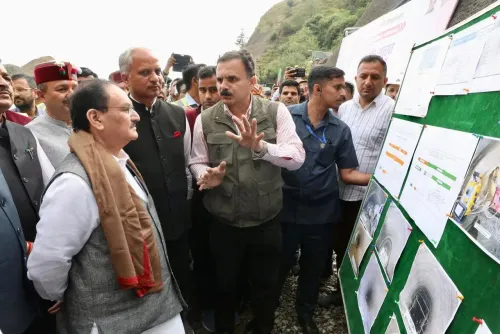
According to the National Highways Authority of India, the executing agency, the PRAGATI-enabled high-level review and monitoring by the Project Monitoring Group under the digital governance framework played a crucial role in addressing long-standing inter-departmental and inter-governmental issues affecting the 39-km-long Parwanoo-Solan section, which was completed at a cost of Rs 1,635 crore.
This section crosses through 33 revenue villages, including major settlements in the Solan district, and navigates through densely populated and environmentally sensitive hilly areas.
(Vishal Gulati can be contacted at vishal.g@ians.in)
Point of View
It's essential to appreciate not only the advancements in infrastructure but also the cultural heritage it represents. The balance between modernization and preservation of historical landmarks is crucial for maintaining the region's identity.
NationPress
3 Oct 2026
Frequently Asked Questions
What is the significance of the Kalka-Shimla highway?
The Kalka-Shimla highway is a vital route connecting the plains to the scenic hills of Shimla, rich in colonial history and important for tourism and trade.
When did the construction of the highway begin?
Construction began on September 21, 2015, and has faced various delays due to natural challenges.
What are some historical landmarks along the route?
Landmarks include the Solan Brewery, railway crossings, and the quaint towns of Barog and Kumarhatti.
How has the highway improved travel time?
The four-laning of the highway aims to reduce travel time by 17 km, making the journey faster and more efficient.
Are there environmental concerns with the highway's construction?
Yes, the route traverses environmentally sensitive areas, and efforts are made to balance development with ecological preservation.