Karnataka Assembly Confronts Rising Illegal Liquor Trade; Calls for Tougher Laws
Synopsis
In a heated session, Karnataka Assembly members demanded immediate action against illegal liquor sales in Raichur district. With alarming statistics and rising addiction rates, legislators are pushing for tougher laws to combat the pervasive liquor menace affecting local youth and communities.
Key Takeaways
Urgent Need for Legislation: The Karnataka Assembly is calling for stricter laws to combat illegal liquor sales.
Rising Addiction Rates: Increasing numbers of youth are succumbing to alcohol and drug addiction.
CH-4 Powder Concerns: The dangerous substance is being used to produce counterfeit liquor.
Community Impact: Families are facing dire consequences, including accidents and violence, due to the illegal trade.
Political Responsibility: Lawmakers are urging immediate government action to address this pressing issue.
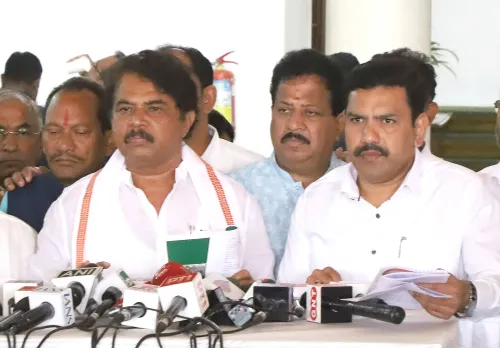
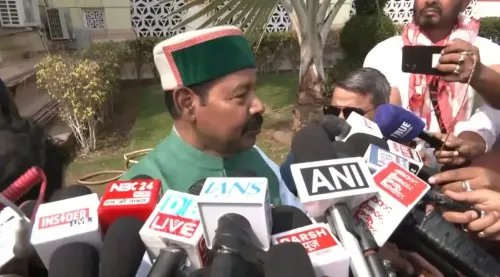
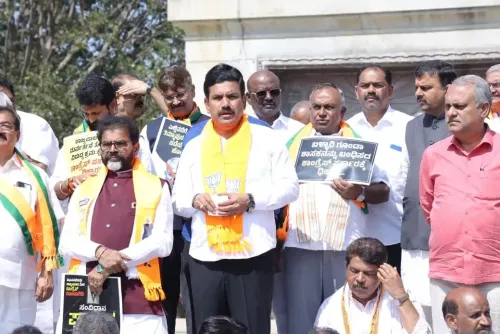
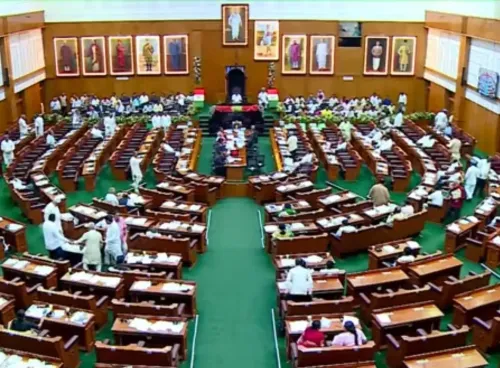
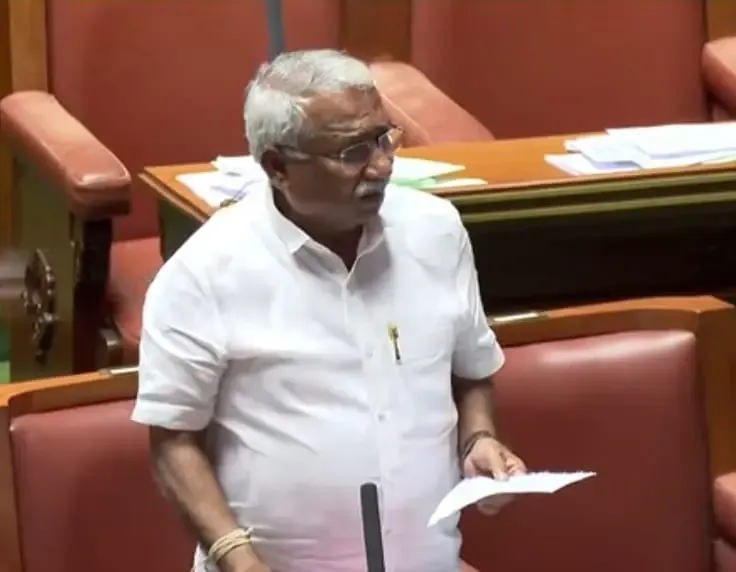
Bengaluru, Mar 17 (NationPress) The issue regarding the illicit sale of alcohol, especially in the border regions of Raichur district, was brought to light in the Karnataka Assembly during the Question and Answer session on Tuesday. Multiple MLAs from the state pressed the Congress-led government to implement stringent measures and enact more robust laws to tackle this serious issue.
Congress MLA Basanagouda Daddal, representing Raichur Rural Assembly, stated that the illegal liquor trade is thriving along the Karnataka-Telangana border, involving numerous individuals.
"I have highlighted the issue of illegal alcohol sales in Raichur. The state government has acknowledged that it is aware some individuals are engaged in this trade. My constituency is located on the Karnataka–Telangana border, where thousands are involved in this business," Daddal remarked.
He further alleged that liquor mixtures are being transported from Telangana, while locally produced country liquor is made in Karnataka.
Despite the authorities being cognizant of these activities, no significant punitive actions or removals of the accused have been executed, according to Daddal.
Official reports indicate that a total of 13,550 liters of liquor have been confiscated, with 183 cases registered and another 102 filed.
Nonetheless, Daddal emphasized that the illegal liquor trade remains rampant.
"The state government claims to know those involved in this business. They should be immediately removed from Raichur district and face severe penalties. Young lives are being lost in accidents, and murder cases are surfacing. If the State Excise Minister does not implement new legislation to address this problem, chaos will ensue," he cautioned.
He also voiced concerns about numerous young individuals falling prey to alcohol and drug addiction due to the easy access to illicit liquor.
JD-S MLA Karemma Nayak pointed out that the illegal sale of liquor is widespread throughout the state and represents a grave issue in the Devadurga taluk of Raichur district.
"Young people are succumbing to this problem, and immediate action is necessary to prevent further harm," she urged.
Another JD-S MLA, Sharanagouda Kandakur, claimed that in some border areas, even officials from the Excise Department are purportedly facilitating the distribution of alcohol to rural locales.
"We have a significant migrant community in these regions, and farmers are adversely affected. I earnestly request the Excise Minister to intervene and stop this," he implored.
Former Karnataka Home Minister and BJP MLA Araga Jnanendra stated that the discussion would lack substance unless a new law is put in place to penalize those involved in the illegal liquor trade.
"Women are reaching out to us, even at midnight, reporting that their husbands have gone astray due to the easy access to alcohol. It is being openly sold in homes across rural areas, and law enforcement is not taking action," he alleged.
In response to these concerns, State Excise Minister R.B. Thimmapura indicated that illegal liquor sales predominantly occur through two methods.
"Some individuals buy liquor legally from CL-6 outlets and Mysuru Sales International Limited (MSIL) stores and then sell it illegally, while others acquire liquor from military canteens for resale in the open market," he explained.
"In Raichur district alone, 183 cases have been registered over the past three years, and 13,557 liters of country liquor have been seized," he added.
The Minister further noted that a significant issue lies in the use of CH-4 powder to create counterfeit liquor.
"The CH-4 powder utilized for liquor production is extremely hazardous and unfit for human consumption. Just one kilogram can produce a full drum of country liquor. It comes in small packages and is being smuggled from neighboring states where its sale is permitted," he mentioned.
He stated that one individual has already been externed, and the department has recommended the externment of nine others involved in the illegal trade.
Thimmapura revealed that the state government is contemplating proposing to the Centre that CH-4 powder be classified as a drug under the NDPS Act since it is currently not covered by law.
"If it is not included under the NDPS Act, the state government will introduce new legislation to address this issue and impose strict penalties," he added.
Daddal reiterated the urgency for CH-4 powder to be classified as a drug and advocated for the formation of a special task force to confront the problem.
"Local officers are unable to manage the situation. Even small ration shops are selling liquor, and authorities claim they have quotas to fulfill. Why isn't the state government establishing MSIL shops in border areas?" he questioned.
He further asserted that fatalities from counterfeit liquor consumption have risen in border villages, leading to an increase in the number of widows in these regions.
Addressing the issue of counterfeit liquor-related deaths, Minister Thimmapura stated that no substantial amendments have been made to strengthen the laws governing illegal liquor trade for nearly 60 to 65 years.
"The current penalties are not stringent enough. We are working on enacting stricter laws and plan to assemble a new team to effectively tackle this menace," he concluded.
Point of View
The ongoing issue of illegal liquor sales in Karnataka highlights the urgent need for effective governance and law enforcement. As communities suffer the consequences of addiction and crime, lawmakers must prioritize public safety and health by establishing rigorous measures to eliminate the illegal trade.
NationPress
30 Sept 2026
Frequently Asked Questions
What actions are being demanded by Karnataka MLAs against illegal liquor trade?
Karnataka MLAs are urging the government to implement stricter laws and take immediate action against individuals involved in the illegal liquor trade, particularly in border areas.
How much illegal liquor has been seized in Raichur district?
As per official data, approximately 13,550 liters of liquor have been seized in Raichur district so far.
What is CH-4 powder and why is it a concern?
CH-4 powder is a hazardous substance used to manufacture counterfeit liquor, posing serious health risks as it is unfit for human consumption.
What measures are legislators proposing to combat the liquor issue?
Legislators are proposing tougher legislation and the establishment of a special task force to address the illegal liquor trade and its related issues.
Why are local communities affected by the illegal liquor trade?
Local communities are suffering from rising addiction rates and increased violence linked to the illegal liquor trade, impacting families and public safety.