Karnataka Congress to repeal Anti-Conversion Law in Winter Session; BJP vows statewide fight
Synopsis
Karnataka's Congress government has put the repeal of BJP's 2022 anti-conversion law squarely on the Winter Session agenda — reigniting one of India's sharpest culture-war debates. The BJP is promising a statewide fight, framing the repeal as an enabler of forced conversions. The December showdown in the legislature could set a precedent for how state governments handle religion-related legislation inherited from their predecessors.
Key Takeaways
Hariprasad announced on 12 November 2026 that the Congress government will repeal anti-conversion law amendments in the Karnataka Winter Session in December.
The legislation in question is the Karnataka Protection of Right to Freedom of Religion Act, 2022 , introduced by the BJP government of Basavaraj Bommai .
The Act mandates a 30-day advance declaration to the District Magistrate before any conversion and allows police enquiries into intent.
Penalties range from ₹25,000 and 3–5 years for standard violations to ₹2 lakh and 5+ years for repeat offenders; all offences are cognisable and non-bailable.
BJP leader Chalavadi Narayanaswamy warned the party will strongly oppose the repeal, arguing the law targets only forced conversions, not voluntary ones.
The repeal bid is expected to be a major political flashpoint, with implications for minority rights debates and BJP electoral strategy.
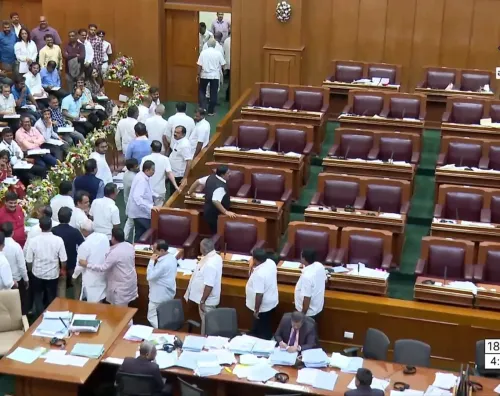
The Karnataka Congress government has announced plans to repeal amendments made to the state's anti-conversion legislation by the previous Bharatiya Janata Party (BJP) administration, setting the stage for a sharp political clash in the upcoming Winter Session of the Karnataka State Legislature, scheduled for December 2026. The announcement was made in Bengaluru on Thursday, 12 November 2026.
What the Congress Has Proposed
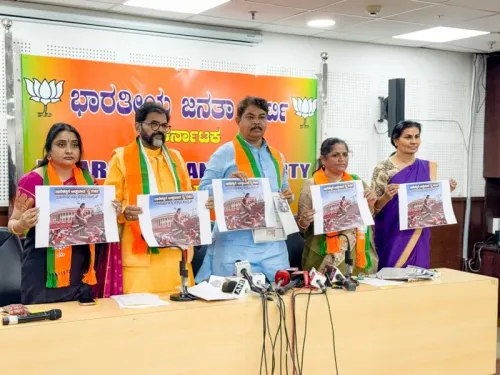
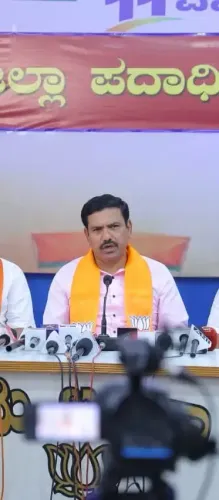
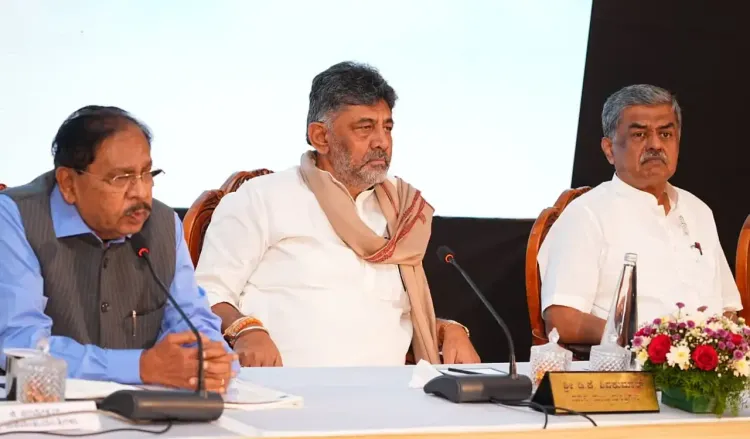
Karnataka Pradesh Congress Committee (KPCC) President and Member of the Legislative Council B.K. Hariprasad made the declaration at a press conference, stating that the ruling Congress government would restore the earlier legal position that existed before the BJP's amendments. He claimed the BJP had introduced what he described as 'draconian and stringent provisions' with the stated intent of harassing religious minorities.
'We will repeal the Anti-Conversion Bill in Karnataka during the upcoming Winter Session. We will restore the earlier status quo. The government will fulfil the aspirations of the people. The BJP had amended the Bill with the intention of harassing minorities,' Hariprasad said at the press conference.
BJP's Counter: Protecting Voluntary Conversion, Not Enabling Force
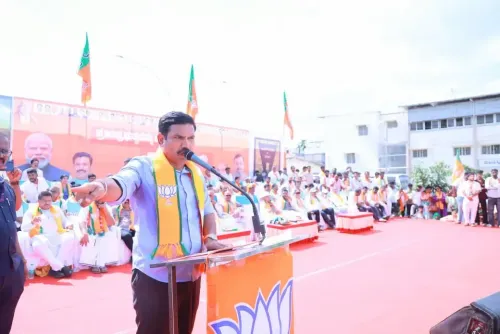
The announcement drew an immediate and sharp response from the opposition. Chalavadi Narayanaswamy, Senior BJP leader and Leader of the Opposition in the Legislative Council, pushed back against the Congress framing, insisting that the BJP's legislation did not impede voluntary religious conversion but was specifically designed to prohibit conversions through force, coercion, or financial inducement.
'There should not be any pressure on people who want to convert to another religion. If a person wishes to embrace another religion voluntarily, it is their right. They can submit the necessary documents through the Deputy Commissioner and convert to any religion. Our Constitution allows this,' he said. However, Narayanaswamy made clear that the BJP would mount strong opposition to any repeal, warning: 'If the government withdraws this law, it would mean that it is allowing other religions to forcibly convert people.'
Responding to demands by minority organisations for withdrawal of both the anti-conversion law and the cow slaughter ban, Narayanaswamy alleged those demands were motivated by a desire to facilitate forced conversions and continue cow slaughter — a claim that minority groups have not publicly responded to as of this report.
What the 2022 Law Actually Says
The legislation at the centre of the dispute is the Karnataka Protection of Right to Freedom of Religion Act, 2022, introduced by the then-BJP government led by former Chief Minister Basavaraj Bommai. The law prohibits conversions achieved through misrepresentation, force, coercion, undue influence, allurement, fraudulent means, or marriage.
Notably, the Act explicitly exempts reconversion to a person's 'immediate previous religion' from the definition of conversion — a provision that critics argue effectively privileges reconversion to Hinduism. The legislation also mandates a detailed procedural framework: a person intending to convert must submit a declaration to the District Magistrate at least 30 days in advance, the officiant must give prior notice, and the convert must subsequently appear before the magistrate for identity and intent verification. The District Magistrate is empowered to invite public objections and order a police enquiry.
Penalties Under the Act
The law prescribes graduated penalties. Standard unlawful conversion carries imprisonment of three to five years and a fine of ₹25,000. Where conversions involve minors, women, members of Scheduled Castes or Scheduled Tribes, or persons of unsound mind, the punishment rises to three to ten years with a fine of up to ₹50,000. Mass conversions involving two or more persons attract three to ten years imprisonment and a fine of up to ₹1 lakh. Repeat offenders face a minimum of five years and fines up to ₹2 lakh. All offences under the Act are cognisable and non-bailable.
What Comes Next
With the Congress formally signalling its intent and the BJP vowing organised resistance, the Winter Session is likely to become a major political flashpoint in Karnataka. The debate taps into one of the most contested fault lines in Indian politics — the boundary between protecting voluntary religious freedom and curbing what proponents of such laws call 'fraudulent' conversion. The issue is expected to generate wider national attention, particularly given its implications for minority community rights and the BJP's electoral messaging ahead of future state elections.
Point of View
Public objections, police enquiries — functioned less as a safeguard against fraud and more as a bureaucratic deterrent to any conversion, voluntary or otherwise. The exemption of reconversion to one's 'immediate previous religion' was the law's most telling tell. That provision, rarely scrutinised in mainstream coverage, essentially created a two-tier conversion regime. The BJP's claim that it only targeted forced conversions does not survive a reading of the Act's text. The Congress, for its part, should answer what oversight mechanism, if any, it will substitute — the absence of any fraud-prevention framework risks handing the opposition a durable campaign line.
NationPress
12 Nov 2026
Frequently Asked Questions
What is the Karnataka anti-conversion law the Congress wants to repeal?
It is the Karnataka Protection of Right to Freedom of Religion Act, 2022, introduced by the BJP government of Basavaraj Bommai. The law bans conversions through force, coercion, allurement, or fraudulent means and requires converts to file declarations with the District Magistrate before and after conversion.
When is the Karnataka Congress planning to repeal the anti-conversion law amendments?
KPCC President B.K. Hariprasad announced on 12 November 2026 that the repeal will be tabled in the upcoming Winter Session of the Karnataka Legislature, scheduled for December 2026.
Why is the BJP opposing the repeal?
BJP leader Chalavadi Narayanaswamy argues the 2022 law only targets forced or fraudulent conversions, not voluntary ones, and that repealing it would amount to permitting coercive conversion. The party has vowed to mount statewide opposition to the Congress move.
What penalties does the 2022 Karnataka anti-conversion act prescribe?
Standard unlawful conversions attract three to five years in prison and a ₹25,000 fine. Conversions involving minors, women, Scheduled Castes or Tribes carry three to ten years and up to ₹50,000. Mass conversions (two or more persons) attract three to ten years and up to ₹1 lakh, while repeat offenders face five or more years and fines up to ₹2 lakh.
What was controversial about the 2022 Act's treatment of reconversion?
The Act explicitly excludes reconversion to a person's 'immediate previous religion' from the definition of conversion, meaning it does not attract the law's procedural or penal provisions. Critics have argued this effectively creates different legal treatment for conversion versus reconversion.