Karnataka Public Schools launch in Shivamogga on June 1: 800 schools, 15,000 teachers planned
Synopsis
Karnataka is betting big on public education: CM Siddaramaiah has set a 1 June launch date in Shivamogga for the Karnataka Public Schools project — 800 campuses, 1,200 students each, LKG to Class 12 under one roof. Paired with a 15,000-teacher recruitment push and SSLC pass rates jumping 14 points in a single year, this is the most ambitious state school overhaul in recent memory.
Key Takeaways
CM Siddaramaiah will formally launch the Karnataka Public Schools (KPS) project in Shivamogga on 1 June 2025 .
The government plans 800 KPS campuses , each housing up to 1,200 students from LKG to Class 12 in Kannada and English medium.
All 800 schools are to be fully operational within two years ; the tender process is to begin this academic year.
A proposal for recruiting 15,000 teachers has been directed to the Finance Department immediately.
SSLC pass rate rose to 94.10 per cent (up 14.06 points ); schools with 100% SSLC results jumped from 766 to 2,393 .
SC and ST student results improved by 18 per cent ; rural students outperformed urban peers in both SSLC and II PUC.
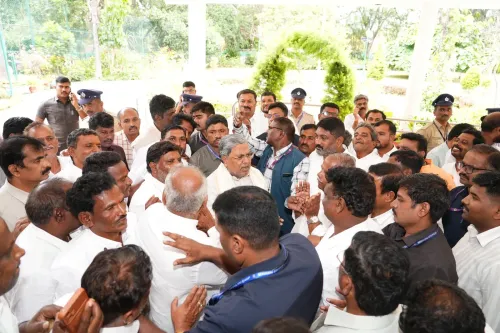
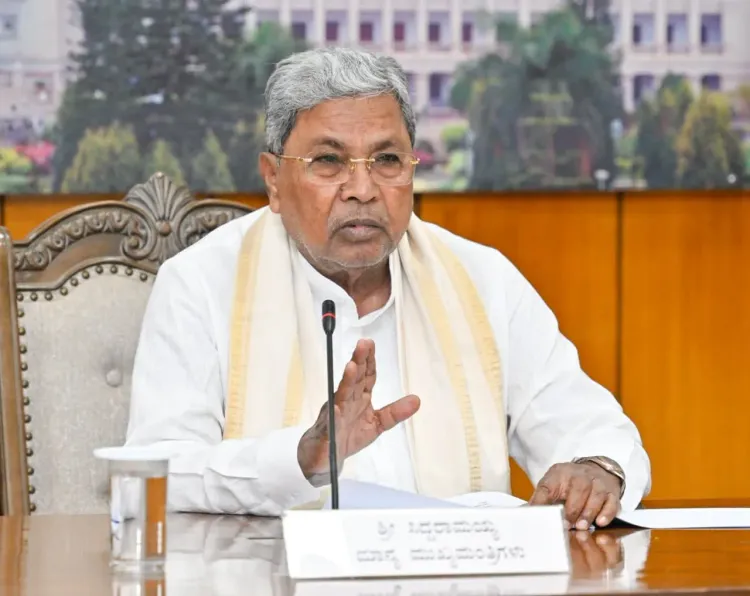
Karnataka Chief Minister Siddaramaiah on Wednesday, 20 May chaired a high-level review of the state's School Education and Literacy Department at his official residence in Bengaluru, directing officials to accelerate the rollout of Karnataka Public Schools (KPS) across the state. He announced that the flagship project will be formally launched in Shivamogga on 1 June.
What the Karnataka Public School Project Entails
Each KPS campus will cater to approximately 1,200 students, offering education from LKG through PU (Class 11 and 12) in both Kannada and English medium under a single roof. The government has proposed 800 such schools statewide, with Siddaramaiah directing that all campuses be fully operational within two years.
The Chief Minister also instructed authorities to initiate the tender process at the earliest for establishing these schools during the current academic year, and directed the department to examine the feasibility of providing school bus facilities for KPS students.
Teacher Recruitment and Infrastructure Push
In a significant administrative directive, Siddaramaiah instructed the School Education and Literacy Department to submit a proposal to the Finance Department immediately for the recruitment of 15,000 teachers. The move signals the government's intent to staff the new campuses ahead of their phased opening.
This comes amid a broader push to strengthen public school infrastructure in Karnataka, with the KPS model designed to compete with private institutions by consolidating resources and offering a wider curriculum span on a single campus.
SSLC and PU Results Show Sharp Improvement
Reviewing academic outcomes, Siddaramaiah noted a marked turnaround in examination performance this year. The SSLC (Class 10) pass percentage climbed to 94.10 per cent, an increase of 14.06 percentage points over the previous year. The II PUC (Class 12) pass rate reached 86.48 per cent, up 13.03 percentage points from 2025.
Notably, the number of schools recording 100 per cent results in SSLC examinations surged to 2,393 this year from just 766 last year — a more than threefold rise. The Chief Minister also confirmed that no grace marks were awarded to students this year and that there would be no third and final SSLC examination this year.
Rural Students Outperform Urban Peers
Officials informed the meeting that rural students outpaced their urban counterparts in both SSLC and II PUC examinations. The SSLC pass rate in rural areas stood at 94.80 per cent against 93.20 per cent in urban areas. In II PUC, rural students recorded 87.62 per cent compared to 85.95 per cent in urban areas.
The government also highlighted that results among SC and ST students improved by 18 per cent, with students from various backward class categories also registering considerable gains — a development the administration attributed to targeted interventions.
Measures Behind the Results and What Comes Next
School Education and Literacy Minister Madhu Bangarappa told the meeting that several steps had driven the improvement: statewide meetings with parents and teachers, appointment of guest teachers, curriculum-based learning methods, state-level preparatory examinations, periodic teacher training, and continuous monitoring. He added that special training programmes in the Kalyana Karnataka region contributed significantly to results there.
The government also discussed a proposal to distribute free notebooks alongside free textbooks to schoolchildren. With the KPS launch set for 1 June in Shivamogga, all eyes will be on whether the tender timelines, teacher recruitment, and infrastructure targets can be met within the two-year window Siddaramaiah has set.
Point of View
But Karnataka has a history of large-scale school reform announcements that stall at the tender and staffing stage. The directive to recruit 15,000 teachers is the right instinct — but submitting a proposal to the Finance Department is not the same as filling classrooms. With 800 campuses to build in two years and a tender process not yet started, execution risk is high. The sharp SSLC improvement is genuinely encouraging, but the jump from 766 to 2,393 schools with 100% pass rates — in a year with no grace marks — deserves independent scrutiny to confirm it reflects learning gains rather than assessment calibration.
NationPress
5 Oct 2026
Frequently Asked Questions
What is the Karnataka Public Schools project?
The Karnataka Public Schools (KPS) project is a state government initiative to establish 800 new public school campuses across Karnataka, each accommodating around 1,200 students and offering education from LKG to Class 12 in both Kannada and English medium. The project was announced by Chief Minister Siddaramaiah and is set to be formally launched in Shivamogga on 1 June 2025.
When and where will the Karnataka Public Schools project be launched?
The project will be formally launched on 1 June 2025 in Shivamogga, Karnataka. Chief Minister Siddaramaiah made the announcement during a review meeting of the School Education and Literacy Department on 20 May 2025.
How many teachers will be recruited for the Karnataka Public Schools?
The Chief Minister has directed the School Education and Literacy Department to immediately submit a proposal to the Finance Department for the recruitment of 15,000 teachers to staff the new KPS campuses.
What were Karnataka's SSLC and PU exam results in 2025?
The SSLC (Class 10) pass percentage rose to 94.10 per cent in 2025, up 14.06 percentage points from the previous year. The II PUC (Class 12) pass rate reached 86.48 per cent, an increase of 13.03 percentage points from 2024. No grace marks were awarded this year.
How did rural students perform compared to urban students in Karnataka exams?
Rural students outperformed urban students in both SSLC and II PUC examinations. The SSLC rural pass rate was 94.80 per cent against 93.20 per cent in urban areas, while the II PUC rural pass rate was 87.62 per cent compared to 85.95 per cent in urban areas.