CM Siddaramaiah marks 3 years with science outreach data
Synopsis
On the third anniversary of the Karnataka Congress government, Chief Minister Siddaramaiah credited every Kannadiga for the administration's achievements and detailed science-education milestones including mobile planetarium visits to over 3,200 schools, ₹7.23 crore in PhD scholarships, and science-centre upgrades across six districts.
Key Takeaways
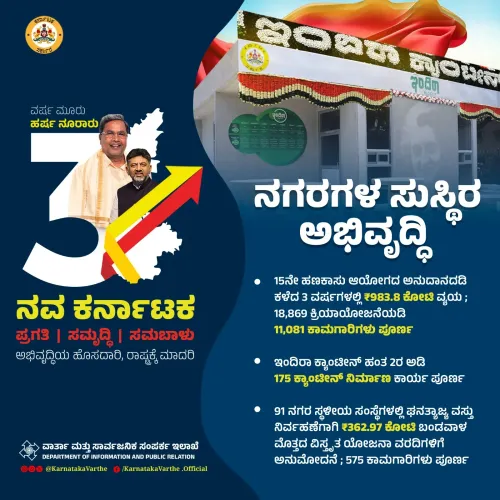
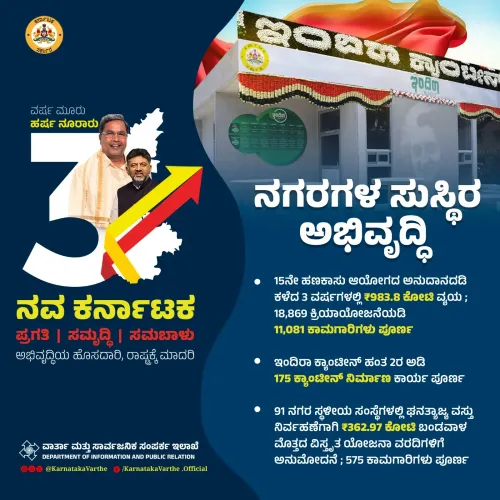
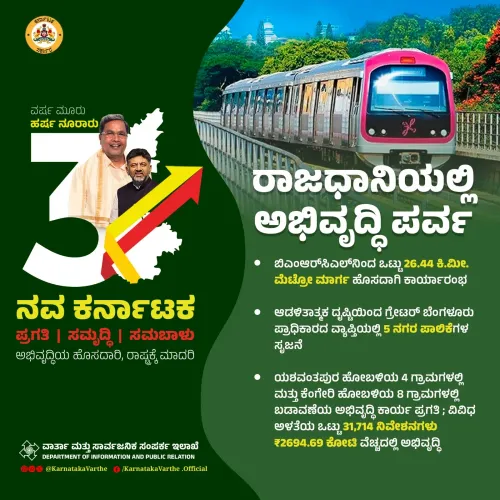
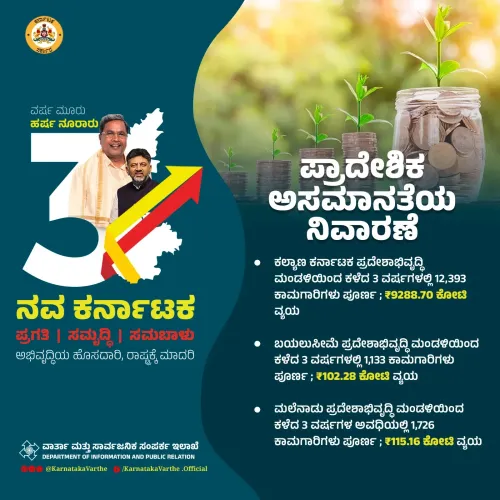
The Karnataka Congress government completed three years in office on 23 May 2026 , marking the anniversary under the #3YearsOfNavaKarnataka hashtag.
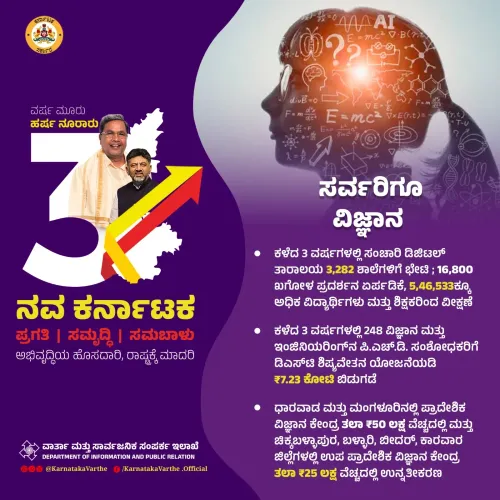
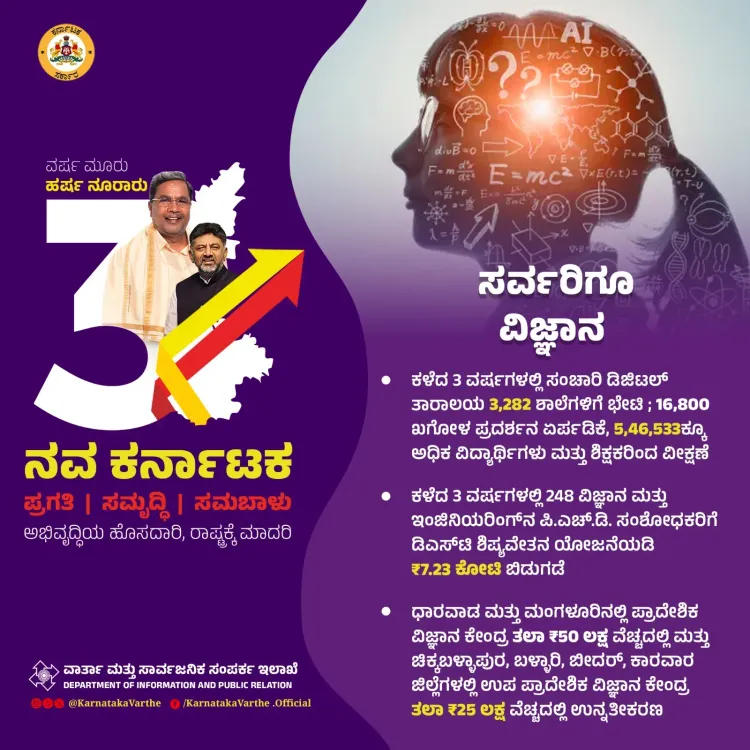
The Mobile Digital Planetarium visited 3,282 schools , conducted 16,800 astronomy shows , and reached over 5,46,533 students and teachers in three years. ₹7.23 crore was released to 248 PhD researchers in science and engineering under the state's DST Scholarship Scheme .
Regional Science Centres in Dharwad and Mangaluru were upgraded at ₹50 lakh each ; sub-regional centres in Chikkaballapur, Ballari, Bidar and Karwar at ₹25 lakh each .
CM Siddaramaiah pledged the government's development efforts would become 'faster and more effective' going forward.
Karnataka Chief Minister Siddaramaiah on Saturday, 23 May 2026 marked the completion of three years in office by crediting every Kannadiga for the government's achievements and releasing a detailed account of key education and science initiatives delivered since May 2023.
Context
Posting in Kannada, Siddaramaiah said the government takes pride in having 'walked the talk' — honouring every promise made to the people before the election. 'ನುಡಿದಂತೆ ನಡೆದ ಹೆಮ್ಮೆ ನಮಗಿದೆ' ('We take pride in having acted as we spoke'), he wrote, framing the anniversary under the hashtag #3YearsOfNavaKarnataka. The post dedicated all credit to the people of the state and pledged that the government's efforts would become 'faster and more effective' going forward.
The Indian National Congress government swept to power in Karnataka in the May 2023 assembly elections on a manifesto that prominently featured welfare, education, and science promotion. The three-year milestone is being framed by the Chief Minister as a fulfilment of those poll commitments, under the Nava Karnataka vision — a government slogan and policy framework centred on building a 'sashakta, samruddha, swabhimani Karnataka' (strong, prosperous, self-respecting Karnataka).
Policy Backdrop
Among the figures cited in the post, the Mobile Digital Planetarium visited 3,282 schools over the past three years, conducting 16,800 astronomy shows watched by more than 5,46,533 students and teachers. The initiative is aimed at bridging the rural-urban gap in STEM exposure by bringing astronomy outreach directly to government schools across the state.
On higher-education support, the post states that ₹7.23 crore was disbursed to 248 PhD researchers in science and engineering under the DST Scholarship Scheme, administered through the state's Department of Science and Technology. This scheme provides financial assistance to doctoral candidates, positioning Karnataka as an active supporter of research talent beyond its established IT sector.
The post also highlights infrastructure upgrades: Regional Science Centres in Dharwad and Mangaluru were upgraded at a cost of ₹50 lakh each, while sub-regional science centres in Chikkaballapur, Ballari, Bidar, and Karwar districts received upgrades at ₹25 lakh each. These centres function as permanent science-popularisation hubs in their respective districts.
Stakeholders and Impact
The direct beneficiaries cited in the post span three groups: school students and teachers reached through mobile planetarium shows, PhD researchers supported through state scholarships, and communities in six districts gaining upgraded science infrastructure. Collectively, the figures reflect a deliberate push to extend science literacy beyond Bengaluru into smaller towns and rural areas.
Karnataka governments have historically invested in the state's knowledge economy alongside IT and manufacturing. The current administration's three-year report positions these science and education investments as a structural continuation of that pattern, while also serving as a political counter-narrative to the previous BJP regime's record.
What's Next
The Chief Minister's post signals that the pace of such initiatives will accelerate in the remaining tenure. Observers will watch state budget allocations in the next financial year for further science-centre expansions and any new district-level announcements. The government's ability to sustain welfare spending alongside capital outlays for science infrastructure will be a key fiscal test as the term progresses.
Point of View
Anchored in verifiable scheme-level data, is as much a governance communication exercise as a political one — it implicitly benchmarks the Congress administration against the preceding BJP tenure ahead of the next election cycle. The focus on science outreach and PhD scholarships signals an effort to complement the government's high-profile welfare guarantees with a credibility narrative around knowledge-economy investment. By disaggregating benefits to schools, researchers and specific districts, the messaging targets both rural voters and an educated urban base. How the government sustains this spending trajectory amid Karnataka's fiscal pressures will determine whether the 'Nava Karnataka' brand holds electoral weight.
NationPress
7 Oct 2026
Frequently Asked Questions
How many schools did the Karnataka mobile planetarium visit in 3 years?
According to Chief Minister Siddaramaiah's post, the Mobile Digital Planetarium visited 3,282 schools over the past three years, conducting 16,800 astronomy shows for more than 5,46,533 students and teachers .
What is the DST Scholarship Scheme in Karnataka?
The DST Scholarship Scheme is a Karnataka government initiative that provides financial support to PhD researchers in science and engineering, administered through the state's Department of Science and Technology. The government released ₹7.23 crore to 248 researchers over the past three years.
Which districts got Regional Science Centre upgrades in Karnataka?
Dharwad and Mangaluru received Regional Science Centre upgrades at ₹50 lakh each , while sub-regional science centres in Chikkaballapur, Ballari, Bidar and Karwar were upgraded at ₹25 lakh each .
What is Nava Karnataka?
Nava Karnataka is the Karnataka Congress government's vision framework and slogan, meaning 'New Karnataka', focused on building a strong, prosperous and self-respecting state through welfare and development programmes since the party came to power in May 2023 .
When did the Karnataka Congress government complete 3 years in office?
The Karnataka Congress government led by Chief Minister Siddaramaiah completed three years in office on 23 May 2026 , having won the state assembly elections in May 2023 .