Has Karnataka Reduced the Maximum Punishment for Hate Speech from 10 to 7 Years?
Synopsis
The Karnataka government has significantly reduced the maximum punishment for hate crimes from 10 years to 7 years. This change, according to Home Minister G. Parameshwara, aims to bring a positive shift in societal behavior and address the rising incidents of hate speech across the state. Will this legislation truly change the landscape of communal harmony?
Key Takeaways
Karnataka government reduces hate crime punishment from 10 to 7 years.
Bill aims to address increasing societal tensions.
Repeat offenders face stricter penalties.
Legislation empowers authorities to remove hate content.
Old publications promoting violence will be banned.
Belagavi (Karnataka), Dec 18 (NationPress) The Congress-led administration in Karnataka has officially lowered the penalty for hate crimes outlined in the contentious Karnataka Hate Speech and Hate Crimes (Prevention and Control) Bill, 2025, changing it from 10 years to 7 years.
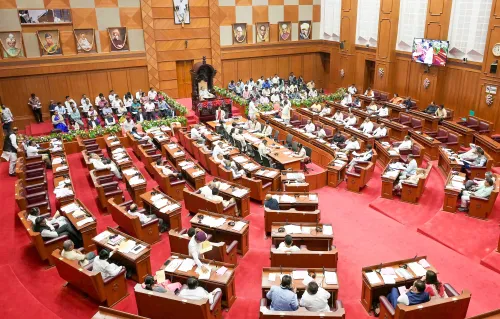
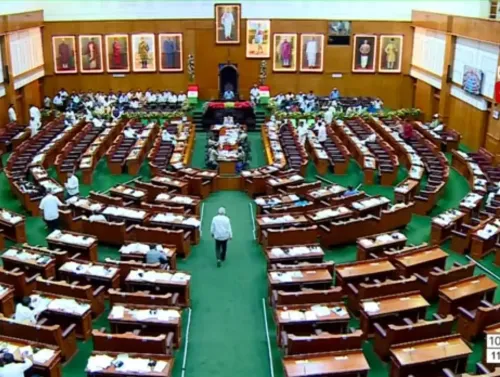
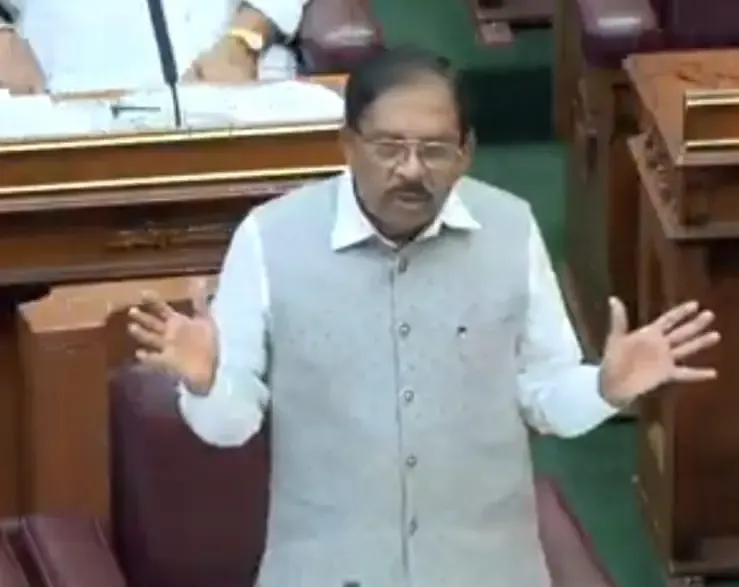
Karnataka's Home Minister G. Parameshwara made this announcement while discussing the Bill during a session in the State Assembly, which subsequently passed the legislation.
He expressed optimism that this law will result in a notable transformation in society.
"I believe that if people know about such a law, it will help prevent societal issues," he emphasized.
According to the Bill, a person found guilty of a hate crime faces a minimum imprisonment of one year, extending up to seven years, along with a monetary fine of ₹50,000. For repeat offenses, the penalty includes a minimum of two years in prison, which can also extend to seven years, with a fine of ₹1 lakh, as stated by Minister Parameshwara.
The Minister clarified that the state government decided to remove the provision that mandated 10 years of imprisonment for repeat offenders, citing various opinions.
Offenses under this Bill will be recognized as cognizable, non-bailable, and will be tried by a First Class Judicial Magistrate.
The legislation also addresses the incitement of hatred through various mediums such as books, pamphlets, and other forms of representation. If an organization or institution commits an offense, everyone responsible at the time will be considered culpable—this applies to both registered and unregistered entities, added Minister Parameshwara.
The designated state authority will also have the power to block or remove hate content, including materials shared via electronic platforms like YouTube.
In response, senior BJP MLA V. Sunil Kumar raised the question of whether older publications promoting violence and hatred would be prohibited.
Minister Parameshwara confirmed that such old publications would indeed be banned to prevent the dissemination of inciteful content in any form.
He further explained the rationale behind the Bill, mentioning that there has been a rise in inflammatory statements from various groups and individuals causing distress within society.
"I won’t specify who made such speeches or their content here, but the use of harsh language has escalated. The impact on society can lead to clashes between communities, risking social order. Should we tolerate this?" he questioned.
Recalling his own experiences with social ostracism, the Home Minister shared his childhood memories of facing humiliation, emphasizing that despite India being a thriving democracy and economy, issues of inequality persist.
He also referenced social reformer Basavanna, who fought against casteism over 850 years ago, pointing out that inequality still exists today.
Minister Parameshwara stressed that if speeches incite hatred towards any community or individual, such behavior is unacceptable in a modern society.
He identified hate crimes as any communication that propagates, promotes, or incites hatred against individuals or groups, resulting in disharmony.
"I possess newspaper clippings of hate speeches that have incited violence or even murder, pitting communities against each other," he stated.
As Home Minister, he noted the challenges of protecting women and children, highlighting that the youth, making up nearly 60% of the population, are particularly vulnerable to hate speech.
"We receive reports that certain speeches could disrupt law and order in districts. We can restrict access for individuals, but without a strong legal framework, such measures fall short. This Bill aims to serve as a deterrent," he explained.
Responding to criticism, Minister Parameshwara remarked that unnecessary hype has surrounded the Bill.
He referenced a Supreme Court ruling in the case of Vishal Tiwari vs Union of India, which highlighted the need for stringent measures against hate speech to preserve dignity and social harmony.
Furthermore, he cited international agreements like Article 20(2) of the International Covenant on Civil and Political Rights and Article 4 of the International Convention on the Elimination of All Forms of Racial Discrimination, emphasizing the global consensus on combating hate speech and violence.
Point of View
I believe the recent adjustments to the Karnataka Hate Speech Bill reflect a necessary response to growing societal tensions. While the reduction in punishment may raise eyebrows, it is essential to consider the broader implications on community harmony and the legal framework surrounding hate speech. As we navigate these complex issues, the priority must remain on fostering understanding and mutual respect among all citizens.
NationPress
23 Sept 2026
Frequently Asked Questions
What is the new maximum punishment for hate crimes in Karnataka?
The new maximum punishment for hate crimes has been reduced to 7 years from the previous 10 years .
What are the penalties for repeat offenders?
Repeat offenders face a minimum of two years imprisonment, which can extend up to seven years , along with a fine of ₹1 lakh.
What does the Bill cover?
The Bill addresses the incitement of hatred through various forms of media, including books, pamphlets, and electronic platforms.
Who will be held accountable if an organization commits a hate crime?
Every person responsible for the organization at the time of the offense will be deemed guilty, applicable to both registered and unregistered entities.
Why is this legislation important?
This legislation aims to tackle the rising instances of hate speech, promoting societal harmony and protecting communities from incitement.