FairPoint: Is It Azadi or Erasure? Unveiling the Truth Behind the Exodus of Kashmiri Pandits
Synopsis
The exodus of Kashmiri Pandits remains a poignant chapter in Indian history. As we reflect on 35 years since their forced migration, we must confront uncomfortable truths and acknowledge the systemic silence surrounding their plight.
Key Takeaways
The exodus of Kashmiri Pandits is a significant yet overlooked chapter in Indian history.
Systematic intimidation led to the forced migration of this community.
January 19 serves as a reminder of the ongoing struggle for justice.
The silence surrounding their plight highlights a need for national introspection.
The Kashmiri Pandit community continues to seek recognition and accountability.
New Delhi, Jan 18 (NationPress) Thirty-five years is a significant period for any nation. It allows for the evolution of governments, the reformation of narratives, and the concealment of uncomfortable realities beneath layers of convenient silence. Yet, for a community expelled from its homeland simply for being Hindu, time has not alleviated the suffering – it has only exacerbated the wound.
Three-and-a-half decades post the exodus of the Kashmiri Pandits, the inquiries linger unanswered. This isn't due to a lack of knowledge; the truths are well known in Kashmir. The silence surrounding these facts, however, is intentional and the cover-up is systematic.
Approximately seven lakh people were uprooted from their homeland in a swift manner, with conditions deliberately engineered to make their return impossible. This was not a mere historical mishap; it was the result of a meticulous strategy that began soon after Jammu and Kashmir's integration into India in 1947, gaining brutal momentum in the late 1980s.
At the core of this scheme lay a straightforward yet sinister goal: to demographically and ideologically overwhelm Kashmir, thus fulfilling Muhammad Ali Jinnah's two-nation theory without the need for a formal conflict. While Pakistan faced defeat in every war against India, it succeeded in Kashmir where armies faltered. A Muslim-majority valley was established not through ballots or persuasion, but through terror – by driving out its Hindu residents.
The Kashmiri Pandits, making up only two percent of the valley's populace, were particularly vulnerable. As a non-martial community primarily engaged in education, administration, and spiritual traditions, they lacked the means for violent retaliation. Confronted with targeted assassinations, public threats, and systemic intimidation, they opted for survival with dignity rather than futile resistance against a formidable adversary. In doing so, they had to forsake a civilization with roots extending over 5,000 years.
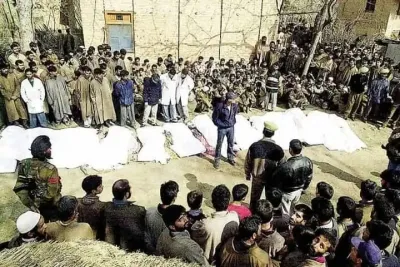
The exodus was not a spontaneous event; it unfolded in orchestrated waves of terror. Initially, those with slain relatives fled, followed by those whose homes were marked for destruction. Next came those whose names appeared on hit lists disseminated openly in mosques. Finally, many fled to safeguard their daughters and wives from what had become inevitable. This was not chaos; it was orchestration.
Thus, the question arises: where was the much-lauded spirit of 'azadi' in this scenario? If the movement was genuinely about freedom, why was its wrath directed towards a defenseless two percent minority? Why were unarmed men, women, and children hunted? The answer is clear and unavoidable. The terrorism in Kashmir was not a liberation movement; it was a campaign for religious homogenization. Its success lay in nearly erasing Hindus from the valley.
The stark reality of this success was evident in the refugee camps throughout Jammu and Delhi, where families accustomed to expansive ancestral homes were confined to dilapidated tents under sweltering 45-degree heat. Essential resources such as water, food, and medicine were scarce. Many perished not from gunfire, but from shock, illness, heatstroke, and snake bites.
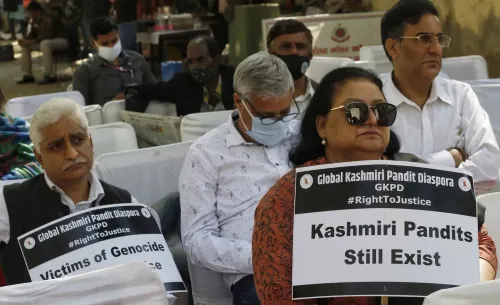
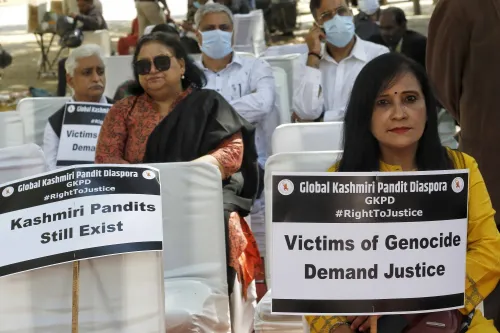
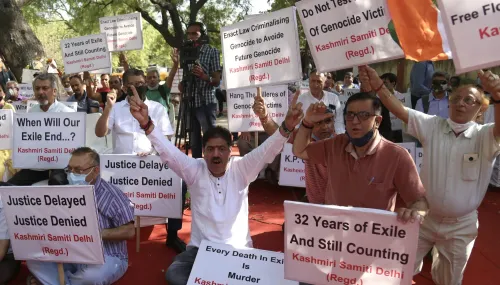
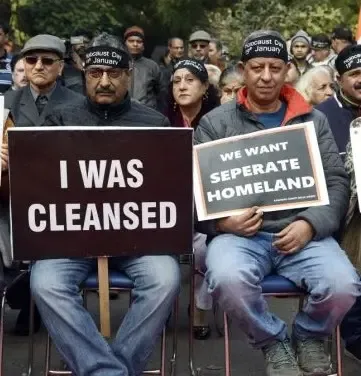
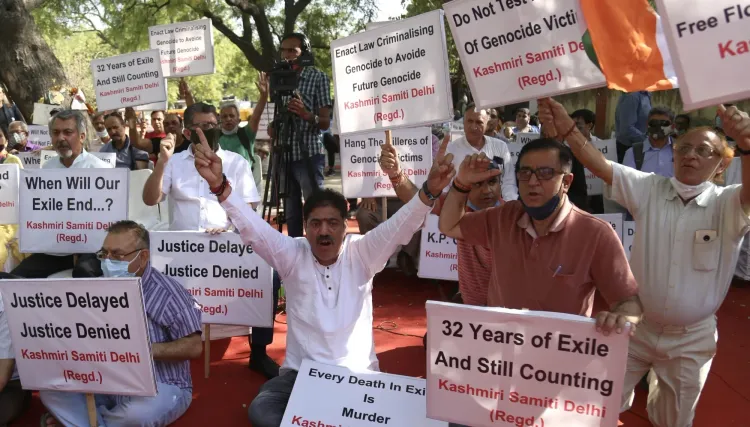
Every year on January 19, the Kashmiri Pandit community observes Exodus Day, also known as Holocaust Day – a day to remember the terror they faced and mourn the denial of justice that ensued. Hundreds lost their lives, homes were looted and burned, and women were raped and murdered. Yet, accountability remains elusive. Only about a hundred cases were registered by the Jammu and Kashmir Police, and not a single investigation has produced a significant outcome. No arrests, no convictions, no closure.
Over these 35 years, many direct victims and eyewitnesses have passed away, taking vital evidence with them. Successive governments – at both the Centre and in the erstwhile state, now union territory – have failed to establish even a commission of inquiry or a Special Investigation Team. The courts have remained unresponsive. Human rights organizations, vocal about conflicts thousands of miles away, have found the suffering of Kashmiri Hindus insufficiently compelling. There has been a Gaza in India’s backyard all this time, yet it never garnered the appropriate headlines.
A part of the tragedy stems from political expediency. The Kashmiri Pandit community is neither sizable nor influential enough to command electoral focus. Their suffering does not translate into street demonstrations or international pressure. Consequently, their plight is quietly overlooked.
Compounding the anguish of the Kashmiri Hindus is the political rehabilitation of those who held power during the time of persecution. Valley-based Muslim leaders are now sought after across the political spectrum, yet none have acknowledged, let alone advocated for, the cause of the Kashmiri Hindus. The silence of the valley’s leaders and intelligentsia – at best complicit, at worst supportive of the separatist narrative – has never been scrutinized or questioned.
The bitter truth today remains: the original inhabitants of Kashmir exist as refugees in their own nation. Their homes have been seized, their return systematically obstructed, and their dignity indefinitely deferred.
January 19 is not merely a day of mourning for the Kashmiri Pandits. It serves as a day of national reflection. It represents not just the exodus of a people, but the unraveling of India’s moral fortitude and the selective application of its secular conscience. Until justice is served and truth acknowledged, the exodus will not remain a chapter of history; it will persist as an indictment.
(Deepika Bhan can be contacted at deepika.b@ians.in)
Point of View
We must strive for accountability and justice, ensuring that the voices of this marginalized community are heard and acknowledged in our collective narrative.
NationPress
22 Sept 2026
Frequently Asked Questions
What triggered the exodus of Kashmiri Pandits?
The exodus was a result of targeted killings, threats, and systematic intimidation faced by the Kashmiri Pandits, who were forced out of their homes due to their Hindu identity.
How many Kashmiri Pandits were displaced?
Approximately seven lakh Kashmiri Pandits were displaced from their homeland during the exodus.
Why is January 19 significant for Kashmiri Pandits?
January 19 is observed as Exodus Day or Holocaust Day by the Kashmiri Pandit community to remember the terror they faced and to mourn the denial of justice that followed.
Has there been any accountability for the violence against Kashmiri Pandits?
Despite hundreds of killings and numerous atrocities, accountability remains absent, with only a handful of cases registered and no significant investigations concluded.
What is the current status of Kashmiri Pandits?
Today, many Kashmiri Pandits live as refugees within their own country, facing continued obstacles to their return and a lack of recognition of their suffering.