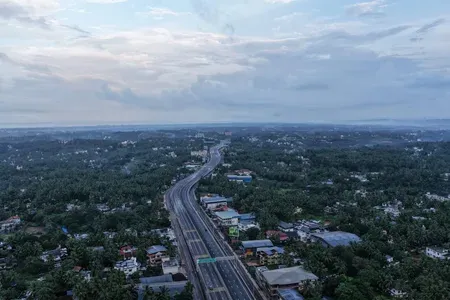
Kerala NH road deaths: 5,991 of 11,697 fatalities on national highways in 2023–25
Synopsis
Kerala's Assembly heard a stark figure on Thursday: 5,991 of the state's 11,697 road deaths between 2023 and 2025 occurred on national highways — nearly one fatality every four hours on NH stretches alone. With overspeeding and unsafe road design both implicated, the data puts pressure on the government to move beyond black-spot mapping toward measurable outcomes.
Key Takeaways
5,991 road accident deaths occurred on Kerala's national highways between 2023 and 2025 , out of 11,697 total road fatalities in the state.
National highways accounted for roughly 51% of all road deaths in the two-year period.
Public Works Minister P.K.
Basheer cited overspeeding and traffic violations as the primary causes, while also acknowledging road deficiencies as a contributing factor.
The government has identified accident-prone black spots through studies by NATPAC and is implementing measures including rumble strips, crash barriers, and solar-powered blinkers.
Joint inspections by the police , Motor Vehicles Department , and road agencies are conducted at high-frequency crash locations to recommend corrective action.
Nearly half of all road accident deaths recorded in Kerala between 2023 and 2025 occurred on national highways, according to figures placed before the Kerala Legislative Assembly on Thursday, 15 October 2026. Of the 11,697 total road fatalities during the two-year period, 5,991 — roughly 51% — took place on NH stretches, underscoring the disproportionate danger posed by the state's national highway network.
What the Numbers Reveal
The data, sourced from the office of Public Works Minister P.K. Basheer, was presented in response to questions raised by members of the legislative assembly. The figures span road deaths across all categories of roads in Kerala, but the concentration of fatalities on national highways — which account for a smaller share of the total road network — points to an acute safety deficit on high-speed corridors.
This is not an isolated trend. Nationally, highways have consistently recorded higher fatality rates per kilometre compared with state roads and urban streets, largely because of higher vehicle speeds and fewer pedestrian-safe infrastructure features.
What the Minister Said
Public Works Minister P.K. Basheer told the Assembly that overspeeding and traffic violations remained the primary causes of road accidents in the state. He maintained that road construction defects alone could not account for the scale of deaths. At the same time, Basheer acknowledged that road deficiencies also contributed to accidents, calling for a twin-track response: safer infrastructure alongside stricter enforcement of traffic rules.
The minister stated that road condition, accident history, and existing safety risks were evaluated before estimates were drawn up for road rehabilitation works. Safety measures, he said, were factored into rehabilitation plans based on these assessments.
Black Spots and Corrective Measures
The government has identified accident-prone locations — commonly referred to as black spots — through scientific studies carried out by the National Transportation Planning and Research Centre (NATPAC). Joint inspections involving the police, the Motor Vehicles Department, and road-owning agencies are conducted at locations with a high frequency of crashes, with the aim of identifying causes and recommending remedial action.
Both temporary and permanent measures are being implemented at dangerous black spots on national highways. These include solar-powered blinkers, rumble strips, speed humps, reflective road signs, road markings, and road studs. Metal crash barriers and wire-rope barriers are also being installed along dangerous curves and road medians to reduce crash severity.
The Wider Challenge
Notably, the minister's reply underscores that engineering fixes, while necessary, are not sufficient on their own. Overspeeding and traffic-rule violations continue to be the dominant causal factors even on improved road stretches. This split — between infrastructure gaps and driver behaviour — has long defined the policy debate around road safety in India, and Kerala's data adds fresh urgency to it.
For the families of the 5,991 people killed on Kerala's national highways over two years, the debate over fault is secondary. Whether through better-designed roads, more rigorous enforcement, or both, the government faces mounting pressure to translate these figures into a measurable reduction in fatalities.
Point of View
Built to higher engineering standards and receiving greater investment, are killing more people per corridor than ordinary state roads. Attributing the toll primarily to driver behaviour lets infrastructure planners off the hook too easily — black-spot mapping has existed for years, yet the fatality count remains stubbornly high. The real accountability gap is between identifying dangerous stretches and actually fixing them before the next fatality. Until the government publishes before-and-after fatality data for each remediated black spot, 'safety measures are being implemented' remains an administrative statement, not a safety outcome.
NationPress
15 Oct 2026
Frequently Asked Questions
How many road accident deaths occurred on Kerala's national highways between 2023 and 2025?
A total of 5,991 road accident deaths took place on Kerala's national highways between 2023 and 2025, according to figures presented in the Kerala Assembly on 15 October 2026. This represents nearly 51% of the state's total road fatality count of 11,697 during the same period.
What did Kerala's Public Works Minister say about the causes of road accidents?
Public Works Minister P.K. Basheer told the Kerala Assembly that overspeeding and traffic violations were the main causes of road accidents in the state. He acknowledged that road deficiencies also contributed, but said construction defects alone could not explain the scale of deaths.
What is a 'black spot' and how does Kerala identify them?
A black spot is an accident-prone stretch of road identified through scientific studies. In Kerala, these locations are mapped by the National Transportation Planning and Research Centre (NATPAC), and joint inspections by the police, Motor Vehicles Department, and road agencies are conducted to determine causes and recommend fixes.
What safety measures is the Kerala government implementing on national highways?
The government is installing solar-powered blinkers, rumble strips, speed humps, reflective road signs, road markings, road studs, metal crash barriers, and wire-rope barriers at dangerous black spots on national highways. Both temporary and permanent remedies are being pursued.
Why do national highways account for such a large share of road deaths in Kerala?
National highways typically carry higher-speed traffic over longer distances, increasing both the frequency and severity of crashes. According to the minister's Assembly reply, a combination of overspeeding, traffic violations, and road deficiencies — including inadequate safety features at dangerous curves — contributes to the elevated fatality rate on NH stretches.