Kerala floods 2025: Has ₹thousands-crore disaster rebuild actually worked?
Synopsis
Kerala's latest floods have killed 21 and exposed a troubling gap: despite eight years of institution-building and World Bank-backed investment since the 2018 disaster, critics say the state's elaborate disaster management network is fragmented, unaudited, and — according to insiders — has drifted into a patronage system. The question isn't who is in power when floods strike, but whether the architecture built to prevent the next catastrophe is actually working.
Key Takeaways
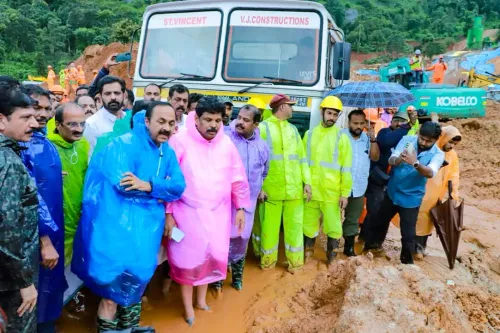
The 2025 Kerala floods have claimed 21 lives , left 7 people missing , and forced thousands into relief camps.
Kerala operates one of India's most extensive disaster management networks, including the KSDMA , 14 District Disaster Management Authorities , and a State Disaster Response Force .
The Rebuild Kerala Initiative (RKI) , backed by a World Bank loan, was launched after the 2018 floods to strengthen long-term resilience — but critics say outcomes have never been independently audited.
Satheesan , a former vocal critic of the KSDMA , now leads the government that depends on the same institution he questioned.
Experts are calling for an independent performance audit of the state's entire disaster management ecosystem, citing poor inter-agency coordination and lack of data sharing.
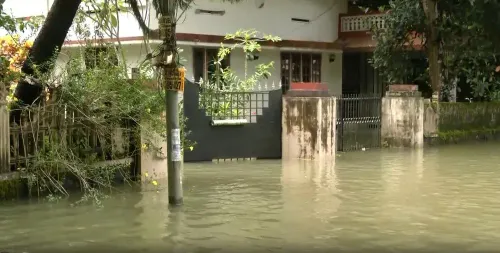
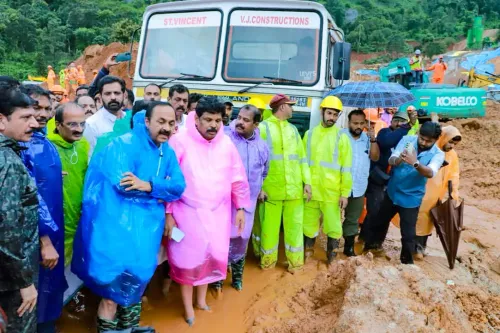
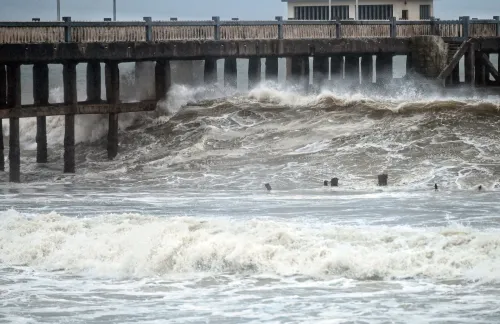
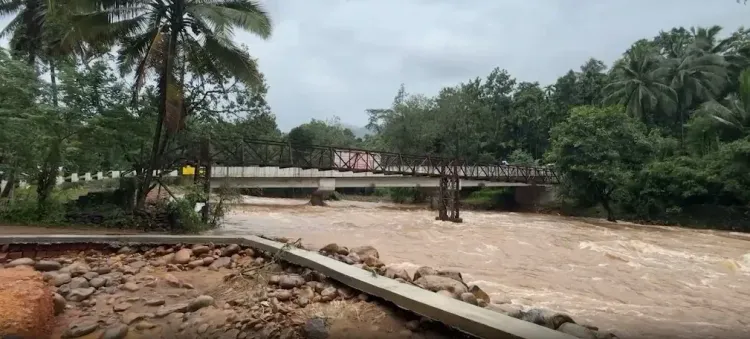
Fresh floods in Kerala have claimed 21 lives, left seven people missing, and driven thousands into relief camps — and with them has returned a question that no political party wants to answer squarely: has the state's heavily funded disaster management architecture actually made Kerala safer since the catastrophic 2018 floods?
The Institutional Framework on Paper
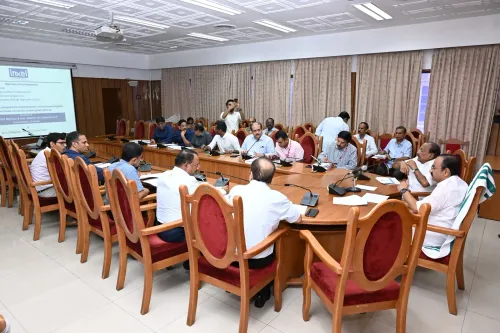
On paper, Kerala's disaster preparedness ecosystem is among the most elaborate of any Indian state. The Kerala State Disaster Management Authority (KSDMA) operates with the support of 14 District Disaster Management Authorities, a State Emergency Operations Centre, a State Disaster Response Force, the Institute of Land and Disaster Management, and the Department of Environment and Climate Change. Statutory agencies covering climate change, biodiversity, wetlands, pollution, and coastal management add further layers to this network.
Following the 2018 floods, every local self-government body was mandated to prepare and annually update a local disaster management plan, submitting it to the respective District Planning Committee. The scale of institutional investment, at least in structural terms, is not in question.
The Rebuild Kerala Initiative Under Scrutiny
The 2018 floods also triggered one of the state's most ambitious post-disaster recovery programmes — the Rebuild Kerala Initiative (RKI). Backed by a major loan from the World Bank, the initiative was conceived as a long-term 'build back better' plan to strengthen infrastructure, deepen disaster resilience, and prepare the state for intensifying climate-related events.
Nearly eight years later, critics argue that there has been little public assessment of whether these investments have delivered faster response systems, stronger local preparedness, or better inter-agency coordination when emergencies actually unfold. Several infrastructure projects were launched and new positions created under various programmes, but measurable outcomes remain largely unverified.
The Political Blame Game
The current political exchange follows a familiar script. The Communist Party of India (Marxist) [CPI(M)]-led Opposition has accused the three-month-old government of Chief Minister V.D. Satheesan of failing to ensure effective coordination during the present crisis. The Satheesan administration, in turn, has alleged that the previous Left Democratic Front (LDF) government spent a decade prioritising publicity over institutional strengthening.
Notably, Satheesan himself was among the most vocal critics of the KSDMA in the aftermath of the 2018 floods. As a senior opposition legislator, he had publicly questioned the authority's effectiveness and argued it had failed to meet its mandate. Today, as Chief Minister, he depends on that same institutional machinery — a detail that underscores how political transitions rarely disrupt entrenched institutional inertia.
What Experts Are Calling For
Experts argue that Kerala has moved past the point where another round of political accusations serves any constructive purpose. The call now is for an independent social and performance audit of the state's entire disaster management ecosystem — from the KSDMA and district authorities to the Rebuild Kerala Initiative and allied environmental bodies.
Such an audit, according to analysts, should examine whether these institutions have met their statutory objectives, how effectively public funds have been utilised, whether early warning systems have materially improved, and whether lessons from 2018 have been genuinely institutionalised rather than merely documented.
Critics have also pointed to a structural problem: according to those familiar with the system, the various bodies within Kerala's disaster management network operate in silos, with no meaningful coordination, no systematic data sharing, and a tendency — critics argue — to function as patronage-driven employment agencies rather than operationally effective emergency institutions.
As extreme weather events grow more frequent and climate risks intensify across the Western Ghats and Kerala's coastal belt, the state's ability to move beyond institutional symbolism toward measurable resilience will determine the human cost of the next disaster — whenever it arrives.
Point of View
Shared data infrastructure, and independent outcome measurement. The allegation that these bodies have become job-generating agencies for political insiders, if substantiated, would mean that public investment meant to save lives is instead subsidising patronage. An independent audit is not just good governance — at this point, it is a public safety obligation.
NationPress
18 Sept 2026
Frequently Asked Questions
How many people have died in the 2025 Kerala floods?
The 2025 Kerala floods have claimed at least 21 lives, with seven people still reported missing and thousands displaced into relief camps. The disaster has renewed scrutiny of the state's disaster preparedness institutions.
What is the Rebuild Kerala Initiative and has it worked?
The Rebuild Kerala Initiative (RKI) was launched after the devastating 2018 Kerala floods as a long-term 'build back better' programme, backed by a major World Bank loan, to strengthen infrastructure and disaster resilience. Nearly eight years on, critics argue that no independent public assessment has been conducted to verify whether the investment has translated into faster emergency response, stronger local preparedness, or better inter-agency coordination.
What is the Kerala State Disaster Management Authority (KSDMA)?
The KSDMA is the apex state body responsible for disaster preparedness, response, and mitigation in Kerala. It is supported by 14 District Disaster Management Authorities, a State Emergency Operations Centre, and a State Disaster Response Force, among other institutions. Despite this network, critics say the bodies operate in silos with little data sharing or coordination.
Why is Chief Minister V.D. Satheesan's position on disaster management significant?
As a senior opposition legislator after the 2018 floods, Satheesan was among the strongest public critics of the KSDMA, arguing it had failed to meet its mandate. Now, as Chief Minister, he leads the government that must rely on the same institutional machinery — a contradiction that experts say illustrates how political transitions rarely reform entrenched institutions.
What are experts recommending to fix Kerala's disaster management system?
Experts are calling for an independent social and performance audit of Kerala's entire disaster management ecosystem, covering the KSDMA, district authorities, the Rebuild Kerala Initiative, and allied environmental bodies. The audit should assess statutory compliance, fund utilisation, improvements in early warning systems, and whether lessons from 2018 have been genuinely institutionalised.