Kerala rain deaths: IMD alerts under fire as minister blames Centre

Synopsis
With 21 dead and 7 missing from Kerala's rain disasters, Revenue Minister A.P. Anil Kumar has deflected criticism of the state's response by pointing the finger at the IMD — arguing the state has no power to issue its own weather alerts. The exchange exposes a fault line between Centre and state that recurs every monsoon, and that Kerala's increasingly extreme weather is making impossible to ignore.
Key Takeaways
At least 21 people have died and 7 remain missing in Kerala's ongoing rain-related disasters as of 4 August .
Worst-affected districts are Pathanamthitta , Idukki , Kottayam , and several northern districts.
Revenue Minister A.P.
Anil Kumar stated that the state cannot issue independent weather alerts and can only relay IMD warnings.
The minister attributed any alert lapses to the IMD , while rejecting allegations of administrative failure in rescue and relief operations.
The minister acknowledged the existing alert mechanism needs improvement for more precise, location-specific forecasts.
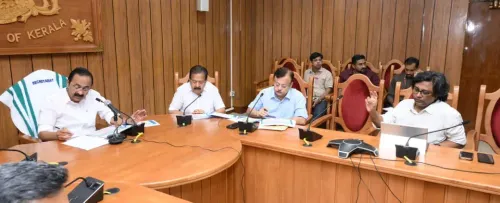
Kerala's Revenue Minister A.P. Anil Kumar on Tuesday, 4 August mounted a strong defence of the state government's disaster response, placing responsibility for inadequate weather warnings squarely on the India Meteorological Department (IMD). His remarks came as the rain-related toll in the state climbed to at least 21 deaths, with 7 people still missing across several districts.
Key Developments
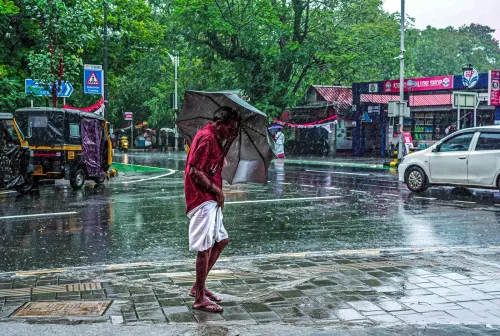
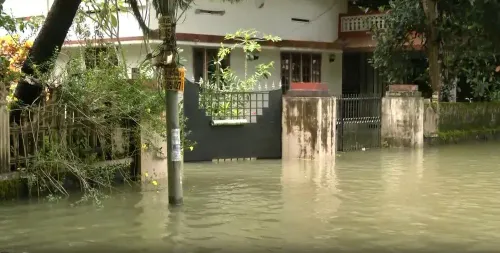
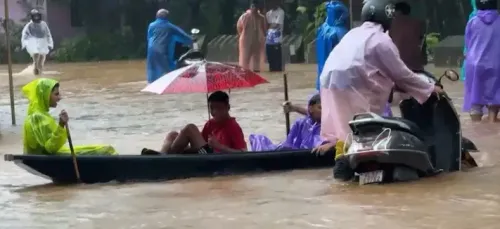
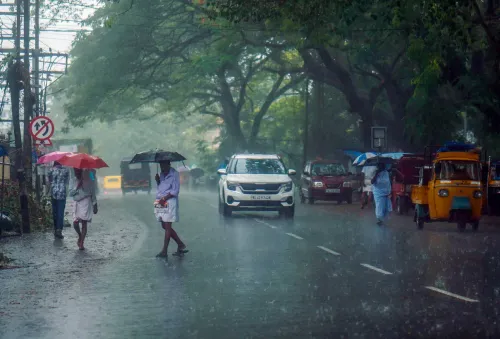
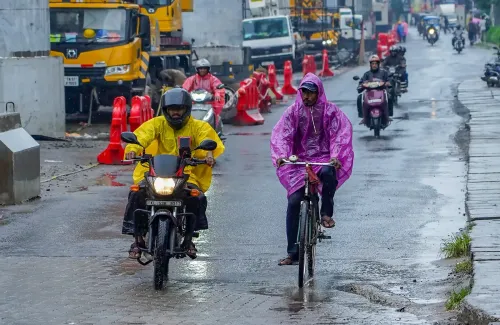
The worst-affected districts include Pathanamthitta, Idukki, Kottayam, and several northern districts, where heavy rains, flash floods, and landslides caused widespread destruction. Rescue, evacuation, and relief operations are ongoing, with multiple state agencies deployed in coordination.
What the Minister Said
'The state government cannot issue weather warnings on its own. Our responsibility is limited to notifying the alerts issued by the India Meteorological Department,' Anil Kumar said. He argued that if any lapse occurred in the issuance of weather alerts, accountability rested with the IMD — the Centre's designated weather authority — and not with the state.
The minister also acknowledged that the existing alert mechanism requires further improvement to deliver more precise and timely forecasts, adding that better forecasting would allow both authorities and the public to prepare more effectively for extreme weather events.
Criticism Over Alert Accuracy
The state government's response has drawn scrutiny after residents and local officials in several areas reported that actual rainfall intensity far exceeded what had been forecast. Critics argue that the gap between predicted and actual rainfall left communities and emergency services with insufficient time to respond. This comes amid a pattern of increasingly frequent and severe weather events battering Kerala in recent monsoon seasons.
Notably, the debate over IMD forecast accuracy and state-level early warning systems is not new to Kerala — similar questions were raised following the devastating floods of 2018 and the Wayanad landslides of subsequent years.
Government's Stand on Disaster Response
Anil Kumar rejected allegations of administrative lapses during rescue and relief operations, maintaining that coordination among departments had been effective. He said any isolated complaints that emerged during operations were addressed promptly by the authorities concerned.
What Happens Next
With Kerala continuing to face the monsoon season, the minister's remarks are likely to sharpen the debate around the need for location-specific, real-time weather forecasting and a clearer delineation of responsibility between the Centre and state governments in disaster early-warning systems. Authorities are expected to continue relief and rescue efforts as weather conditions remain unpredictable across affected districts.
Point of View
Yet the state bears the political cost when those alerts fall short. This accountability gap is not accidental — it is baked into the federal architecture of disaster management. What is striking is that after 2018, Kerala was widely praised for building one of India's more robust early-warning networks, yet the same questions about forecast precision and last-mile communication keep resurfacing. The real accountability question is not who issues the alert, but whether the joint Centre-state system is designed to protect lives or to protect administrations.
NationPress
19 Sept 2026
Frequently Asked Questions
How many people have died in Kerala's rain-related disasters?
At least 21 people have died and 7 remain missing as of 4 August, with Pathanamthitta, Idukki, Kottayam, and northern districts being the worst affected by heavy rains, flash floods, and landslides.
Why is the Kerala government blaming the IMD for weather alert failures?
Revenue Minister A.P. Anil Kumar stated that the state government has no authority to issue independent weather warnings and can only disseminate alerts issued by the IMD. He argued that any lapse in alert accuracy or timing was therefore the IMD's responsibility.
What is the IMD's role in Kerala's disaster warning system?
The India Meteorological Department, a central government agency, is the sole authority empowered to issue official weather alerts in India. State governments, including Kerala, are responsible for communicating and acting on those alerts but cannot generate independent forecasts.
Has the Kerala government denied any failure in disaster management?
Yes. Minister Anil Kumar rejected allegations of administrative lapses, saying rescue, evacuation, and relief operations were carried out in close coordination with various agencies, and that isolated complaints were addressed promptly.
What improvements have been called for in Kerala's weather alert system?
The minister acknowledged that the existing mechanism needs improvement to provide more precise and location-specific forecasts. Better forecasting, he said, would allow both authorities and the public to prepare more effectively for extreme weather events.