Kerala LDF rift: Sivankutty fires back at CPI's attack on Pinarayi
Synopsis
A single Opposition appointment has cracked open the Kerala LDF's internal fault lines. With CPI's Sathyam Mokeri invoking Georgi Dimitrov to challenge Pinarayi Vijayan's unilateral style and CPI(M)'s Sivankutty firing back in kind, what is publicly on trial is not just a post — but who actually leads the Left alliance and on whose terms.
Key Takeaways
Sivankutty (CPI(M)) publicly rebuked CPI Assistant Secretary Sathyam Mokeri on 25 August over his criticism of Pinarayi Vijayan .
The dispute centres on Pinarayi's unilateral nomination of a CPI(M) leader as Deputy Leader of the Opposition , bypassing CPI consultations.
Mokeri published his criticism in the CPI mouthpiece Janayugom , invoking Georgi Dimitrov's united-front doctrine to demand consensus-based alliance politics.
Sivankutty accused the CPI of violating political propriety and of being 'unwilling to strengthen the LDF.' The row erupts as the LDF prepares for local body bye-elections, raising concerns about front unity against the BJP and Congress .
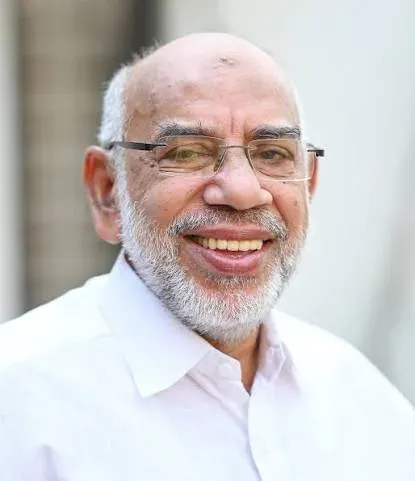
The long-simmering tensions within Kerala's Left Democratic Front (LDF) burst into the open on Tuesday, 25 August, as senior Communist Party of India (Marxist) leader V. Sivankutty publicly rebuked CPI Assistant Secretary Sathyam Mokeri over his sharp criticism of Opposition Leader Pinarayi Vijayan on the Deputy Leader of the Opposition appointment. The confrontation, playing out in party publications and public statements in Thiruvananthapuram, marks one of the most open disagreements between the CPI(M) and its second-largest alliance partner in recent memory.
What Triggered the Public Spat
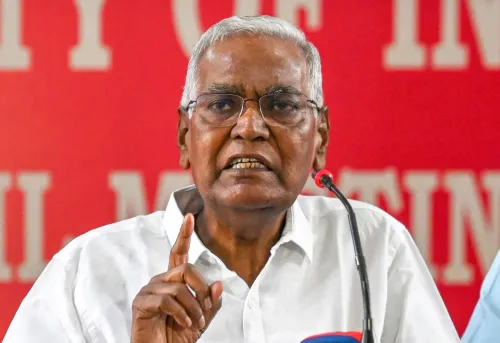
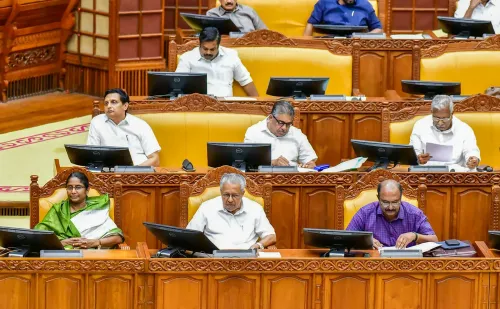
The flashpoint is Pinarayi Vijayan's decision to nominate a CPI(M) leader as Deputy Leader of the Opposition — a post the CPI had reportedly expected to contest. Mokeri launched an unusually pointed attack, published in the CPI mouthpiece Janayugom, accusing Pinarayi of violating alliance norms and the political ethics expected within a coalition. He questioned Pinarayi's public assertion that he alone would send the Deputy Leader's name to the Speaker, arguing that the matter had not been resolved in bilateral discussions — including at the national leadership level — between the two parties.
Mokeri also recalled that LDF Convenor T.P. Ramakrishnan had met CPI State Secretary Binoy Viswam at the M.N. Smarakam, where an understanding had reportedly been reached that the Deputy Leader dispute should not obstruct the front's functioning. He invoked Communist theorist Georgi Dimitrov's doctrine of united-front politics, arguing that alliances must be grounded in equality, mutual respect, and consensus — not unilateral decisions by a single leader.
Sivankutty's Counter-Attack
Sivankutty hit back firmly, accusing the CPI of violating political propriety and behaving like a party 'unwilling to strengthen the LDF.' He argued that the Deputy Leader's post had traditionally been held by the CPI(M) and that there was, therefore, no justification for altering the existing arrangement. He described Pinarayi's decision as democratic and said it was the CPI, not the Opposition Leader, that had acted against coalition norms.
Notably, Sivankutty is one of the CPI(M)'s most prominent leaders in Thiruvananthapuram district and a former Cabinet colleague of Pinarayi. He previously held the Nemom constituency but lost it to Bharatiya Janata Party (BJP) state president Rajeev Chandrasekhar in the recent Assembly election — a personal setback that makes his public defence of the CPI(M) leadership all the more pointed.
The Broader LDF Context
The row comes at a delicate moment for the Opposition front. The LDF meeting that preceded the public exchange — chaired by Pinarayi himself — had agreed on joint preparations for the upcoming local body bye-elections and on strengthening the front's organisational machinery. That consensus now appears fragile.
This is significant because it brings into the open a structural disagreement: who holds decision-making authority within the LDF, and what collective leadership actually means in a Left alliance where the CPI(M) dominates but the CPI insists on equal standing. Mokeri warned that imposing the preferences of an individual leader on Left politics could weaken the front and ultimately benefit the BJP and the Sangh Parivar.
What Happens Next
What began as a dispute over a single Opposition post has widened into a fundamental debate over internal LDF democracy. Observers will watch whether the CPI(M) and CPI national leaderships intervene to contain the fallout before the local body bye-elections, where a visibly fractured front could hand the BJP and Congress an opening.
Point of View
In practice, operates as a CPI(M) vehicle with other parties as passengers. Mokeri's invocation of Dimitrov is not academic — it is a signal that the CPI's national leadership is watching. The CPI(M)'s insistence that the post is 'traditionally' theirs is precisely the kind of argument that erodes coalition trust over time. With bye-elections approaching and the LDF already weakened after its Assembly setback, this is the worst moment for the alliance's internal contradictions to go public — and the BJP will not miss the opportunity.
NationPress
9 Oct 2026
Frequently Asked Questions
What is the Kerala LDF Deputy Leader of the Opposition dispute about?
The dispute concerns Opposition Leader Pinarayi Vijayan's decision to nominate a CPI(M) leader as Deputy Leader of the Opposition without, according to the CPI, completing bilateral consultations. The CPI argues the post cannot be decided unilaterally, while the CPI(M) maintains it has traditionally held the position and sees no reason to change that.
Who is Sathyam Mokeri and what did he say?
Sathyam Mokeri is the CPI Assistant Secretary who published a pointed criticism of Pinarayi Vijayan in the CPI mouthpiece Janayugom on 25 August. He accused Pinarayi of violating alliance norms and invoked Communist theorist Georgi Dimitrov's united-front doctrine to argue that LDF decisions must be based on equality, mutual respect, and consensus.
How did V. Sivankutty respond to the CPI's criticism?
Senior CPI(M) leader V. Sivankutty accused the CPI of violating political propriety and behaving like a party unwilling to strengthen the LDF. He defended Pinarayi's nomination as democratic and argued that the Deputy Leader post has traditionally been held by the CPI(M), making any change unjustified.
Why does this LDF rift matter now?
The public confrontation comes as the LDF is regrouping after an electoral setback and preparing for local body bye-elections. A visibly fractured front risks handing both the BJP and the Congress an advantage at a critical organisational moment for the Left alliance in Kerala.
What was agreed at the LDF meeting before the row went public?
The LDF meeting, chaired by Pinarayi Vijayan, had agreed on joint preparations for the upcoming local body bye-elections and on strengthening the front's organisational machinery. However, the public exchange between CPI(M) and CPI leaders that followed has cast doubt on how durable that consensus is.