Jagannath Rath Yatra 2025: Lakhs offer prayers at Gundicha Temple in Puri
Synopsis
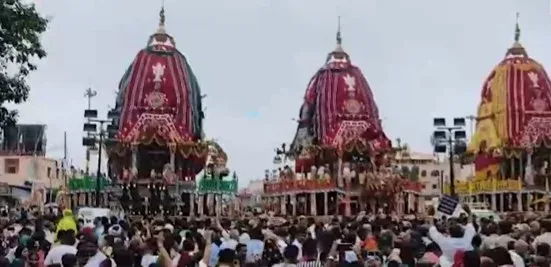
Lakhs of pilgrims — including international devotees moved to tears — gathered before the Gundicha Temple in Puri on 18 July as Lord Jagannath, Lord Balabhadra, and Goddess Subhadra remained on their chariots during the Rath Yatra. The festival's rare theological promise — that the Lord steps out of his sanctum to bless everyone equally — is precisely what draws millions every year, from Odisha villages to Hungary.
Key Takeaways
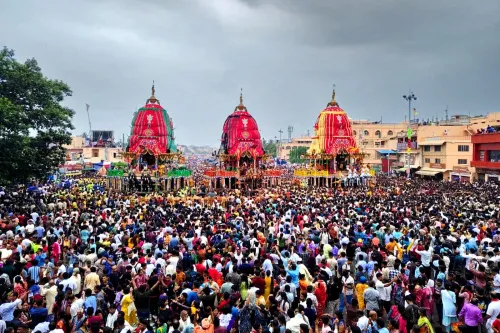
Lakhs of devotees offered prayers before Lord Jagannath , Lord Balabhadra , and Goddess Subhadra at the Gundicha Temple in Puri, Odisha on 18 July 2025 .
The Jagannath Rath Yatra 2025 commenced on Thursday , drawing pilgrims from across India and abroad.
Radhika Lila Devi from Hungary was among the international devotees who spoke about the festival's profound spiritual impact.
Puri Police deployed elaborate crowd management and security arrangements to ensure safe and orderly darshan.
The deities will remain at the Gundicha Temple for a few days before the return procession, Bahuda Yatra , begins.
The Rath Yatra is the only occasion in the year when the deities leave the Jagannath Temple sanctum sanctorum.
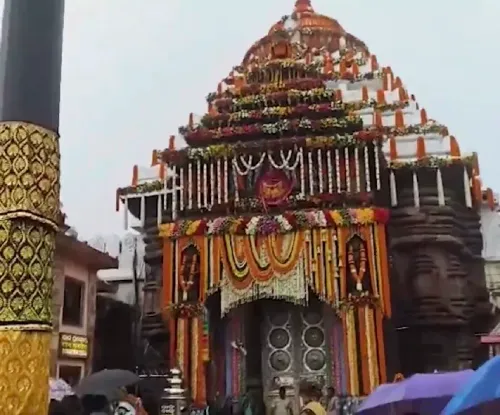
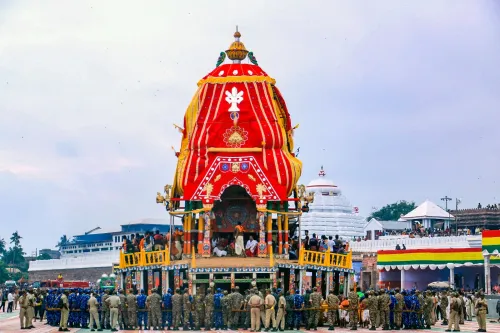
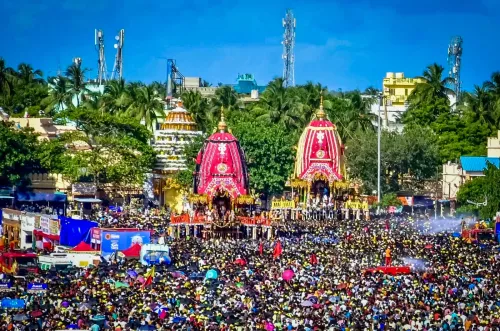
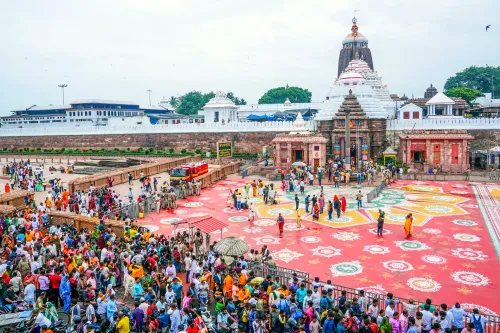
Lakhs of devotees descended on Puri, Odisha, on Saturday, 18 July to offer prayers and seek the darshan of Lord Jagannath, Lord Balabhadra, and Goddess Subhadra, as the sibling deities remained seated on their magnificently decorated chariots in front of the Gundicha Temple during the ongoing Jagannath Rath Yatra 2025. The annual festival, which commenced on Thursday, draws one of the largest religious congregations in India, with pilgrims arriving from across the country and abroad.
Atmosphere at the Gundicha Temple
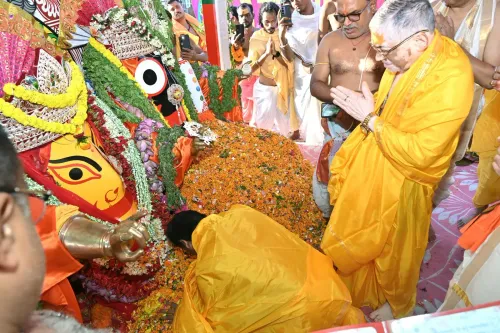
The air around the Gundicha Temple was thick with devotion as pilgrims chanted hymns, offered prayers, and sought blessings from the three sibling deities. Thousands of sants, tourists, and first-time visitors joined seasoned devotees in what many describe as a once-in-a-lifetime spiritual experience. The congregation reflected the festival's defining ethos — that the Lord belongs to all, regardless of social or cultural standing.
One devotee, moved by the occasion, said, 'I pray that the Lord grants wisdom to everyone, brings peace to the world, and puts an end to the conflicts that are going on. May He continue to bless everyone. The arrangements are good.'
International Devotees Add a Global Dimension
Among those present was Radhika Lila Devi from Hungary, whose account of the festival captured its cross-cultural pull. 'When I look at the devotees here, I get goosebumps. I can see so many different emotions on their faces — some are crying, some are smiling,' she said.
Recalling a particularly moving moment, she added, 'I just saw a woman who had brought rice as an offering for the Lord. Seeing the devotion of everyone here moves me deeply.' Reflecting on her own spiritual journey, Radhika Lila Devi described Lord Jagannath as 'the most powerful magnet; there is nothing more powerful.'
Security and Crowd Management
The Puri Police deployed security personnel at key locations across the festival route and implemented elaborate crowd management protocols to regulate the movement of the large gathering. Officials monitored pilgrim flow in real time to ensure a safe and orderly darshan for all attendees. No major untoward incident was reported as of Saturday.
Significance of the Rath Yatra
The Jagannath Rath Yatra is one of India's oldest and most revered religious festivals, rooted in a centuries-old tradition in which the presiding deities of the Jagannath Temple leave the sanctum sanctorum — the only occasion in the year when they do so — and travel through the streets of Puri on three towering wooden chariots pulled by thousands of devotees. The procession marks the sacred journey of the deities to the Gundicha Temple, believed to be the home of their aunt, where they traditionally reside for a few days before returning.
The festival symbolises divine compassion, inclusivity, and Lord Jagannath's desire to come out among his devotees and bless all, irrespective of background — a theological message that scholars and religious leaders cite as central to the Jagannath tradition's enduring mass appeal. With the deities still at the Gundicha Temple, the return procession — known as Bahuda Yatra — is keenly awaited by the faithful in the days ahead.
Point of View
Not the other way around. That inclusivity — encoded in centuries of tradition — is what makes Puri's streets the great equaliser they are for a few days each July. What mainstream coverage often misses is the festival's growing international footprint; the presence of devotees from Hungary and other countries signals that the Jagannath tradition is quietly becoming a global spiritual brand, not merely a regional one. The logistical challenge of managing lakhs of pilgrims safely is equally underreported — Puri Police's crowd management record here is, by any measure, a serious administrative feat.
NationPress
16 Oct 2026
Frequently Asked Questions
What is the Jagannath Rath Yatra and why is it significant?
The Jagannath Rath Yatra is an annual Hindu festival held in Puri, Odisha, in which Lord Jagannath, Lord Balabhadra, and Goddess Subhadra are ceremonially placed on large wooden chariots and pulled through the streets. It is the only occasion in the year when the deities leave the Jagannath Temple sanctum sanctorum, making it one of India's most revered religious gatherings.
When did the Rath Yatra 2025 begin and where are the deities now?
The Jagannath Rath Yatra 2025 commenced on Thursday, with the deities arriving at the Gundicha Temple, where they traditionally reside for a few days. As of Saturday, 18 July, lakhs of devotees were still offering prayers before the chariots stationed in front of the Gundicha Temple.
What security arrangements were made for the Rath Yatra in Puri?
The Puri Police deployed security personnel at key locations across the festival route and put in place elaborate crowd management protocols. Officials monitored pilgrim movement in real time to ensure a safe and orderly darshan for the large gathering.
Who are the three deities worshipped during the Rath Yatra?
The three deities are Lord Jagannath, Lord Balabhadra, and Goddess Subhadra — sibling deities who are the presiding figures of the Jagannath Temple in Puri, Odisha. Each deity has a separate, distinctively decorated wooden chariot during the procession.
What is the Bahuda Yatra and when does it take place?
The Bahuda Yatra is the return procession in which Lord Jagannath, Lord Balabhadra, and Goddess Subhadra travel back from the Gundicha Temple to the Jagannath Temple. It takes place a few days after the outward Rath Yatra, once the deities have completed their traditional stay at the Gundicha Temple.