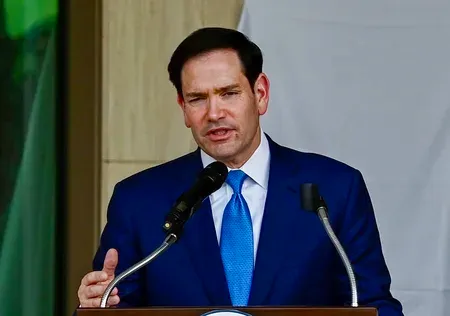
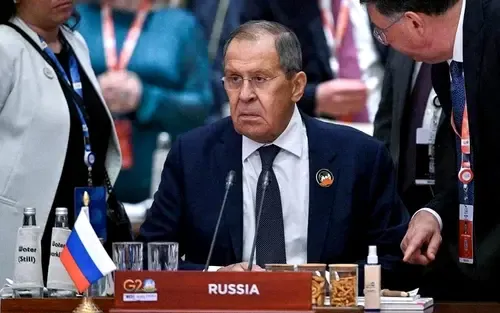
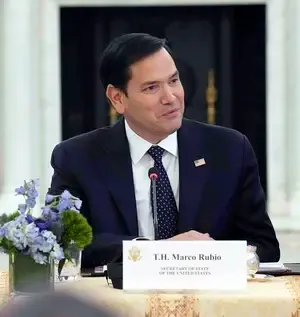
Lavrov meets Rubio in Manila, signals Russia's readiness on Ukraine deal
Synopsis
On the sidelines of ASEAN talks in Manila, Lavrov and Rubio held a rare face-to-face meeting — and the central fault line was immediate: did the Anchorage summit produce a binding understanding on Ukraine or merely an exchange of proposals? Moscow says yes; Washington says no. That gap, unresolved in Manila, is now the hinge on which any US-Russia peace framework turns.
Key Takeaways
Sergei Lavrov and Marco Rubio met in Manila on 23 July on the sidelines of ASEAN ministerial talks.
Lavrov conveyed Russia's readiness to resolve the Ukraine conflict and reaffirmed commitment to understandings from the Anchorage summit (August 2025) .
Lavrov briefed Rubio on the combat situation and stressed the need to halt further arms supplies to Ukraine .
Both sides agreed to continue contacts between foreign ministries, including within international organisations.
A public dispute persists over whether the Anchorage meeting produced a formal agreement — Russia says yes, the US says it was only proposals.
US Ambassador to India Sergio Gor and other officials were present at the meeting.
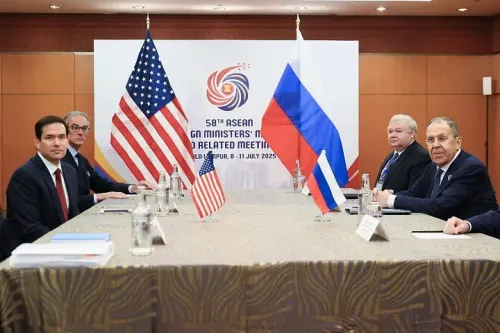
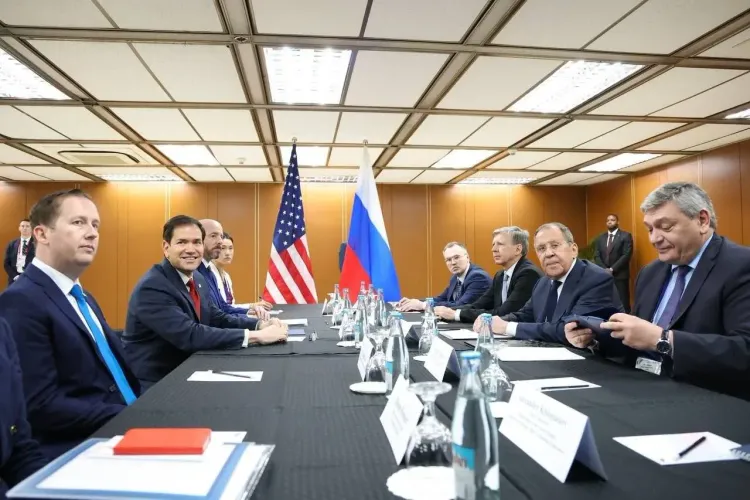
Russian Foreign Minister Sergei Lavrov met US Secretary of State Marco Rubio on the sidelines of the Association of Southeast Asian Nations (ASEAN) ministerial meetings in Manila on Thursday, 23 July, with Moscow signalling its readiness to resolve the conflict in Ukraine and reaffirming commitment to understandings reached at the Anchorage summit, according to local media reports. The meeting marks one of the highest-level direct engagements between Russian and American diplomats since the war in Ukraine began.
What Was Discussed
During the bilateral, Lavrov briefed Rubio on the current situation along the combat line in Ukraine and stressed the importance of halting further arms supplies to Kyiv, according to reports citing the Russian Foreign Ministry. The two ministers also discussed the normalisation of operating conditions for diplomatic missions of both countries — a long-standing friction point in US-Russia ties.
Beyond Ukraine, Lavrov and Rubio exchanged views on regional and international issues, including developments in West Asia. Both sides agreed to maintain ongoing contacts between their foreign ministries, including within the framework of international organisations. US Ambassador to India Sergio Gor and other officials were also present at the meeting.
The Anchorage Dispute
The Manila meeting comes against the backdrop of a public disagreement over what was — or was not — agreed at the Anchorage summit in August 2025, where Russian President Vladimir Putin and US President Donald Trump met to discuss the Ukraine war. Rubio subsequently stated that the two presidents had not reached any final agreement in Alaska, a characterisation Moscow has sharply contested.
Lavrov, responding to those remarks on 26 June, said: 'Already in Anchorage, when the two Presidents sat down for talks — Marco Rubio and I were also present — President Vladimir Putin, looking at Steve Witkoff, who was also in the room, began listing the US proposals point by point. After each point, in the presence of President Donald Trump and Secretary of State Marco Rubio, Vladimir Putin asked Steve Witkoff whether he had accurately captured the ideas that the latter had brought to Moscow ahead of Anchorage.'
Lavrov added that Steve Witkoff confirmed each point in the affirmative, and questioned the US framing: 'If one side — in this case, the US — puts forward its settlement proposals, its ideas on how to approach this crisis, and the other side expresses consent to these proposals, then saying that there was no agreement does not sound particularly elegant.'
Moscow's Reading of Washington's Position
Lavrov noted what he described as a contradiction in the US stance. He pointed to Rubio's comments at congressional hearings, where the Secretary of State said the US could not be a mediator because it supports Ukraine — and contrasted that with subsequent signals of Washington's interest in playing a 'constructive role' in ending the war. Lavrov said Rubio had indicated that 'bringing the parties together and ending this war is what Trump has been trying to do for a year and a half.'
Moscow's interpretation, as stated by Lavrov, is that this amounts to an implicit acknowledgement that the Anchorage proposals were accepted by Russia, and that Washington is now positioning itself as a potential mediator — a role it had earlier publicly distanced itself from. Notably, the Kremlin's framing of the Anchorage meeting as a foundational agreement, rather than a preliminary exchange, is a key point of contention that the Manila talks have not fully resolved.
What Comes Next
Both sides have agreed to continue diplomatic contacts at the ministerial level and through multilateral forums. The outcome of the Manila meeting suggests that back-channel engagement between Washington and Moscow remains active, even as the war in Ukraine continues. Whether the two sides can bridge their divergent readings of the Anchorage summit — and translate diplomatic signals into a concrete ceasefire framework — remains the central question going forward.
Point of View
While signalling a 'constructive role' elsewhere — is a contradiction that Lavrov has now made public and on record. Until Washington clarifies its actual posture, the Manila handshake risks being another diplomatic photo-op that moves no front line.
NationPress
21 Oct 2026
Frequently Asked Questions
What did Lavrov and Rubio discuss in Manila?
Lavrov and Rubio met on 23 July in Manila on the sidelines of ASEAN ministerial meetings and discussed the Ukraine conflict, the halt of arms supplies to Kyiv, normalisation of diplomatic missions, and regional issues including West Asia. Both sides agreed to maintain ongoing ministerial contacts.
What is the dispute over the Anchorage summit?
Russia and the US have divergent accounts of their August 2025 Anchorage summit. Lavrov says Putin accepted US proposals point by point in front of Trump and Rubio, constituting an agreement. Rubio has stated no final agreement was reached, describing the outcome as an exchange of proposals only.
Why does the Lavrov-Rubio meeting matter for the Ukraine war?
It represents one of the highest-level direct engagements between Russian and US diplomats since the Ukraine war began, signalling that back-channel diplomacy remains active. However, the unresolved Anchorage dispute means no concrete ceasefire framework has yet emerged from these contacts.
What did Lavrov say about US mediation on Ukraine?
Lavrov highlighted a contradiction in Washington's stance — Rubio told Congress the US could not mediate because it supports Ukraine, yet also signalled readiness to play a 'constructive role' in ending the war. Lavrov said this amounted to a bid for mediation, and called for clarity on the US position.
Who else was present at the Lavrov-Rubio meeting in Manila?
US Ambassador to India Sergio Gor and other officials from both sides were present at the bilateral meeting held on the sidelines of the ASEAN ministerial gatherings in Manila on 23 July.