Lavrov seeks clarity on Rubio's Anchorage summit remarks on Ukraine
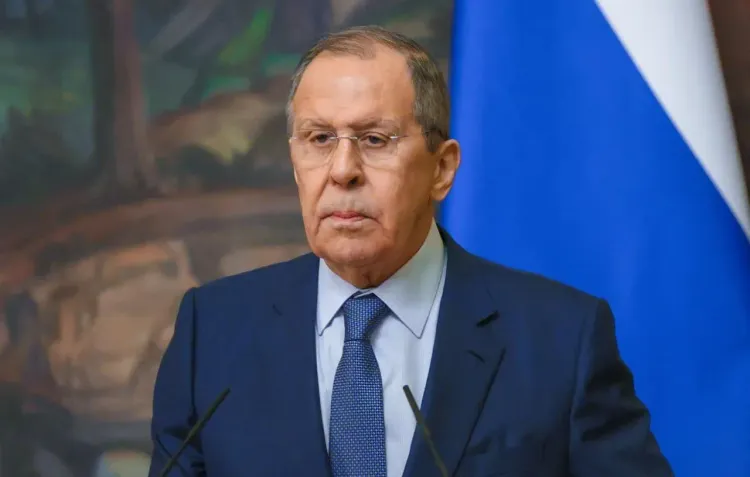
Synopsis
Moscow and Washington are now openly contradicting each other over what happened at the Anchorage summit. Lavrov says Russia accepted US proposals and is still waiting for a response. Rubio says there was no agreement at all. That gap — between a 'proposal accepted' and a formal deal — may be the single biggest obstacle to a Ukraine ceasefire right now.
Key Takeaways
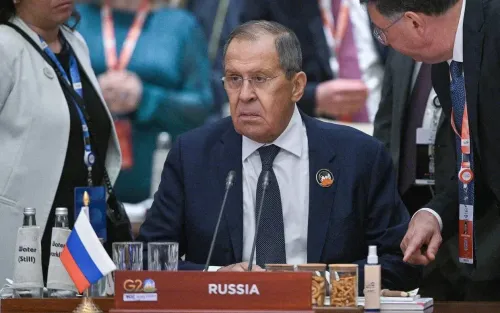
Russian FM Sergei Lavrov on 26 June called for clarity after US Secretary of State Marco Rubio said no agreement was reached at the Anchorage summit .
Lavrov says Russia accepted US proposals made in Alaska and has received no follow-up response from Washington.
Rubio, speaking in Bahrain , insisted: 'There was no agreement in Alaska.
There was a proposal in Alaska, but there was no agreement.' Lavrov described the Alaska understandings as 'already a compromise' and questioned Rubio's use of the word 'agreement' as 'not very elegant.' The public dispute raises fresh doubts about the viability of a US-brokered Ukraine ceasefire in the near term.
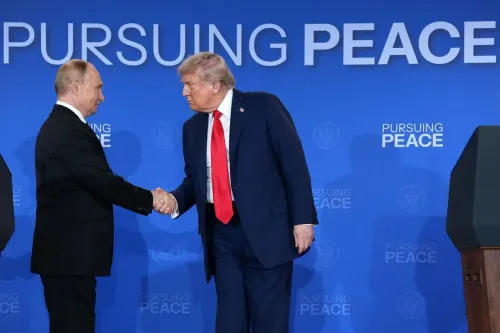
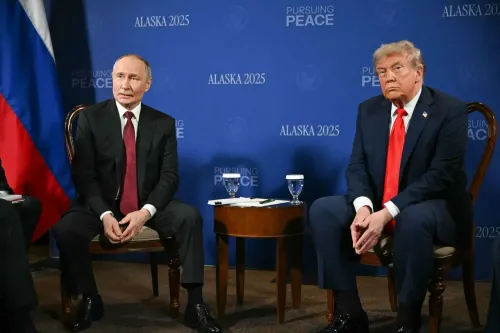
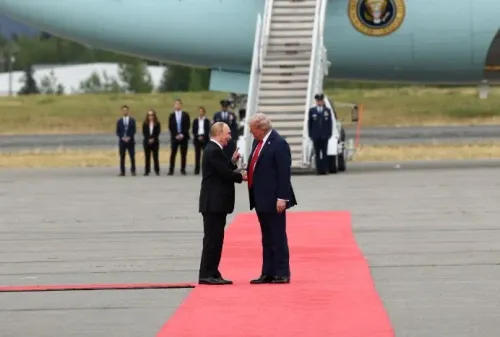
Russian Foreign Minister Sergei Lavrov on Thursday, 26 June called for clarity on Washington's role in resolving the Ukraine conflict, after US Secretary of State Marco Rubio publicly disputed the outcomes of the Anchorage summit between President Vladimir Putin and President Donald Trump.
The Core Dispute
Lavrov stated that Russia had accepted what it understood to be concrete US proposals put forward before and during the Russia-US Summit in Alaska. 'Of course, this whole situation needs to be clarified. But the fact remains: US proposals were discussed in Alaska, and they were accepted by the Russian side,' Lavrov said.
Rubio, however, pushed back sharply during his state visit to Bahrain on Thursday. 'There was no agreement in Alaska. There was a proposal in Alaska, but there was no agreement in Alaska. If there had been an agreement, we would have had an end to the war,' he told journalists.
What Lavrov Said Earlier
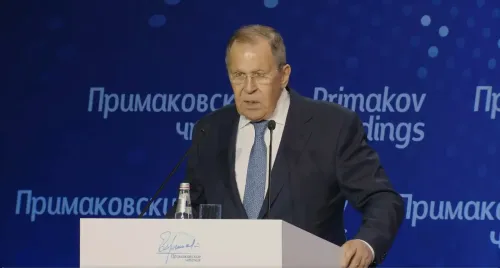
The dispute traces back to remarks Lavrov made on Wednesday at the Primakov Readings international scientific and expert forum, where he said Russia was given 'absolutely concrete proposals' ahead of the Alaska summit — proposals that Putin accepted. Lavrov expressed frustration that no American response had followed, even as Trump reportedly consulted European leaders and Ukrainian President Volodymyr Zelenskyy after returning to Washington.
'We thought we had reached an agreement there. But a week passes, then two. President Trump went to Washington to consult with the Europeans. Zelenskyy was also consulted there somehow. But in the end, we still don't have a response to the American proposal, which we supported,' Lavrov said. 'That's how the situation looks now.'
The Semantics of 'Agreement'
Lavrov directly challenged Rubio's framing on Friday, questioning what the term 'agreement' actually means in diplomatic context. 'When my colleague Marco Rubio says that in Alaska there were only proposals, but no agreement, this raises questions for me in terms of what we mean by agreement. If one side, in this case the United States, put its proposals for a settlement on the table, for how to approach this crisis, and the other side expressed agreement with these proposals, then saying there was no agreement is somehow not very elegant,' Lavrov said.
The Russian foreign minister also characterised the understandings reached in Alaska as 'already a compromise' — signalling Moscow's view that it had made concessions, and that Washington's silence or backtracking is a setback to the peace process.
What Happens Next
The public contradiction between Moscow and Washington over what was — or was not — agreed at Anchorage deepens uncertainty around any near-term Ukraine ceasefire. This comes amid broader diplomatic manoeuvring involving European allies and Kyiv, whose positions have complicated the US-Russia bilateral track. Analysts note that the gap between 'proposal accepted' and 'agreement reached' may reflect deliberate ambiguity on Washington's part, leaving room for domestic and allied political management.
Point of View
Leaving Moscow holding what it believed was a deal and finding only silence on the other end. That Rubio chose to clarify this publicly, in Bahrain of all places, suggests the US is managing allied optics as much as it is managing Moscow. The deeper risk: if Russia concludes that American proposals cannot be relied upon even when 'accepted,' the entire bilateral channel loses credibility as a ceasefire mechanism.
NationPress
25 Sept 2026
Frequently Asked Questions
What happened at the Anchorage summit between Putin and Trump?
The Anchorage summit was a Russia-US meeting at which, according to Russian FM Lavrov, the United States put forward concrete proposals for a Ukraine settlement that Russia accepted. However, US Secretary of State Rubio has since said there was no formal agreement reached — only proposals were tabled.
Why is Lavrov demanding clarity from the United States?
Lavrov says Russia accepted US proposals made at the Alaska summit but has received no follow-up response from Washington, even after Trump consulted European leaders and President Zelenskyy. He argues that if one side tables proposals and the other accepts them, calling it 'no agreement' is diplomatically inconsistent.
What did Marco Rubio say about the Anchorage summit outcomes?
Speaking to journalists in Bahrain on Thursday, Rubio stated: 'There was no agreement in Alaska. There was a proposal in Alaska, but there was no agreement in Alaska. If there had been an agreement, we would have had an end to the war.'
What does this dispute mean for Ukraine peace talks?
The public contradiction between Moscow and Washington over the Anchorage outcomes deepens uncertainty around any near-term ceasefire. It suggests the US-Russia bilateral diplomatic track is stalled, with European allies and Ukraine also complicating the process.
What is the Primakov Readings forum where Lavrov spoke?
The Primakov Readings is an annual international scientific and expert forum held in Russia, focused on global affairs and foreign policy. Lavrov used the platform on Wednesday to publicly disclose that Russia had accepted US proposals from Alaska and was still awaiting an American response.